


By The Editorial Board
One of the best opportunities in college is connecting with professors and building relationships. For most students, ideal professors have high but attainable expectations and work throughout the semester to help students meet them. With that as the goal, a class can be structured any way, as long as there is a plan — something Professor Don Carpenter painted well in a Lariat Letter earlier this year.
But right now in colleges nationwide, both students and professors have become way too comfortable with doing whatever is easiest — especially for exams. Many general education classes and entry-level major-specific courses are sought out as “weed-out classes,” meaning they are intentionally designed to be hard just to reduce the number of students in that major.
Classes shouldn’t be difficult just for the sake of being difficult. Busywork does nobody any good. Geez, when high school professors said “that won’t fly in college,” we actually believed them, not knowing most professors will do just about anything to help you succeed if you are invested in learning the material.
The Editorial Board has had all kinds of classes across our Baylor tenure, and for some of us, classes where there were only three exams with no homework was the most beneficial for our learning. For others, a heavier project workload with fewer exams was better for information retention.
Every student and professor has a different idea of how to build and succeed in a course, but as long as the end-of-semester goal is aligned, students are more likely to put in the work and less likely to resort to cheating. However, when the only thing someone is working for is a grade, retaining information and truly learning are less of a priority than finding a way to check the box — even when a shortcut takes more work than doing it right.
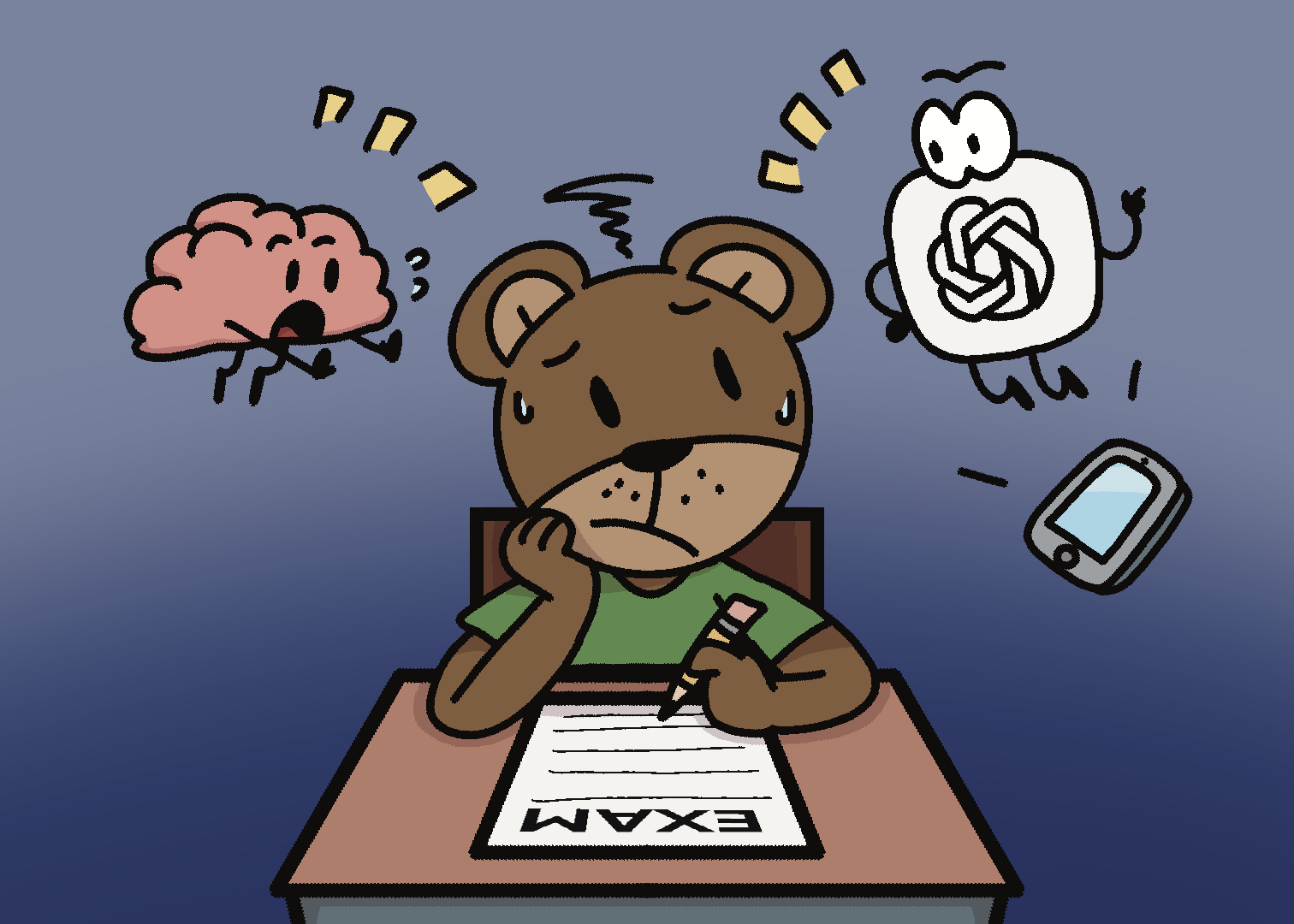
When giving students take-home tests that are not open note — even on a LockDown browser — rather than structuring class time to do these exams, you’re asking for trouble. LockDown exams should be taken in class; doing them outside of class or even during class time asynchronously is lazy. And with that, students are becoming way too comfortable with cheating.
Cheating is detrimental to retaining information and, of course, future learning. But when exam format determines how students are judged, giving a take-home exam allows way too much leeway. There is no incentive to make the right decision and honestly take the exam when it would be more time-efficient and better for the student’s final grade to cut corners.
Artificial intelligence is not the only cause of the increasing cheating; it just makes it easier and more accessible. With these additional tools, there are so many ways to properly prepare before the exam rather than resort to cheating during them. But especially in entry-level classes, professors need to ensure they equip students with what they need to succeed so they don’t resort to cheating.
Right now, the academic world is struggling to combat AI, but we feel a bigger issue is that some students are falling into a groupthink mentality that cheating is what you have to do to keep up in classes and maintain scholarships. Not all students perform well or learn best in an exam format, and Baylor has resources available at the Office of Access and Learning Accommodation to accommodate those students. But without clear communication between both teachers and students, it’s harder for both parties to meet expectations.
Again, The Lariat does not condone cheating, but The Editorial Board understands the stress students are under and understands why a student might choose that route when they are not incentivized to learn. Ultimately, it’s a disservice to students to be put in a position where they are tempted to cheat rather than gain valuable knowledge that prepares them for a postgraduate job.
An ideal student-professor relationship sets clear and high expectations, but not unreasonable ones. It’s an exchange between the two — the professor teaches the student and stays available to help the student understand the material, and the student shows their adequate understanding of the information on the test. They don’t feel the need to cheat on a test because they’ve already been given the tools they need to succeed. It’s challenging, but doable. This relational exchange is what universities were created to achieve, and when it is achieved, students learn, succeed and are prepared for whatever life after college brings.
