By Colleen Long
Associated Press
NEW YORK — Many of the tens of thousands of New Yorkers stopped, questioned and sometimes frisked by police in the past decade were wrongly targeted because of their race, lawyers for four men who claim they were illegally stopped said Monday.
But New York Police Department lawyers countered that officers must go where the crime is — and the crime is overwhelmingly in minority neighborhoods.
A civil trial that began Monday in federal court in Manhattan will examine the police tactic that has become a city flashpoint, with mass demonstrations, City Council hearings and mayoral candidates calling for change. The lawsuit, now a class-action, seeks a court-appointed monitor to oversee changes to how the police make stops.
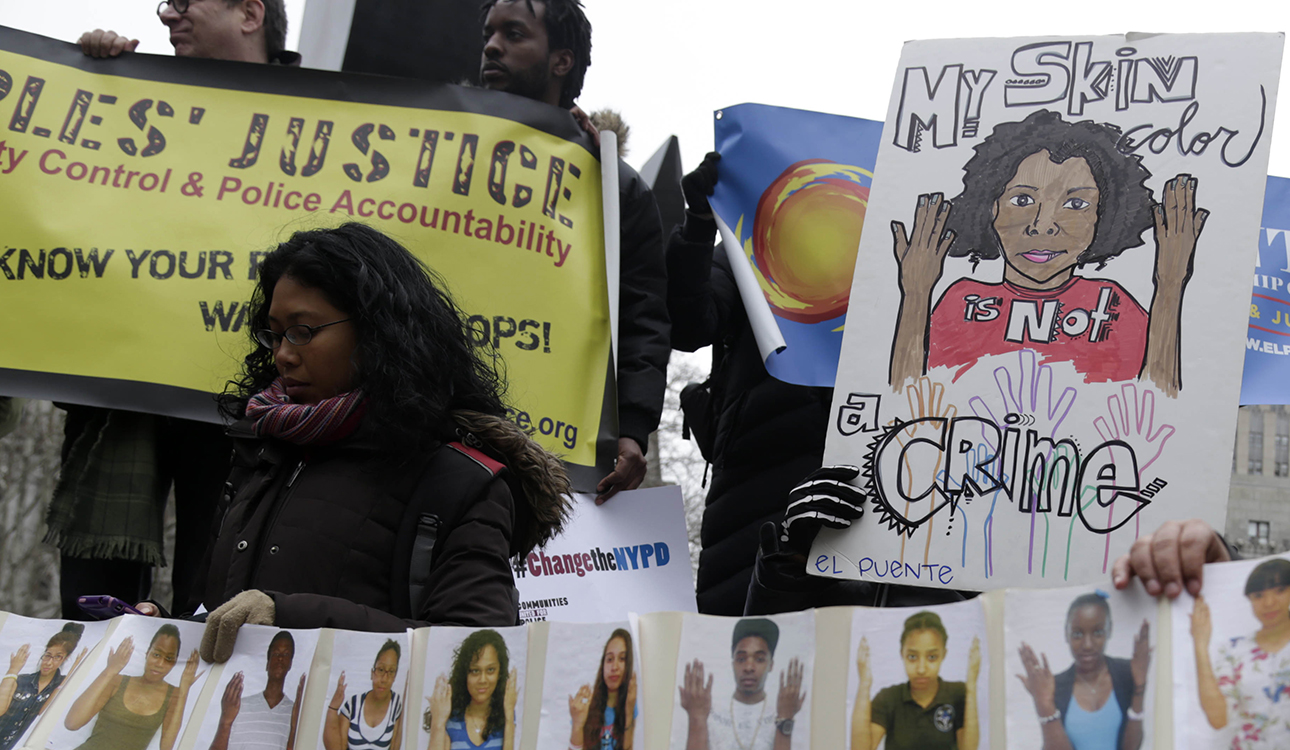
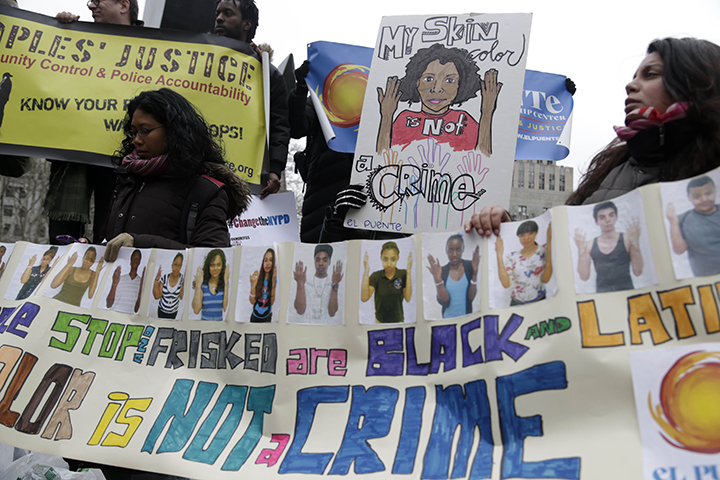
The courtroom and overflow rooms were packed Monday, and stop-and-frisk opponents held an afternoon rally outside the courthouse. The Rev. Jesse Jackson watched the opening statements, telling reporters outside court afterward: “I heard rationalization and justification rather than explanation from the city. They were not denying. They were justifying.”
The trial is expected to last more than a month.
The mayor and police commissioner say stop-and-frisk is a life-saving, crime-stopping tool that has helped drive crime down to record lows.
But Darius Charney, the lawyer for the four men who filed the suit in 2008, said the department is doing stops illegally and must make adjustments. He called many of the stops a “frightening and degrading experience” for “thousands if not millions” of New Yorkers.
Charney, of the Center for Constitutional Rights, called the stops “arbitrary, unnecessary and unconstitutional,” and promised that plaintiffs will show the judge “powerful testimonial and statistical evidence” that New Yorkers are routinely stopped without suspicion.
Police have made about five million stops in the past decade, of mostly black and Hispanic men. Two witnesses testified Monday, out of a dozen who say they were targeted because of their race.
One, Devin Almonor, the 16-year-old son of a police officer, said he was thrown against an unmarked car and handcuffed when he was 13 on his way home. The other, David Floyd, testified that he was wrongly stopped twice. Both said they were testifying because they didn’t want the same injustice to happen to other people. Floyd, 33, is now a medical school student.
City lawyers sought to discredit the witnesses by suggesting their stories had evolved over the years to become more dramatic.
Officers and criminologists who have studied the statistics on street stops are also slated to testify, and lawyers plan to play hours of audio tapes made by Adrian Schoolcraft, an officer who was hauled off to a psych ward against his will after he said he refused to fill illegal quotas.
U.S. District Court Judge Shira Scheindlin, who has said in earlier rulings that she is deeply concerned about stop-and-frisk, is not being asked to ban the tactic, since it has been found to be legal. But she does have the power to order reforms, which could mean major changes to the nation’s largest police force and other departments.
City lawyers said Monday the department already has many checks and balances, including an independent watchdog group that was recently given authority to prosecute some excessive force complaints against police. Officers have more than 23 million contacts with the public, make 4 million radio runs and issue more than 500,000 summonses every year.
Comparatively, 600,000 stops annually are not unreasonable, city attorneys said.
“The New York Police Department is fully committed to policing within the boundaries of the law,” said Heidi Grossman, an attorney for the city. “Crime is not distributed evenly across the city.”
The city lawyers said the expert testimony was flawed and evidence would show a correlation between the description of suspects and those stopped.
“Police are given an awesome responsibility, one of which is to bring crime down and keep people safe,” Grossman said.
Street stops have risen dramatically since the 1990s while overall crime dropped in a city that once had the highest murder rate in the nation. Mayor Michael Bloomberg and Police Commissioner Raymond Kelly say the stops are a deterrent that led to lower crime.
The city recorded 419 murders in 2012, down from more than 2,000 in the 1990s and the lowest since similar record-keeping began in the 1960s.
More than 531,000 people were stopped last year, more than five times the number when Bloomberg took office a decade ago. Fifty-one percent of those stopped were black, 32 percent Hispanic and 11 percent white. According to census figures, the city has 8.2 million people: 26 percent are black, 28 percent are Hispanic and 44 percent are white.
About half the people who are stopped are subject only to questioning. Others have their bag or backpack searched. And sometimes police conduct a full pat-down. Only 10 percent of all stops result in arrest, and a weapon is recovered a small fraction of the time.
Recent polls show a stark divide over how blacks and whites view the tactic, while among Hispanics, disapproval of the practice has grown.