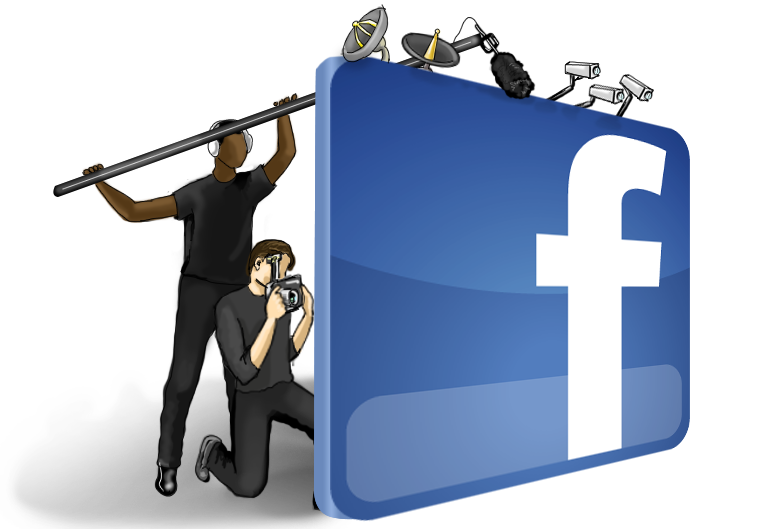
Two billion Facebook users are questioning whether or not to follow the trend of #DeleteFacebook as the corporation shared information on 50 million users that was later reappropriated to influence political advertising for Donald Trump’s presidential campaign.
In the midst of this data-privacy crisis, we demand that Facebook makes quick, comprehensive changes and that legislation enacts protective reform. In the meantime, and even with these added protections, we can start taking the initiative to protect ourselves with the options currently in place.
Facebook has traditionally been an “open platform,” which has allowed Facebook users to log into other apps and allow information sharing about themselves and their friends since 2007, The New York Times reported. In 2013, Cambridge researcher Aleksandr Kogan created a personality quiz app called “This is Your Digital Life,” downloaded by 50 million users. The information gathered from the app was used to target voters with personalized political advertisements, according to a former Cambridge Analytica algorithm-builder and contractor interviewed by the The Guardian. Cambridge Analytica is a U.K.-based political data firm.
Facebook has been aware of the data breach by Cambridge Analytica since 2015. It was not until March 2018, however, that Facebook banned the app and required Cambridge Analytica delete all collected data.
Users who have taken action to permanently delete their accounts were offered a downloaded copy of their information from Facebook. Some have found logs of their phone calls, text messages, as well as information from their contacts and calendars, indicating a broader and more comprehensive instance of data mining than what was seen with Cambridge Analytica alone.
Facebook has had limits on the amount of data apps could access since 2014, but clearly the site needs to put limits on itself.
Site Regulation
The action plan Facebook has announced on its webpage includes pre-screening identities and locations, as well as publicly labeling ad sponsors. Pages created by the Internet Research Agency, a Russia-based company accused of influencing the 2016 U.S. election, have been deleted. Users can check to see if they liked or followed a page created by the Internet Research Agency.
Facebook chief executive Mark Zuckerberg plans to make updates within the next few weeks to include an “Access Your Information” section that allows more profile control and shows the information the company uses to strategically advertise.
In addition to these changes, Facebook should create more opportunities for users to be actively engaged in cultivating a public profile they fully understand and give consent to.
Legal Protections
The European Union plans to enact legislation, going into effect in May, that will enforce a financial penalty and require an “intelligible and easily accessible” consent form, among providing other rights for data subjects.
Within the U.S., there has been discussion of legislative control on data harvesting, but no action.
In 2009, the Federal Trade Commission held discussions “to determine how best to protect consumer privacy while supporting beneficial uses of the information and technological innovation.”
In 2012, President Barack Obama proposed the Consumer Privacy Bill of Rights, which included many ideas for giving people more control over their information, making data collection more transparent and putting limits on what businesses can do with the information they collect. Ninety percent of advertising networks, such as Google and Yahoo, agreed to comply with Do Not Track technology, which allows users to turn off tracking. These industries also agreed to withhold from releasing browsing data for any purposes other than advertising. The bill never passed.
The Internet-enabled security breaches by Cambridge Analytica and Internet Research Agency highlight the need for tougher legislation on user privacy rights.
However, before legislators are able to make change, they need to understand the issue in its technological context. The questions Zuckerberg was asked at the congressional hearing on April 11 revealed a lack of understanding.
Sen. Lindsay Graham, R-S.C., showed a clear lack of understanding of social media site functions, asking, “Is Twitter the same as what you do?” Sen. Brian Schatz, D-Hawaii, perceived the messaging application WhatsApp, purchased by Facebook in 2014, as an email network. Sen. Orrin Hatch, R-Utah, wondered, “How do you sustain a business model in which users don’t pay for your service,” displaying a lack of understanding of how websites make money through selling advertising space. Sen. Deb Fischer, R-Neb., had trouble identifying the means through which Facebook collects user data, referring to ambiguous “categories.”
Legislators should be educated on the areas they seek to reform. A tutorial on the basic website function and practices would help bring greater understanding to the situation and the issues within it before legal change is possible.
Self-Guarding
There are currently options within the site to control what information Facebook has access to.
Contact uploading is used to help users find friends and determine prioritization in algorithms. While this feature may enhance your social media experience, it is optional. Turning off the continuous upload setting in the Messenger app will stop instant contact updating as well as delete all previously added contacts.
Taking thought before linking accounts on different websites or giving applications permission to your mobile data can help modify privacy settings. While there are ways to protect ourselves, it should ultimately be the website that changes, not us.