By Giselle Lee | Staff Writer
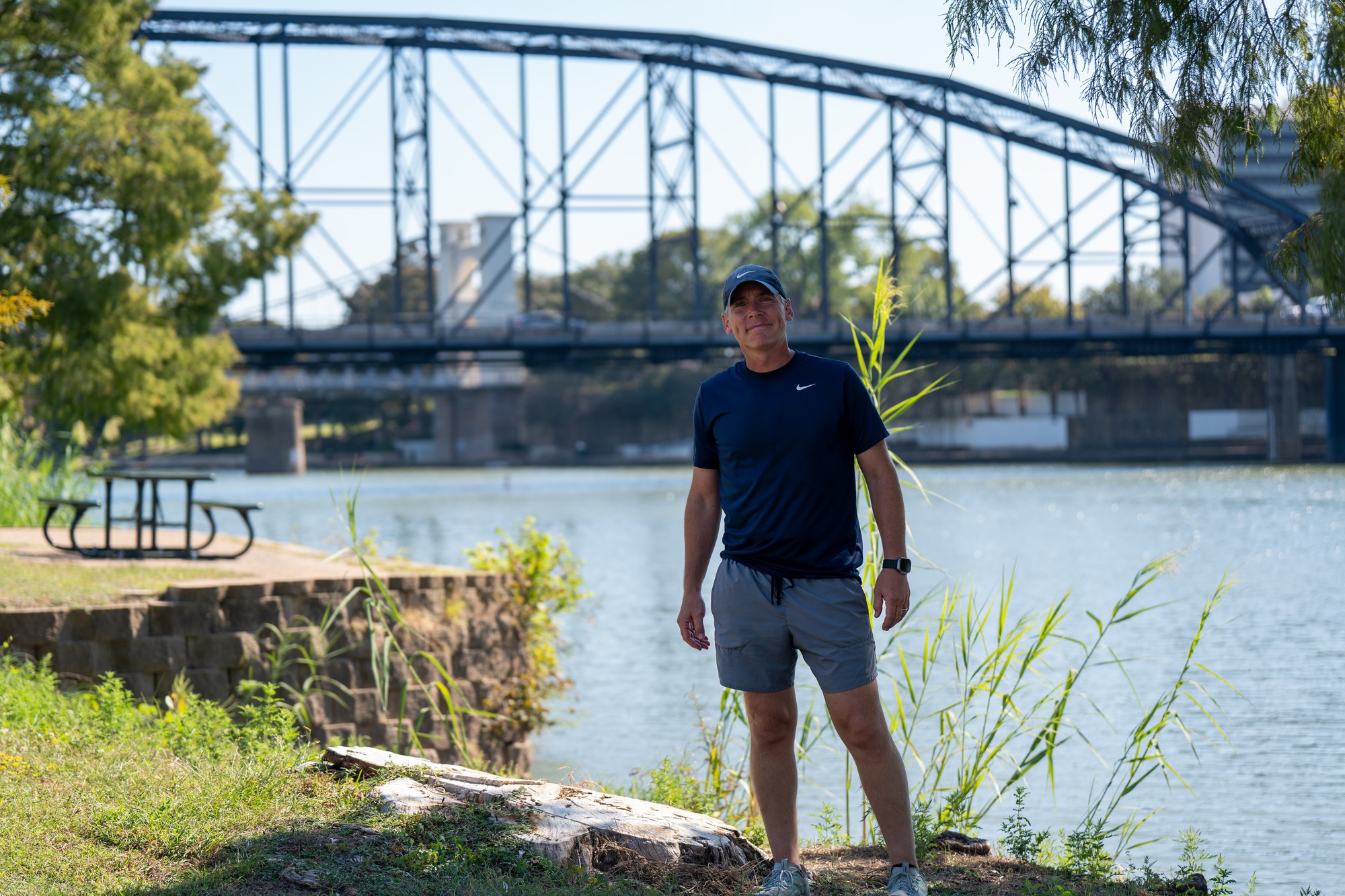
Best known as a fan-favorite carpenter on Chip and Joanna Gaines’ long-running series “Fixer Upper,” Waco resident Clint Harp is trading his toolbox for a pair of running shoes. On Nov. 1, Harp will run and bike 100 miles from Waco to Austin to raise money for immigrant rights organizations.
Harp will begin his journey at the Doris Miller Memorial in Waco and end at the steps of the Texas State Capitol in Austin, where a rally will be held from 5 to 6 p.m. The event will raise funds for the Heart of Texas Network for Immigrant Rights (HOTNIR), a volunteer organization founded over a year ago by Dr. Blake Burleson and Dr. Mark Brickhouse.
The fundraiser is also a collaboration with the Lake Shore Baptist Church’s fund line, Refugia, in support of immigrants and their families’ financial needs, such as legal fees, food and transportation.
Harp said the physical feat is a combination of his television experience on his show, “Restoration Road,” his love for Anthony Bourdain and his longtime passion for American history.
“When I was doing [“Restoration Road”], I used to always say that I wanted to learn all of the history,” Harp said. “Don’t just give me the shiny, happy people version. I want the other side of it, too, that is darker and is something that we naturally want to avoid because it’s sad, it’s painful, it’s horrific in some instances, but I wanted to talk about that.”
According to an August report by The Texas Tribune, the nation’s only immigrant detention facility in Dilley has routinely held children beyond the 20-day limit established under the Flores settlement. At least 60 children had been held there for 100 days or longer, according to the report.
Dr. Mary Darden, director of fundraising for HOTNIR, said Harp was “brought to tears” after hearing about the stories of the immigrant families that HOTNIR was trying to help, which led to Harp approaching the organization directly to organize the rally.
“Clint has very close to 1 million followers in the combination of social media followers, and so we knew that his plea for help to all those people would likely help raise quite a bit of money for us,” Darden said. “We currently need at least $20,000 a month just to meet the fundamental needs of immigrants that come to us for help, and that [number] keeps going up.”
While Harp sees his position as a “white man with means,” he hopes to use his platform to champion issues like immigration, which he sees as a first step toward positive change.
“What makes me so emotional is that I have rubbed elbows with so many different immigrants in this community through the work that I do, working on houses and all of that,” Harp said. “It should bother us when our neighbor is bothered, when our neighbor is in trouble. That should be enough for us to say something’s not right here. Don’t stick your head in the sand.”
Harp said his social media presence may contrast with people’s assumptions about him, comparing it to the chorus in Noah Kahan’s “Northern Attitude.”
“Putting my thoughts out there, trying to stand up for what I feel is decent, right and good, that’s surprised a lot of people,” Harp said. “I think about the first two lines of [the chorus], all the time, because a lot of people right now, I’m not what they hoped, because I am trying to stand up for immigrant rights, and for some other things, and obviously right now it’s a crazy time.”
Like Harp, Darden said her relationships with others were affected by the increased volume of misinformation from different organizations and media outlets, but she remains hopeful her service is contributing to the greater good of the American people.
“I have family members that I can’t talk to about these relevant issues, [because] they think what I’m doing is helping a bunch of criminals and it’s awful,” Darden said. “We are helping people that are hurting. We are helping people that there are people dying in these detention centers, and it’s unthinkable that could happen in a country like America. It shouldn’t happen anywhere.”
With the upcoming midterm elections, Harp said students should curate their social media to hear from voices “all under the sun” to combat sharp polarization in current political discourse.
“I want to hear from all corners of the spectrum when it comes to an issue because everybody has a different take on it,” Harp said. “Hopefully we take all that information, and we come to a consensus on our own, but that is shaped by other people’s experiences.”
When HOTNIR takes the stage on Nov. 1, Darden hopes to not only talk about the ordeals that immigrants have endured, but to raise awareness and put an end to the marginalization of immigrant communities.
“Ultimately, we’re really hoping that HOTNIR won’t be needed in the future,” Darden said. “We’re hoping that we’re going to solve the problems, and we don’t need to have an organization that’s trying to save people from abuse. We have to tell people that this kind of behavior has got to stop.
Harp encouraged students to speak up about issues they care about, especially during a time of political turmoil, as a way to give back to future generations who might also benefit from change.
“As young people, don’t kick the ladder away from the platform once you’ve gotten up there,” Harp said. “Turn back around and make sure the kids behind you have a chance at education because they need it. Keep that going. Because that’s the thing that’s going to get us out of this hole.”