By Abby Rathburn | Staff Writer
While many college students scramble to submit job applications amid an uncertain job market, Baylor ROTC cadets can look toward graduation with a clearer path toward a career in military leadership.
Reserve Officers’ Training Corps, also known as ROTC, is a college-based officer-training program that prepares students to become commissioned officers in the U.S. military as they pursue their undergraduate degrees.
For cadets, ROTC offers scholarship assistance and the certainty of a job upon graduation.
“We’ve had steady growth for the last few years, and I would say that’s not just a Baylor thing,” ROTC Detachment Commander and Lieutenant Colonel Kimber Nettis said. “I think that’s across the nation, as people have seen the stability of being in the program. Students are looking at what happens after college now, even more so than before, especially the ones who are making such a big investment in their education.”
Universities across the country, including Tulane University, the University of Tennessee and Cornell University, are seeing growth in their respective programs.
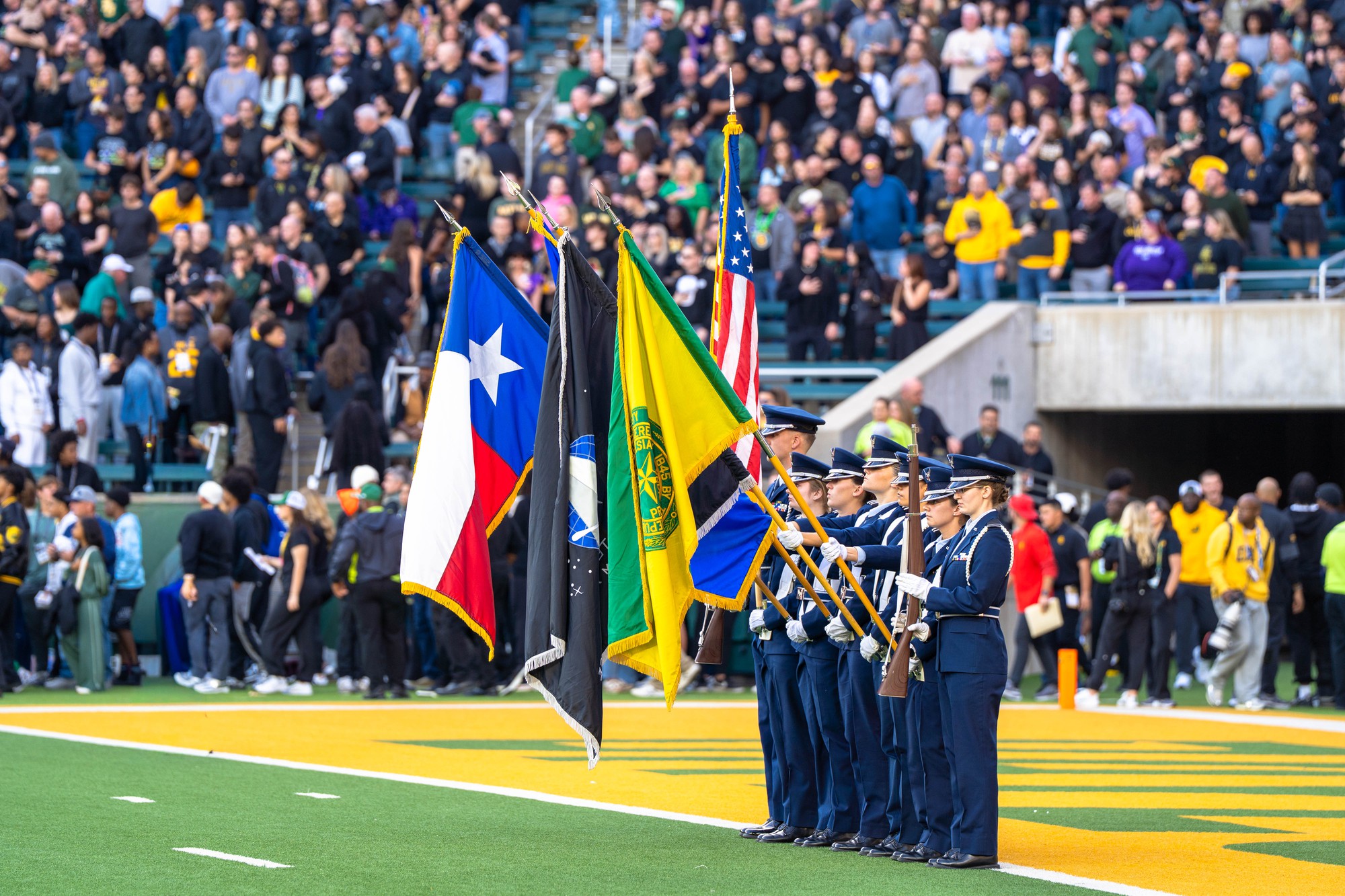
Depending on the university, students may be given different ROTC options. At Baylor, students can choose between Army ROTC and Air Force ROTC, which also includes a pathway into the Space Force. Although the two programs prepare cadets for service in different branches, both emphasize leadership development, teamwork and critical thinking.
“They are given responsibilities, just like they would if they were a platoon leader in the Army, to plan, coordinate, resource and execute different leadership tasks and military tasks with the oversight of our cadre, who coach and mentor them along,” Lieutenant Colonel Kyle Friesen, professor of military science and department chair, said.
Although Army and Air Force ROTC follow branch-specific standards for physical training and leadership classes, Baylor’s programs offer students the unique opportunity to develop these skills within an institution that strongly emphasizes Christian values.
“Having those values instilled in you as a university definitely plays into our closeness and the familiarity of ROTC here,” The Woodlands senior and Army ROTC Cadet Sophia Dasilva said. “I would say it makes us a little bit closer, too, because it is also one more thing that you have in common with pretty much everybody else around you.”
In addition to leading a women’s ROTC Bible study, Dasilva has recently started a new tradition: the ROTC Friendsgiving potluck. She said events like these, outside formal training, foster deeper relationships that extend beyond shared military goals.
“It’s a different environment that we create here because you could go to the big schools, like A&M or UT, and while they’re very good schools, you become a number,” Nettis said.
While other universities may have larger ROTC programs, Baylor’s Army and Air Force ROTC programs foster a closer-knit environment that allows cadets to support one another while they grow as leaders.
“Something I’ve really learned and developed is servant leadership, learning how to put others before myself and put the team and the mission before myself,” Sioux Falls, South Dakota, senior Katherina Mickelson said. “That looks like sacrifice, like waking up earlier to go help a squad that might be getting something ready or preparing for the day.”
Whatever the sacrifice may be, ROTC members say that it is worth it. But even with these sacrifices, ROTC does not bar a student from participating in other extracurriculars.
“We’re both also involved in Greek life, and we lead other clubs on campus, so you really can do it all,” Mickelson said. “You can be in ROTC, and you can excel academically. It’s really just time management, making sure that you prioritize your studies and taking time for yourself, too.”
For those interested in learning more about Baylor ROTC programs, Mickelson and Dasilva encourage students to contact them directly.
“A lot of times our cadets are our best recruiters when it comes to sharing our story,” Friesen said.