By Hannah Webb | News Editor
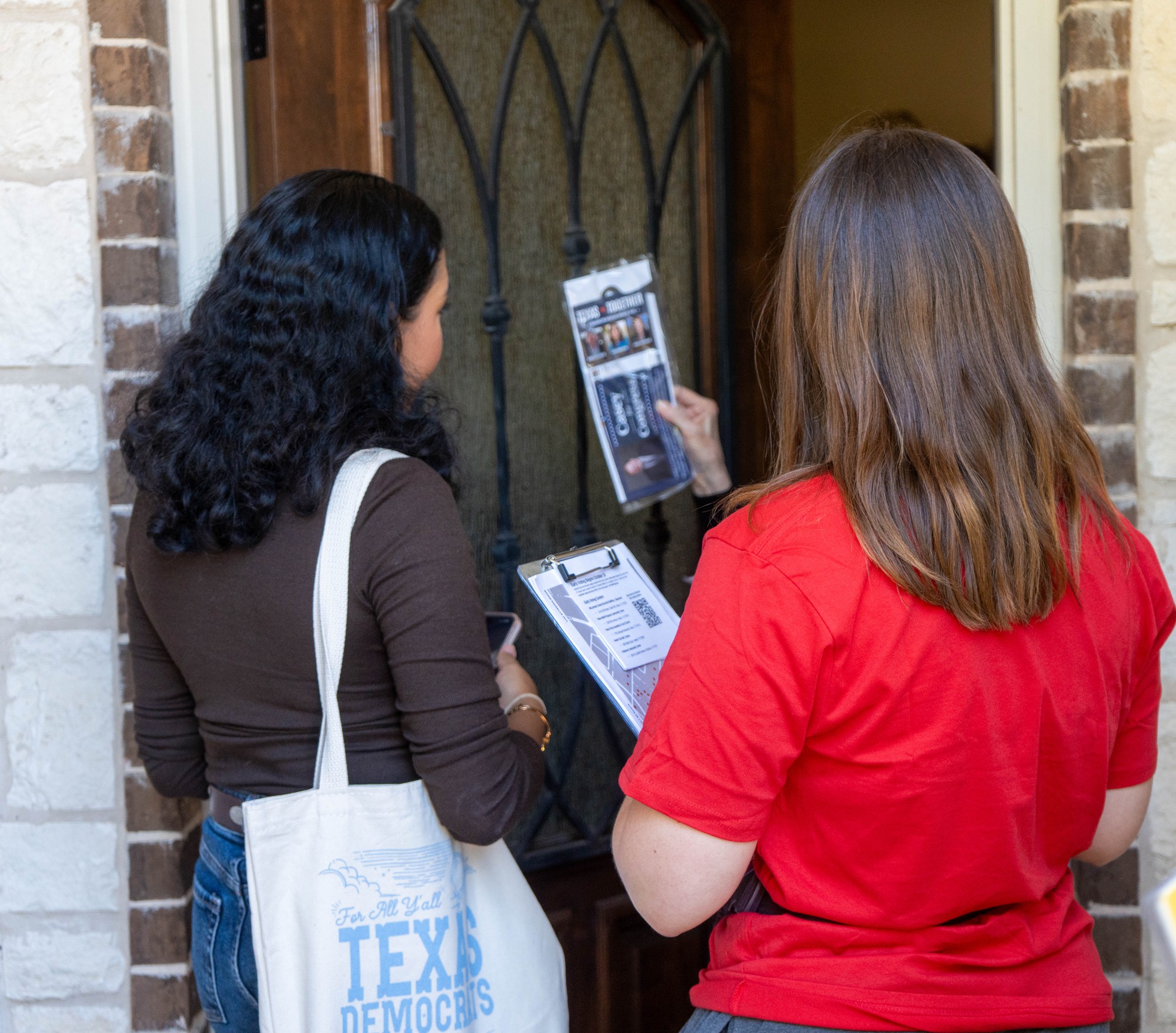
At roughly 40 doorsteps, a group of Baylor students encountered a cross-section of voters: some eager to talk, some ready to close the door and others willing to spend nearly half an hour discussing politics across party lines with people they had just met.
The conversations were part of a Sunday block walk in McLennan County, where volunteers went door to door to encourage voter participation ahead of the midterm elections. Though organized with the Democratic Party, the effort offered a glimpse into the challenges of engaging voters in a polarized political climate.
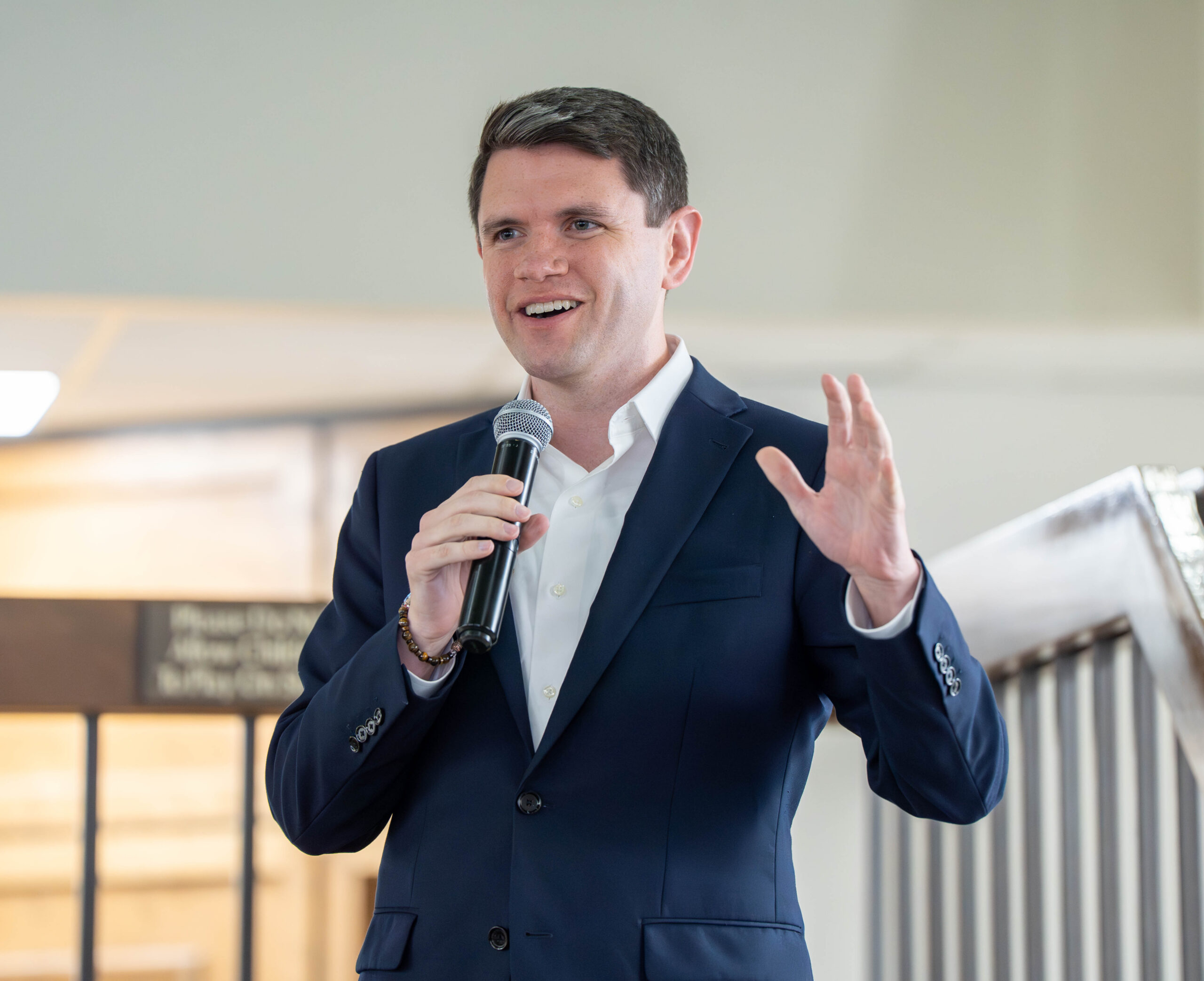
“What makes a difference is neighbors showing up at their neighbors’ doorstep and telling them why this election is so important,” Democratic Senate candidate James Talarico said. He kicked off the afternoon with a brief stop at Executive Plaza in Waco Sunday.
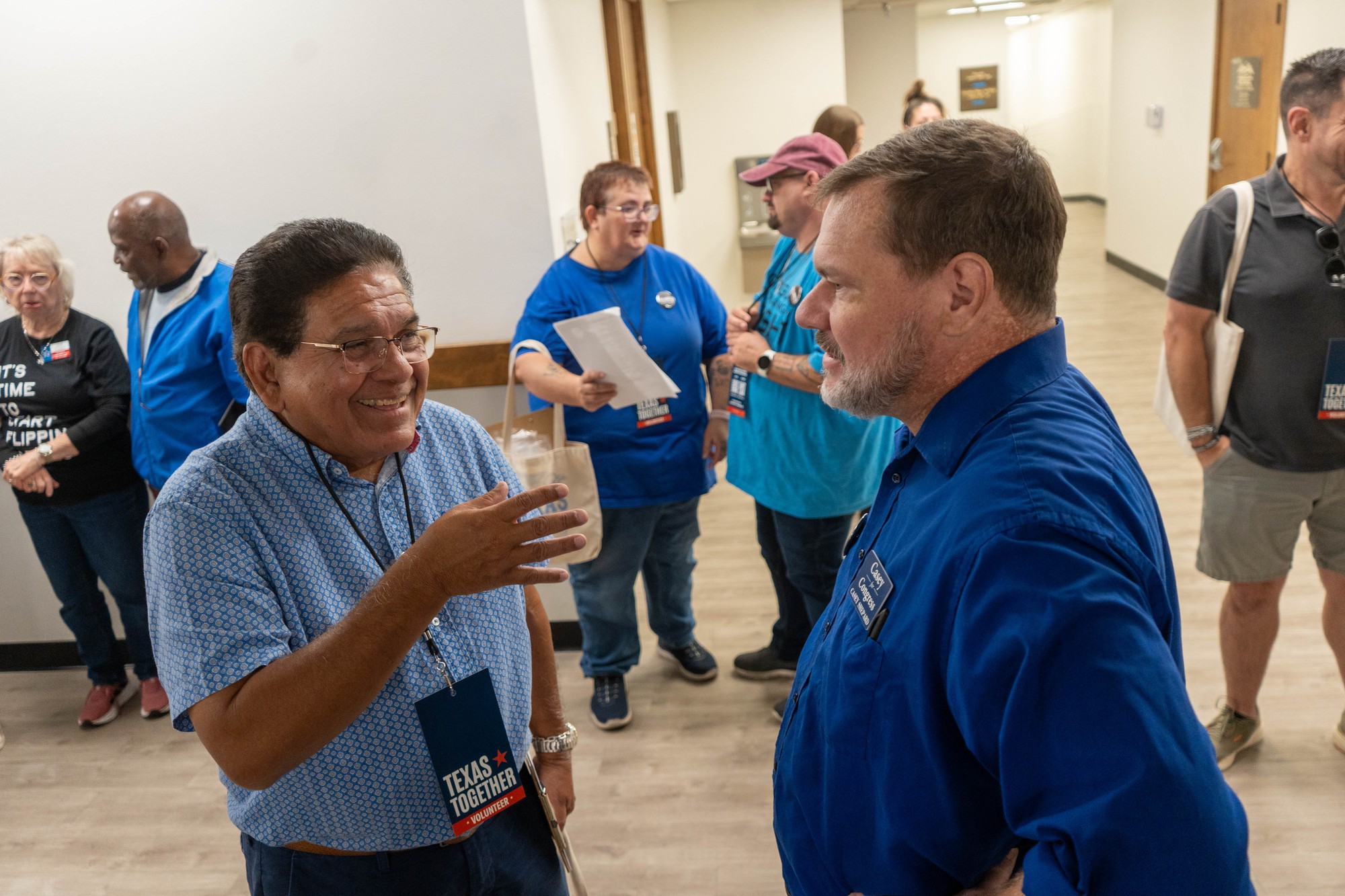
Houston senior Hanna Al-Hayek, president of Baylor College Democrats, said about 140 people signed up for the effort. Organized by the Texas Democratic Party and Texas Together, groups were deployed throughout McLennan County, carrying literature about voting locations and Democratic candidates on the ballot.
“We just try and contact people in a number of ways to encourage them to get out and vote,” said Meg Wallace, a Woodway resident participating in the walk.
Block walking, also known as foot canvassing, is a campaign strategy in which volunteers meet potential voters at their homes to share information and encourage turnout. Unlike television advertisements or mailers, the method creates an opportunity for direct conversation.
At one house, the students encountered a resident who planned to vote Republican in the midterms. Instead of dismissing the group, he spent nearly 30 minutes asking why the students supported their preferred candidates and chose to campaign.
Waco senior Joanna Able, who participated in the walk, said this conversation stood out to her because residents are not always willing to hear from people with different political views.
“We had a really interesting conversation with somebody who typically votes Republican who really wanted to hear why we personally like Talarico and support him,” Able said. “He took time to hear more of why we believe what we believe, which I think is really interesting because a lot of people don’t want to have conversations on the other side.”
Other residents told the students Democrats could “absolutely” count on their votes, while some sent them away. Despite the mixed reactions, Able said the most important outcome was getting people to participate, regardless of party.
“I think the biggest thing is that people are planning to vote,” Able said. “Whether they are voting Democrat or Republican, a lot of people don’t vote in elections that are not for president.”
Voter turnout hit 63.9% of eligible U.S. voters in the 2024 presidential election. On the contrary, only 46.2% of eligible voters filled out a ballot for the 2022 midterms, according to Ballotpedia.
In a new age of voting, Al-Hayek said exchanges with community members show how face-to-face conversations can reduce the distance people feel when engaging with politics online.
“Living through screens is very polarizing until when you’re actually out here, and you’re able to have conversations with people,” she said. “You realize how close we actually are, even if they do shut the door in your face.”
Wallace said volunteers use an app to identify Democratic voters who do not consistently participate in elections. The group then visits those homes to encourage residents to vote.
Talarico, who stopped in Waco while traveling to a rally in Plano, described door-to-door outreach as one of the most consequential parts of campaigning. He compared democracy to parenthood, saying we think it is “automatic,” but we “take it for granted.”
“Just like parenthood, democracy requires attention,” Talarico said. “It requires nourishment. It requires love and commitment, and that’s what you are doing today.”
For Al-Hayek, the goal extends beyond any single candidate or election.
“I know a lot of people sit it out because they think, ‘What’s the point if politics is just coming up with the most creative nickname’ or asking ‘How quick can I attack back?’” she said. “But that’s not the point of what politics should be.”
She pointed to the streets where volunteers walked, noting the lack of sidewalks, as an example of how political decisions affect everyday life.
“I think politics, at its best, works for everybody,” Al-Hayek said. “Better politics is better accessibility to everything for everyone.”