By Stephanie Starks | Staff Writer
The “freshman flu” is an experience new college students can face that can dampen their first few weeks, and Baylor is no exception.
Despite its name, the freshman flu is not a true case of influenza. The “flu” is a colloquial term for the bugs and colds that spread quickly among the student body and in the Waco area as the fall semester starts, and it will continue on and off throughout the school year.
Dr. Dustin Fowler, a local immunologist and owner of Allergy & Asthma Care of Waco, said the freshman flu can be attributed to the fact that “people from all across the country have all come together with their own distinct, naive immune systems.”
“In the first few years of medical training, I learned that in areas such as college or military service, certain infections can easily get swapped due to close proximity to new people,” Fowler said.
Students can contract various illnesses because they are exposed to larger groups of people. More contact can expose students to new strains of bacteria they haven’t had a chance to fight off.
Although it is called the freshman flu, all students experience this change as they return to college. According to a 2025 study from the International Honor Society in Psychology, freshmen are more likely to report symptoms than students in other classes. This phenomenon may stem from the structure and dependence on others that incoming students had before they arrived on campus, with illness lessening as they become more independent over time.
Central Texas is a hub for aeroallergens, airborne substances that cause many of the respiratory illnesses students might encounter.
“Waco is already like an allergy hotbed waiting to spark,” Fowler said. “In the summer and early fall, there are grass and weed pollens that get amplified in the air. When people cough, their hands go to their face. Then if another student happens to touch a surface with those germs, such as a handrail in Draper or a door handle from the BSB, eventually, that student will touch their face again, and that is how these illnesses spread.”
Stephanie Butler, a licensed vocational nurse and infection prevention specialist in the Department of Health Services, said students should protect not only themselves but also the people around them.
“If students know even basic symptoms, they can help their roommates, classmates and other students that they interact with avoid these illnesses,” Butler said.
Butler said Health Services wants to support students as they get sick.
“[Our staff] can give students notes for class if they need it. We can direct students to the Care Team who can offer them additional resources.” Butler said. “The pharmacy sells over-the-counter medication that can help with specific symptoms. Our campus dietitian, Lily Norcross, can help students feel better sooner with certain nutrition. There are resources not just in the clinic but outside of it that can also be beneficial to students.”
Lilia Gonzalez, director of nurses for Baylor Health Services, said viruses and other respiratory illnesses spread in the fall when many people gather at once.
“If students feel sick, they need to stay away from big groups, even if students do not know what illness they have,” Gonzalez said. “[McLennan County] generally has a lot of viruses around this time of year that spread quickly. If students do not feel well, they need to stay home.”
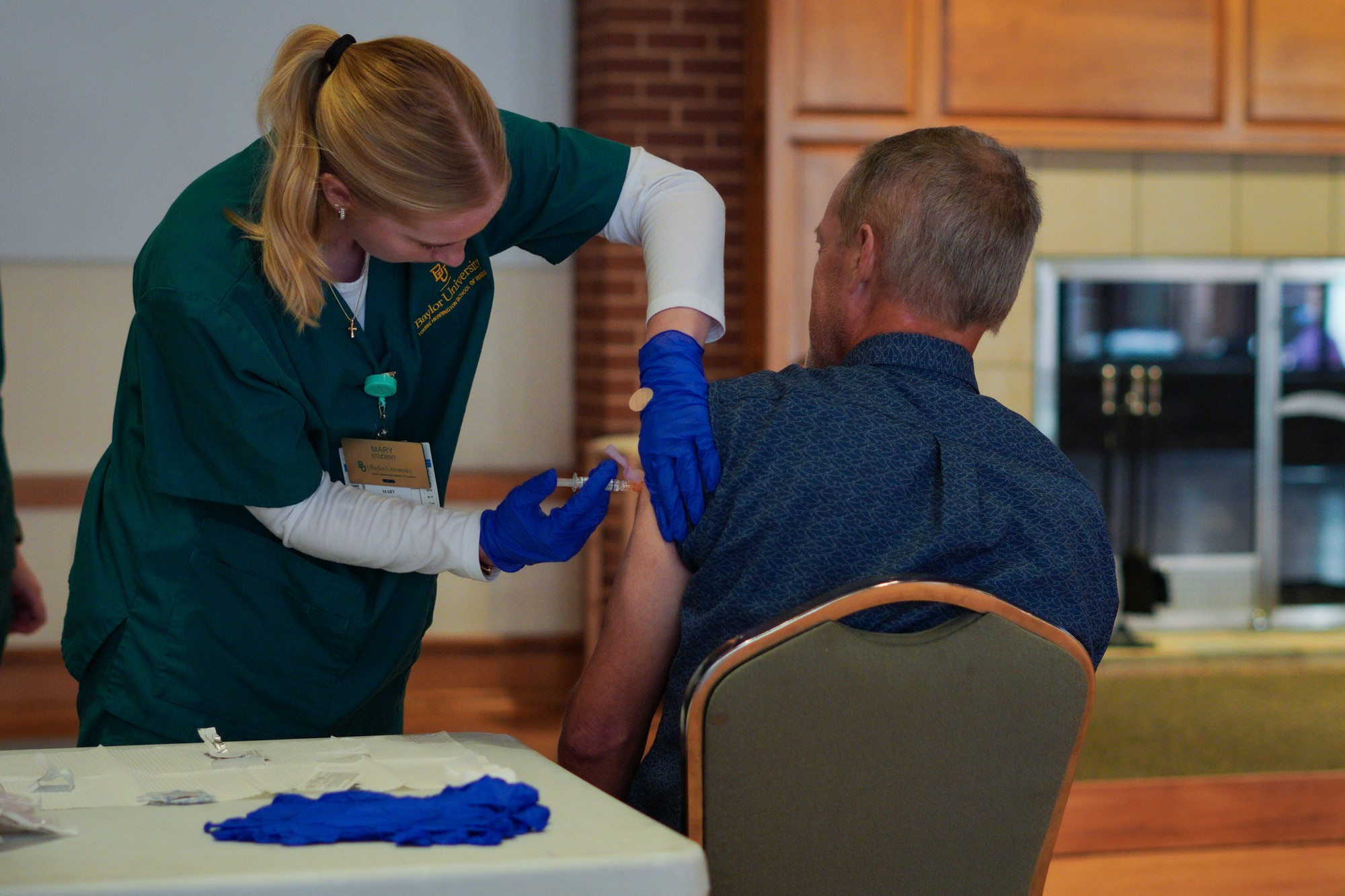
Health Services offers vaccines for influenza. These vaccines are available on campus so students can stay up to date on vaccinations without leaving Baylor.
Gonzalez said inoculation will be offered at locations such as the Bill Daniel Student Center and the Baylor Science Building, through the Occupational Therapy department in Robbins College and in the Louise Herrington School of Nursing.
Tomball sophomore Anthony Riley said his roommate got sick at the start of the semester.
“I thought that I was fine, but then I started getting some symptoms,” Riley said. “I have learned that sleep is one of the best ways to combat getting sick. I got a full 12 hours of sleep after my symptoms started developing. I think that helped me a lot.”
Argyle freshman Gage Prepula said he had a sore throat and chills for a whole week.
“I had to stay on the couch and rest because I did not feel well,” Prepula said. “I did not sleep enough one night, and that is when I really started to feel bad. I had to skip a day’s worth of classes, but I was able to power through and make it to the rest of my classes that week.”
Gonzalez said students should take action to prevent illness due to its repercussions.
“It can take a while for students to bounce back if they miss class due to their illness,” Gonzalez said. “The sooner the flu is caught, the faster students can recover.”