By The Editorial Board
We used to know when something was private. There was a line, maybe blurry at times, but still ever present. You didn’t film strangers without asking. You didn’t turn someone’s worst moment into entertainment. And you definitely didn’t walk around recording everything like the world owed you content.
Now that line has basically evaporated.
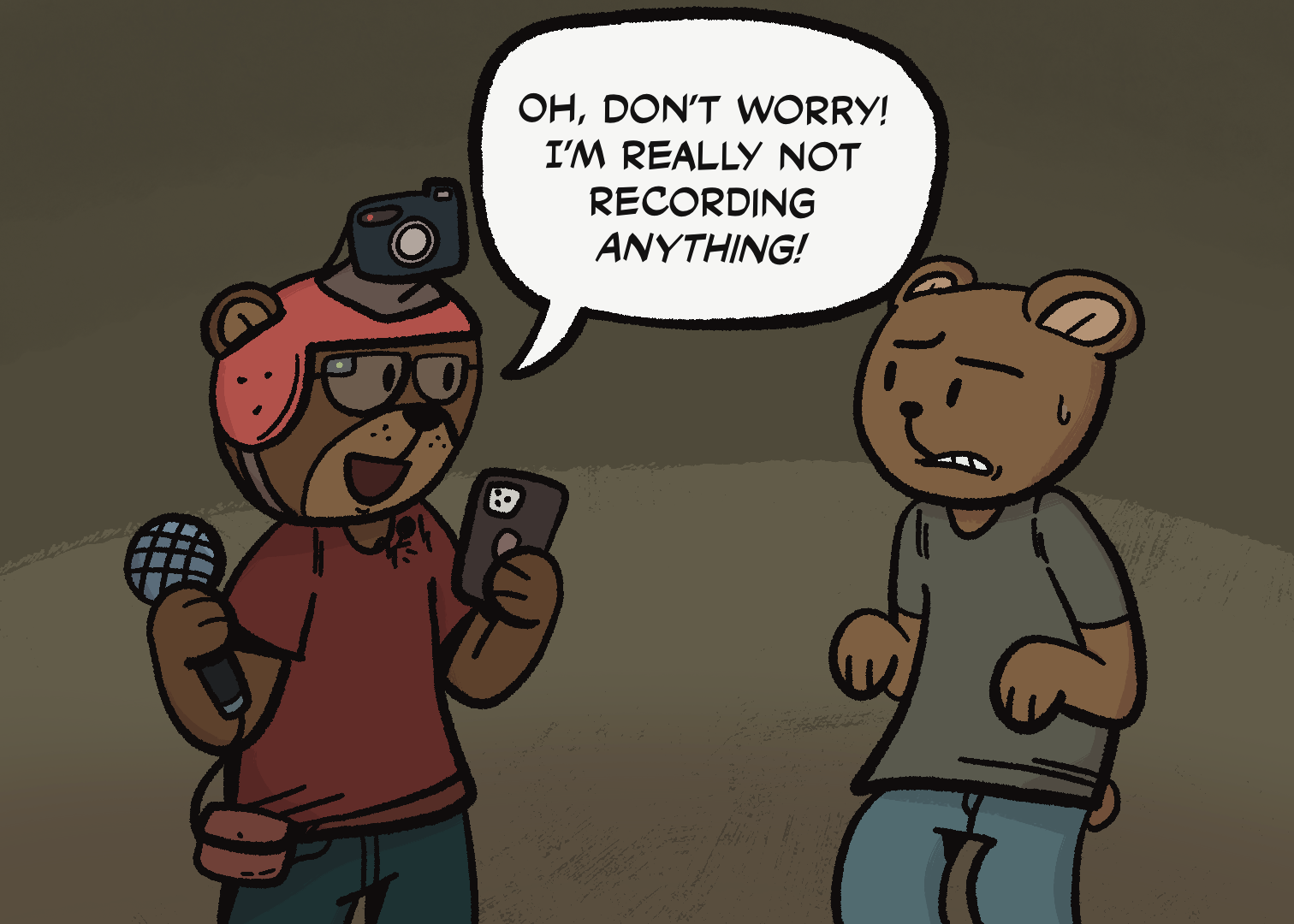
With things like Ray-Ban Meta Glasses, recording isn’t even a decision anymore; it’s just part of existing. People can film you without you realizing it. Add influencer culture to that, and suddenly everything is fair game. A trip to the grocery store, a bad or random interaction, a study session — any of it can end up online for someone’s content.
And we’ve just accepted it.
Scroll for five minutes, and you’ll see it: people recording homeless individuals and posting it like it’s inspirational or “raising awareness.” But let’s be honest — most of the time, it’s not about helping; it’s for views. There is something deeply wrong about turning someone’s lowest moment into content for strangers to consume.
That’s not kindness. That’s exploitation with a filter and fun captions.
Even worse, kids are constantly being filmed and posted online — sometimes by strangers, sometimes by their own parents chasing engagement. A child has no real ability to consent to being shared with thousands or millions of people. Yet their lives are documented, their faces recognizable by any common man, their embarrassing or vulnerable moments permanently out there. They don’t get a say, nor do they get a redo.
About 9 in 10 Americans are worried that social media sites know personal information about children, according to a 2023 Pew Research study. But we haven’t stopped filming children or liking these videos.
Does that imbalance not worry you?
We’ve gotten so used to cameras being everywhere that we no longer question them. Someone pulls out a phone and starts recording, and instead of asking, “why,” we just assume it’s fine. Privacy has quietly shifted from being a basic expectation to something you’re lucky to have.
But privacy matters more than we’re acting as if it does.
It’s not about “having something to hide.” It’s about having space to exist without being watched, judged or posted. It’s about being able to mess up, look bad or just be human without worrying that it’ll follow you forever. When every moment can be recorded, you start to act like you’re always onstage, even when you shouldn’t have to be.
And not everyone is on equal footing here. The people being recorded are often the most vulnerable — the homeless, service workers, random strangers who didn’t sign up for an audience. Meanwhile, the person filming gets the benefit: likes, followers, reach and attention. One person’s privacy becomes another person’s profit. And often, things are edited out of context to further raise entertainment value.
That imbalance should bother us more than it does.
So what do we do about it?
For starters, we need to stop pretending this is harmless. Not everything needs to be filmed, and not every moment needs to be shared. Just because you can record something doesn’t mean you should. That used to be common sense. We need to bring it back.
Platforms also need to take more responsibility for what they promote. If invasive, exploitative videos keep going viral, people will keep making them. The algorithm isn’t neutral; it rewards behavior. Right now it’s rewarding the erosion of privacy.
This starts with individuals. It’s a mindset shift. Before hitting record or liking a reel, ask a simple question: Would I be okay if this were me?
If the answer is no, that should be enough.
We don’t need to reject technology or social media completely, but we do need to relearn where the line is and start acting as if it exists again. If everything becomes content, we all lose control of our own lives at some point.