


By Giselle Lee | Staff Writer
While many crossed city or state lines to get to Baylor, others crossed oceans and looked for ways to make Baylor home thousands of miles away.
Nairobi, Kenya, freshman Kesa White said coming back to Baylor was difficult because of the abrupt disconnect when leaving after the fall semester.
“It was hard coming back because I had adjusted to being here,” White said. “I had kind of stopped missing home and things that were comfortable about my culture. When I went back, I was kind of annoyed with it.”
However, White found that lifestyle differences were also factors that made the transition back to Baylor a challenge.
“I missed African culture and foods from back home,” White said. “I missed struggling to get around town on buses or having to call Ubers that were $2 instead of $15.”
White also explained how she is more familiar with how to communicate with people in her home country than at Baylor.
“I feel like there’s lots of misunderstandings because I can’t bring up something from back home,” White said.
Similarly, Bogota, Colombia, freshman Juan Soto said people’s behaviors and communication are different at Baylor compared to his hometown.
“[We’re] a bit noisy and a little bit disorganized,” Soto said. “Something that’s similar in both places is the people are really nice, so that’s a good thing.”
Soto added that despite being able to understand academic language in English during classes, socializing in English was something new to get used to.
Plainview senior Mason Gregory, a global ambassador in the International Student and Scholar Services, acknowledged that both the educational and social environment is vastly different in America, which makes it harder for international students to acclimatize.
“This might be their first time living independently in an English-speaking country, so [homesickness] includes language barriers [and] time differences where they can’t speak with their families often [and] going years without seeing family members,” Gregory said. “Not having access to the food they’re used to eating or their typical cuisine might make it feel harder for a student to be connected and brew more of that homesickness.”
However, international students said Baylor’s environment was easy to adapt to regardless of where they came from because of all the resources available to students.
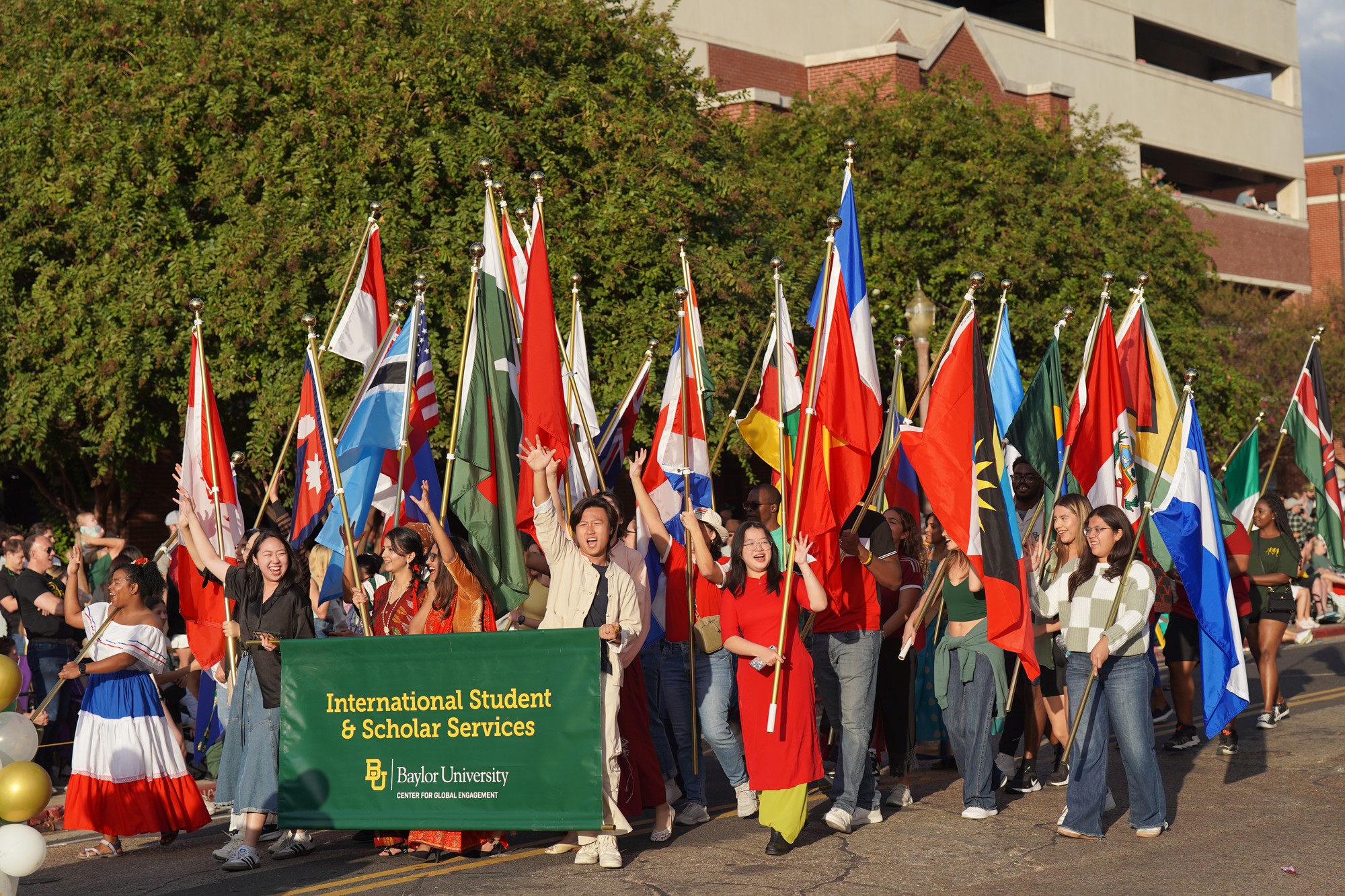
The Center for Global Engagement acts as the bridge between international students and Baylor’s campus resources. Last semester, students noted various events and programs that helped them better assimilate to life at Baylor, including Global Bears Week, the First Year International Program, International Snack Hour and the International Thanksgiving Dinner.
Katie Klingstedt, coordinator of International Programs for the International Student and Scholar Services Team in the Center for Global Engagement, said these events help build camaraderie among international students.
Klingstedt said she strives to foster stronger community bonds between all students, regardless of where they come from, through three key elements: chances to meet Baylor students from around the world, celebration of international culture and the assurance that students feel integrated into Baylor.
“We say that all our events are open to all students,” Klingstedt said. “They are often targeted towards certain groups, but they’re open to all. We would love to see more participation from American students who might just be far from home or want to get to know other cultures.”
Although Baylor’s CGE prioritizes international students and their acclimation, Gregory said everyone feels homesick at some point during the semester.
“Anyone can connect with our office and utilize our office, whether that be through being a Global Ambassador or as an American student working with other international students and finding a sense of community there,” Gregory said.
