


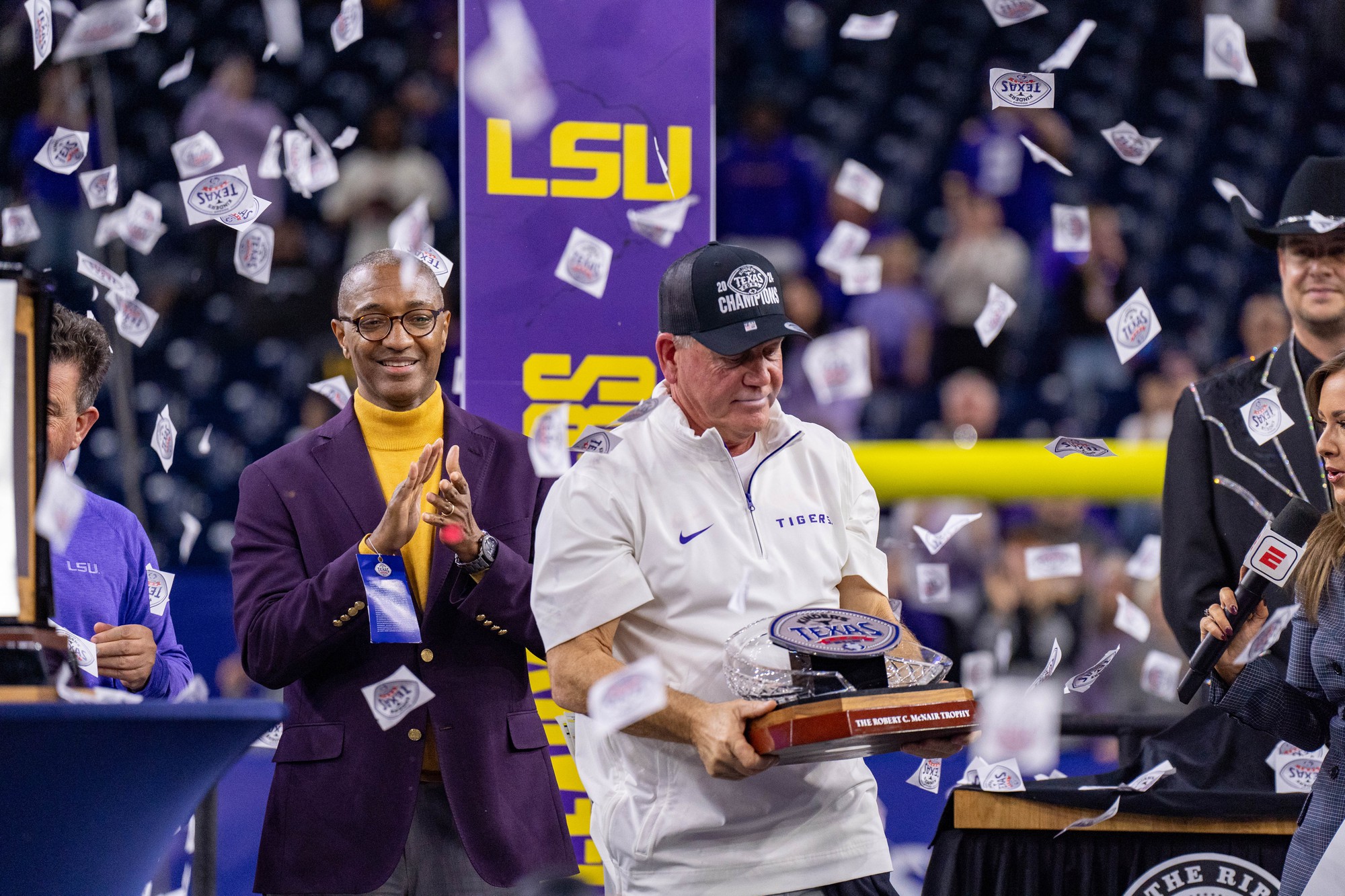
By Jeffrey Cohen | Sports Writer
Before his exit at LSU, Brian Kelly was already a figure of disdain for some in the college football world.
He left a Notre Dame team that finished the season 11-1 with a chance at a College Football Playoff berth to take over as head coach of the Tigers. He reportedly “ghosted” his coaches before his decision and left his team high and dry amid a national championship push, creating animosity for himself.
LSU fired Kelly on Oct. 26 after falling to 5-3 on the season and 2-3 against SEC opponents with the loss to No. 3 Texas A&M. He is now embroiled in a negotiation over buyout compensation.
The fallout of Kelly’s separation from the Tigers has added fuel to the fire of his poor image. His firing marks the death of traditional, authoritative coaches in college football, as the landscape of NIL and social media sheds light on the negatives of that coaching style.
Multiple stories about Kelly have caught on social media. Former LSU player Greg Brooks Jr.’s family said Kelly and his staff had not reached out to Brooks Jr. since his fight with a career-ending brain tumor. While Kelly denied the claim, the controversy left a lasting stain on him and his already-tattered image.
Programs and players do not want coaches who refuse to connect outside of football. The idea that coaches stick strictly to team performance and the X’s and O’s is no longer accepted.
Players are more empowered than ever with the development of NIL and the transfer portal. They can enter the portal and find a coach and program that they see as a good fit. They are not held to remaining under a coach who does not connect with the players.
Coaches are now held to a standard of being more of a “players’ coach.” This approach emphasizes a coaching style that focuses on creating relationships with the players and fostering a positive team culture.
Players and programs want coaches who possess strong leadership skills and can inspire their players, rather than coaches who run a team more like a dictatorship.
The traditional coaching style, exemplified by Herman Boone in the movie “Remember the Titans,” does not translate to college players today. While Kelly was one of the last of a dying breed, the fallout and consistent hits to his character have provided a seemingly definitive end.
Programs will continue to look for coaches like Oregon’s Dan Lanning or Notre Dame’s Marcus Freeman, who seek to inspire and lead their teams through strong relationships and a more modern approach to college football. Some may even seek a coach with a more personable and psychological approach, like Baylor head coach Dave Aranda, who said in a 2022 interview with Sports Illustrated that “you have to … remember that you’re coaching other people’s sons.”
For the Division I programs that will be on the lookout for a new head coach in the offseason, Kelly’s story at LSU will serve as a warning. Coaches with a more holistic and player-focused approach are the new standard and will continue to be the future of college football.
