Associated Press
By Robyn Sanders
Reporter
Baylor’s new chair in environmental science has had his share of hazardous waste experience. Dr. George Cobb developed a plan to help remediate the United States’ largest hazardous waste site where 100 years of copper smelting has taken its toll on a 100-square-mile expanse of land in Deer Lodge, Mont.
Millions of cubic meters of ash and waste left behind after metal smelting, covered the land were contaminated with lead, arsenic, copper, zinc and cadmium. But a group of researchers, including Cobb,
“It was just a wasteland,” Cobb said. “And after the smelter shut down, there was an intense effort to re-vegetate the area by U.S. Geological Survey, state of Montana and several other entities. And they have managed to get some things to grow there, but it’s very, very difficult because the metal concentrations are so high that it’s phytotoxic — things won’t grow.”
One of the objectives of this project was to figure out what areas would be most likely to succeed in remediation.
“We were able to do pretty sophisticated modeling and help these guys prioritize the areas that needed to be cleaned up,” Cobb said. “And that might not sound like a big deal, but when you’re talking about having to possibly remove topsoil a foot and a half deep from a hundred square miles – and this is not flat land, this is mountains – you can’t do that.”
Cobb said this project at the Anaconda Smelter, which wrapped up in 2004, is one of his favorite projects he has worked on.
Cobb received his undergraduate degree in chemistry from the College of Charleston in 1982, and his doctorate in chemistry from the University of South Florida in Tampa, Fla.
Before coming to Baylor to be the new chair of the environmental sciences department, Cobb was a professor of environmental toxicology at Texas Tech University. While he was there, he contributed to projects ranging from working with explosives for the Army to hazardous waste site assessments and researching contaminant levels in New Orleans after Hurricane Katrina. Cobb also currently serves as the president of the North American region of the Society of Environmental Toxicology and Chemistry.
“Dr. Cobb brings internationally recognized leadership experience to the department of environmental science,” Dr. Bryan Brooks, professor of environmental science and biomedical studies, said. “His background mentoring graduate and undergraduate students is stellar. His research and scholarship records are superb.”
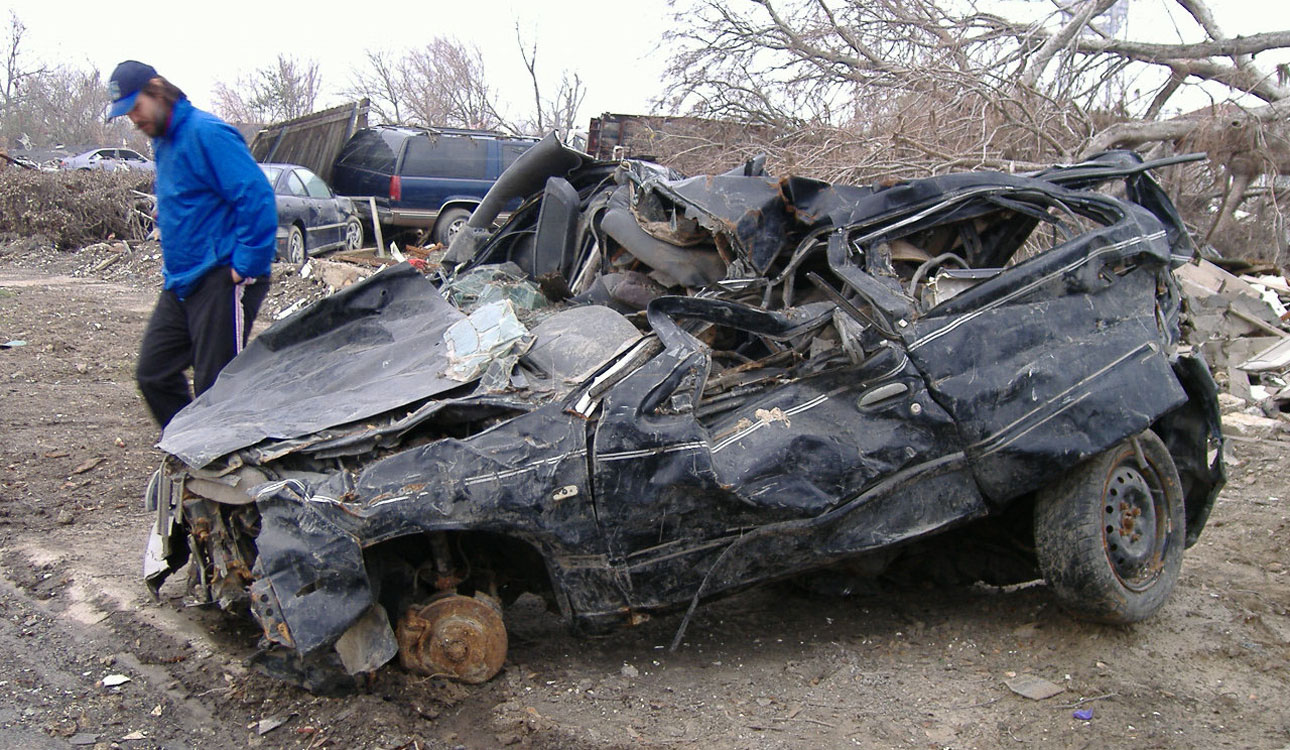
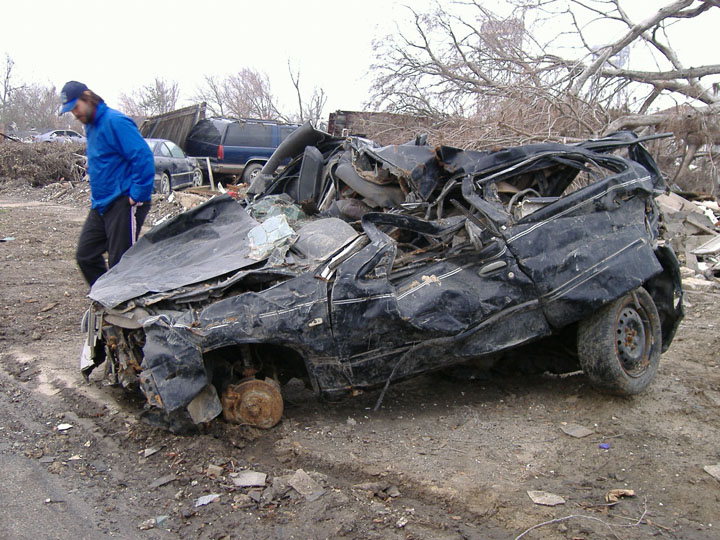
Following Hurricane Katrina, Cobb and a group of researchers from Texas Tech coordinated with the U.S. Army Corps of Engineers to work together on contaminant mapping over New Orleans.
“We were really interested in some of the contaminants issues that appeared to be issues based on some early reporting coming out of New Orleans,” Cobb said. “And so we sent a team of folks down to try and find out how much of the reporting of ‘really toxic soup,’ is what they were calling it, was correct.”
Cobb said that they weren’t able to get into New Orleans in the immediate aftermath of the hurricane because of flooding and martial law.
“We were able to get in while the city was still under martial law, but it took time. It took weeks, even, after the hurricane to get in,” Cobb said.
Although New Orleans had several chemical contaminants issues in the aftermath of Katrina, Cobb said they found that those issues weren’t caused by the hurricane.
“They were caused by people living in New Orleans for so long that these chemicals deposited,” Cobb said. “There was a tremendous amount of lead in the soil in certain areas, and a lot of it was due to lead-based paint, and a lot of it was due to lead in gasoline, which is no longer an issue, but in the decades that lead was put in gasoline, it was emitted out of the tailpipes of cars and so there was lead everywhere.”
The researchers used their findings to inform the scientific community and the public about the concentrations of lead that were present in some areas of New Orleans.
This data was also used in risk assessment and evaluating how hazardous the compounds were to humans and other organisms.
Now at Baylor, Cobb said he sees an opportunity to create an internationally recognized program in environmental science.
“The environment’s right. The facilities are right. The people are right,” Cobb said. “I’m convinced that we can build an environmental science program here that people from all over the world will want to come to be part of.”
Dr. Larry Lehr, senior lecturer in environmental science, has been working with Cobb on class offerings and schedules.
“I think, with the leadership over here, that we’re really set to increase our number of majors,” Lehr said.
Brooks said with Cobb’s leadership, the excellence of Baylor students and contributions of faculty and staff, Baylor is poised to have one of the best environmental science departments in the United States.
“We’re fortunate to welcome him as a new colleague,” Brooks said.