By Kamryn Anthis | Staff Writer
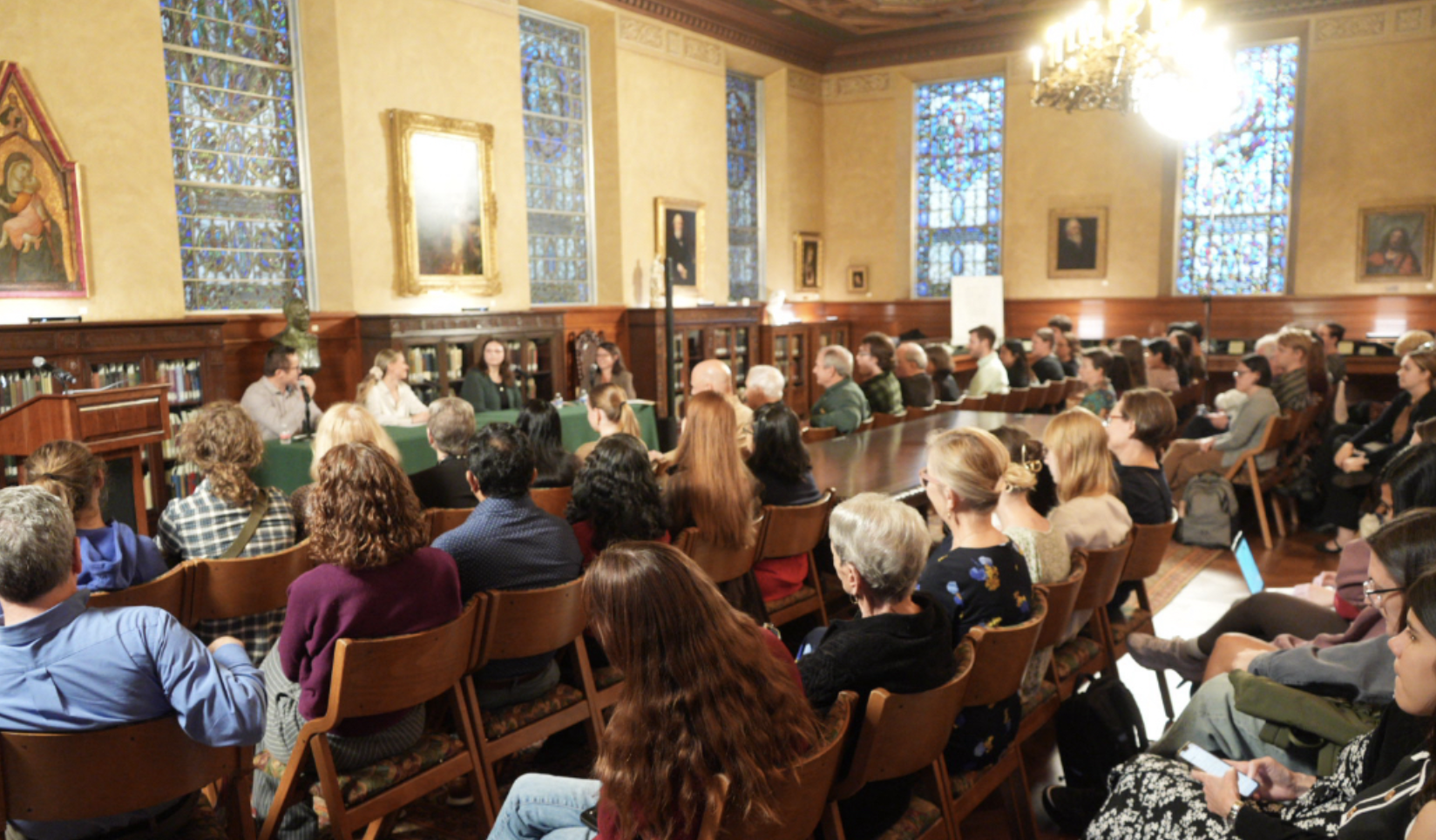
The Keston Center for Religion, Politics, and Society hosted its annual fall panel, “Secrets, surprises, and stories: Unveiling the Unexpected in the Keston Archives and Beyond,” Monday afternoon in Armstrong Browning Library.
According to its website, the Keston Center exists to be a “Voice of the voiceless,” advocating for those who suffered religious persecution. The Keston Archives and Library contain the world’s most comprehensive collection of literature and art depicting religious persecution in totalitarian societies.
Dr. Liana Kirillova, lecturer in history, described the archives as collections of information that people can access to learn about particular subjects.
“I would describe an archive as a place that has access to numerous primary sources … letters, posters, newspaper clippings … that have direct connections to an event that you’re studying,” Kirillova said.
The Keston Institute was founded in 1969 in England by Oxford University student Michael Bourdeaux, following his firsthand exposure to the persecution of Russian Christians. Baylor gained control of the Keston archives in 2007, forming the Keston Center and continuing their mission of education and advocacy for the voiceless.
History department Chair Dr. Julie deGraffenried moderated this year’s panel.
Other panelists included Kirillova; Dr. Linda Moldovan, a third-year Ph.D. student in historical studies in the religion department; and Dr. Željko Oset, a visiting Fulbright Scholar from Slovenia. Each panelist shared stories about discoveries, surprises and unexpected findings from their research.
Kirillova shared three examples of how her students used the Keston archives to uncover details about life under Soviet occupation and better understand how societies functioned during that period.
The research explored how tourism was used to manipulate citizens, how authorities used psychiatric institutions to control people who spoke out against totalitarian regimes and how a Catholic church in Soviet Latvia represented a departure from complacency under Soviet control. Kirillova said this research is important to understanding everyday life during that period.
“History is not just about the governments’ perspective,” Kirillova said. “… History is about everyday people. Without archives, we lack the documents to describe the experiences of everyday people.”
While translating Romanian documents for the Keston Center, Moldovan investigated a mystery involving a man who had been repeatedly edited out of photographs across different sources. She has continued researching the man and the photographs, an experience she said made her feel connected to the people she studies.
“When I was reading through documents … I knew I had the originals on hand; I felt like I had those people with me. Those personal connections cannot be lost when writing history,” Moldovan said.
Oset shared two accounts of uncovering previously hidden information about secret police officers during the Soviet era. He also discussed the importance of preserving physical artifacts as archives continue to support historical research.
“Right now, we live in interesting times,” Oset said. “There is a lot of discussion about AI and how it will change academia. Some fields will be handicapped … if our archives are not digitized, then AI cannot do it instead of us.”