By Giselle Lee | Staff Writer
As Baylor celebrates the many traditions of its annual homecoming, the Black community on campus has found a unique way of expressing itself and its culture: the Royal and Pure Homecoming Stroll-Off.
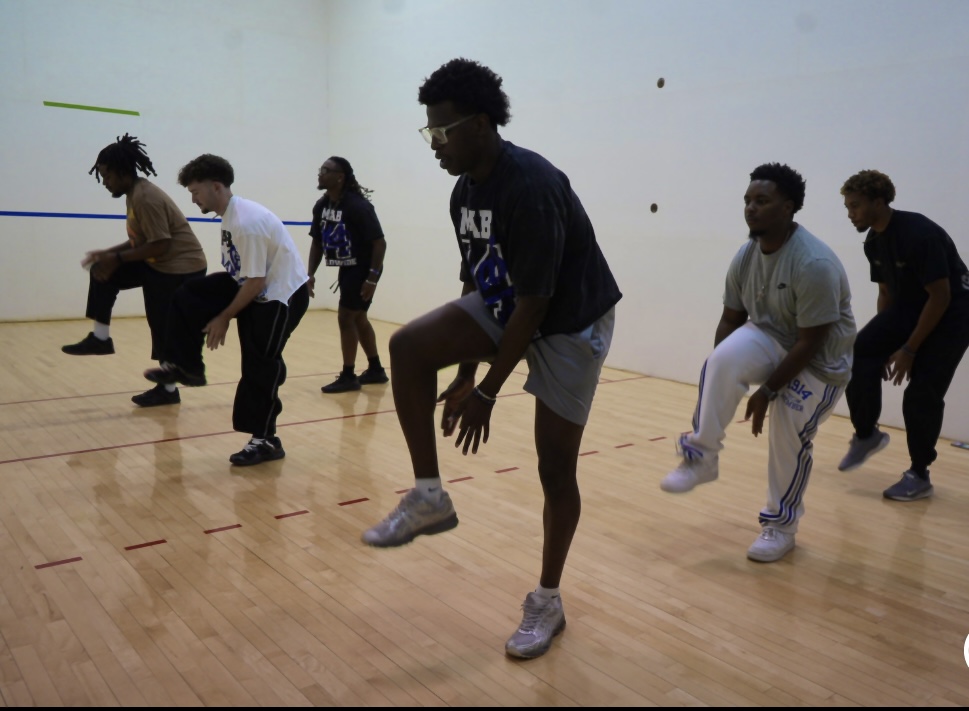
Strolling, also known as stepping, is an organized line movement or a cultural dance performed in groups to symbolize unity and strength. The event will take place from 6 to 9 p.m. on Friday at the Mark & Paula Hurd Welcome Center Ballroom.
The Stroll-Off consists of three rounds: fast, slow and freestyle; routines are usually inclusive of steps that are traditional to the fraternity or sorority’s culture. The top three acts receive a cash prize of $1,000, $500 and $250, respectively, to fund programs and support their chapters.
The event has historically only included the Divine Nine of the National Pan-Hellenic Council (NPHC), but has expanded to include other multicultural organizations on campus. This year, these groups will compete under a Hollywood theme.
Austin senior Damo Kouakou, president of the Phi Beta Sigma Fraternity, said the Stroll-Off’s new home in the Hurd Welcome Center Ballroom is due to the large number of attendees at the annual event, after its previous venues, such as the Hippodrome.
“We surpassed what previous rooms were able to cater to, so [moving to the Hurd was] one thing that we had to change on our part,” Kouakou said.
Houston junior Tan Green, a member of the Phi Beta Sigma fraternity, said planning for the Stroll-Off began as early as summer break, split between chapter members and logistical assistance from the National Pan-Hellenic Council.
“It takes a lot of work and dedication for us to be able to get this show situated and everything, but we do appreciate everyone who is able to help us out and whatnot,” Green said.
For Green, the Homecoming Stroll-Off is an opportunity to “come together” as a community and connect past and present Baylor students.
“This is a really big event that brings back a lot of alumni,” Green said. “This is one of the times of the year where a lot of people get to see some of their old friends who may have graduated; people’s parents also come for this because it all falls right in that homecoming weekend time, and for me that’s the biggest thing.”
On the other hand, Kouakou said the Stroll-Off acts as a bridge between the history behind fraternities and sororities of the NPHC and the broader Baylor community.
“It’s brought more of an understanding of why we were made into fraternities and sororities, because we are more than just paying to be in a group,” Kouakou said. “We do a lot of services together, which every single one of these orgs that are performing have services that are either in their principles or their motto.”
Houston junior Jesenya Wrightsil, the second anti-basileus for the Zeta Phi Beta sorority, said the Stroll-Off has been significant for representing Black culture compared to other Greek life events.
“Even as a student before I joined [my sorority], there isn’t a lot of representation within Panhellenic sororities of people who look like me or I feel I could identify strongly with,” Wrightsil said. “Stroll–Off still has performance aspect that Sing and Pigskin has, but it’s less packed and it’s free.”
As the defending champions, Wrightsil said their sorority has been practicing up to six times a week. She said there was an “added level of pressure” after their monumental win last year.
“That was the first time we had ever won or even placed,” Wrightsil said. “Up until this past year, my sorority wasn’t known for doing very well in the dancing category, then we won. Now we have this new reputation about us that I think it’s good to have, because we happen to have more experienced dancers. But I think our reputation is at stake.”
Aside from including step and an important message in their routine, Wrightsil said their sorority hopes to use its originality to preserve its cultural history of dance, music, and rhythm as a key outlet of expression.
“You have three rounds to really get whatever story that your chapter thinks is important to get across,” Wrightsil said. “[Step is] such a significant part of our culture, going back all the way to Africa: the drums, the rhythmic ways of expression and how to get messages across through rhythm and through stepping. Thinking about those important nuances is the way we’ve gotten closer.”
Moving forward, Kouakou hoped to leave a legacy of continuous growth for future chapter members to expand Homecoming Stroll-Off after his graduation.
“I know as of right now, it’s not what I think it should be, because the event is so good we’re just entertaining that no matter what, we can always add something to make it even better,” Kouakou said. “By the time I’m gone, I just want it to be better than how I was here.”
Wrightsil encouraged students to attend Stroll-Off as it is a “huge way to bridge the gap” across Baylor’s student body.
“Whenever I’ve invited somebody to Stroll-Off, they’re not necessarily plugged into the NPHC community; they’ve never seen strolling or stepping,” Wrightsil said. “I think it’s a good way for the rest of Baylor to see who we are, what we do. This is how we have fun. This is how we express ourselves. It looks different, but it’s still a beautiful thing. I’ve never met anybody who’s left and said it was boring.”