By Giselle Lee | Staff Writer
As a giant inflatable globe floats through the streets of Waco and across Baylor’s campus, students from around the world have the unique experience of witnessing the nation’s oldest and largest collegiate homecoming parade, a testament to how far Baylor has truly flung its green and gold.
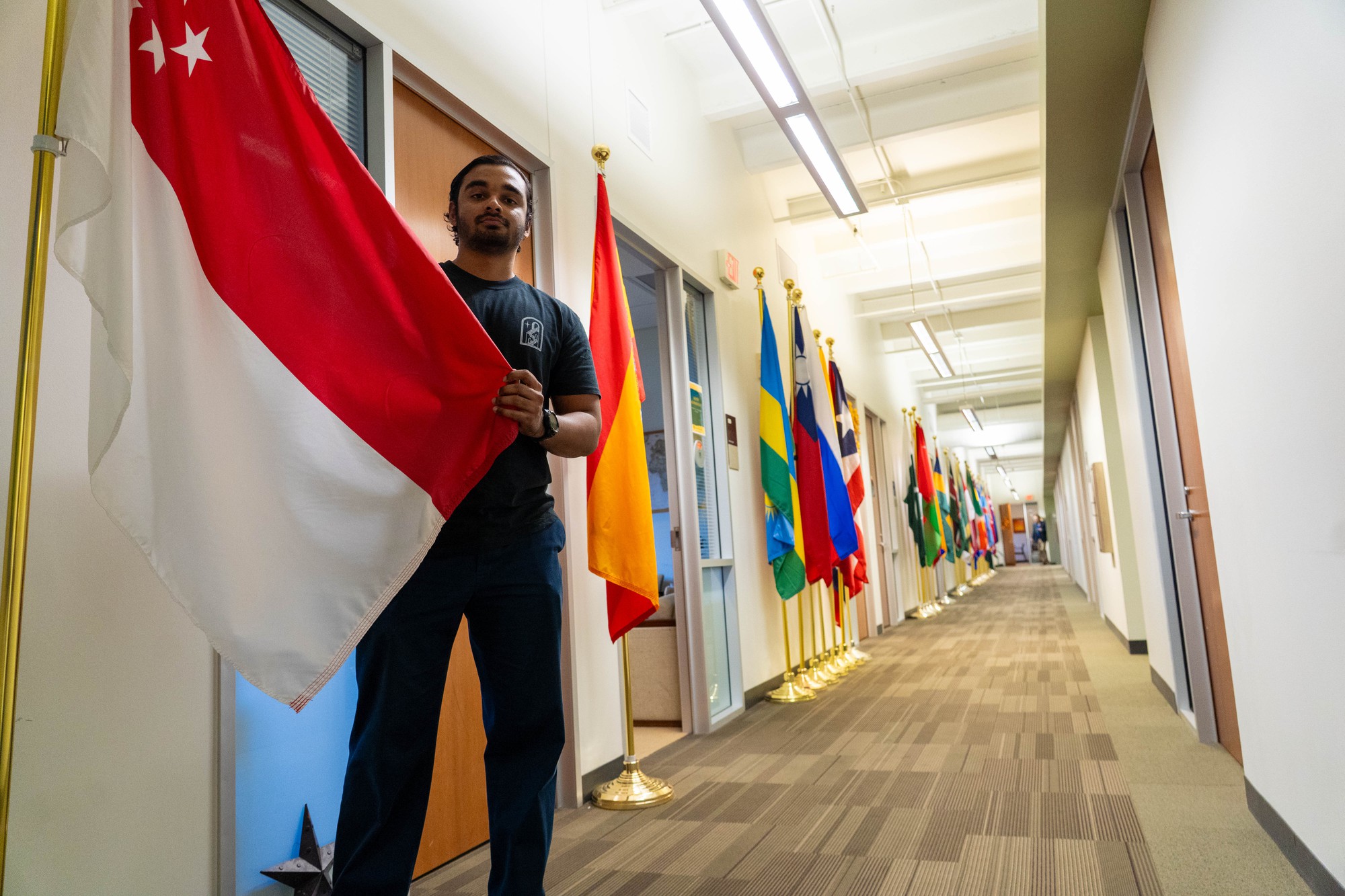
International students have become a key group to watch in the homecoming parade, notably by donning vibrant cultural clothing and waving their country’s flags, but Baylor Homecoming has meant more than a week of celebration; for many, it’s about finding home away from home.
Katie Klingstedt, coordinator of international programs for the ISSS, said Baylor’s rich homecoming history helps international students learn about university traditions and build a sense of belonging.
“For most international students, when they come, they don’t have a real understanding of what American homecoming is and what that means,” Klingstedt said. “It’s kind of one of the first big Baylor traditions, so we do our best to explain this is what homecoming means, and [that students are] at the right place because Baylor has the longest-running homecoming.
Klingstedt said international students are “not the only group trying to find home” at Baylor and hopes students from across campus can find community in one another.
“The idea of homecoming is that not just international students, but also students from all over the country, have chosen to make Baylor their second home and it’s a place that they want to return to year after year,” Klingstedt said. “I hope it can be encouraging to international students that the people around you are looking for a home here just as much as you are and you can find that home together.”
Torreón, Mexico, sophomore Abigail Batarse said Baylor’s international student orientation programs have helped her find a sense of community on campus and looks forward to taking part in the homecoming traditions this year.
“Thanks to the people I met [at orientation], they helped me meet their friends and that’s how I started to create a community both from people who come from the same background as me and other people,” Batarse said. “I’m excited about the bonfire because last year I was able to go for a little bit, but [this year] I want to stay for the whole thing.”
Dinajpur, Bangladesh, doctoral candidate Abdullah Noman said his favorite Baylor Homecoming tradition is the parade, as international students can carry their country’s flag as they walk from Austin Avenue to Baylor’s campus.
“We see lots of people, and when we see our country flag among other countries, I feel proud,” Noman said. “Baylor has given us an environment that we belong, even though we are far from [our home] countries. I don’t describe myself as an extrovert, but whenever this event comes, I feel like it is a festive thing.”
Noman said homecoming is a bridge between the international community and American culture, as it sparks curious conversations among the student body.
“Through this homecoming, we get more exposure, and we find a couple of similarities,” Noman said. “Whenever I connect with peers from different nations or Americans, most of the time, I feel surprised by their point of view whenever they discuss their cultures or their behaviors, so these things are enjoyable.”
For Batarse, being introduced to different people across campus has been pivotal, as she experienced a better sense of home at Baylor after her freshman year.
“There’s a lot of international students at Baylor now,” Batarse said. “I feel like in every single class that I’ve been in, I’ve met somebody who said that they’re from somewhere else than the U.S. Baylor has done a great job at keeping their student body diverse, which has been cool to be able to meet people almost out in the wild.”
Klingstedt said Baylor’s culture is shaped by international students as much as it has been by university traditions such as Baylor Homecoming.
“We tell international students that at the end of your time at Baylor, we hope that they’ve learned things and they’ve been changed by the Baylor culture,” Klingstedt said. “But we also hope that Baylor has been changed by their presence on campus and that what it means to be a Baylor Bear now includes all these different cultures and all the unique traditions and history and celebrations that you bring.”
As international students hoist their flags and take the streets Saturday, Klingstedt hoped students understand the legacy they are joining by being a Baylor student and partaking in Baylor Homecoming.
“They’re getting to see the broader community; not just current Baylor students, but alumni and the people of Waco lining the streets,” Klingstedt said. “Being in the parade is a very visual representation of that, but I hope homecoming in general will let students know they are part of a legacy much longer than them and that they would always be welcome to come back here and join in that celebration.”