By The Editorial Board
It’s 3:15 p.m. on a Thursday, and the professor has finally uttered the words, “that’s where we will end off today,” after a particularly technical and draining class. The sound of rustling backpacks and closing laptops fills the room, and you are left with three options: talk with your professor about the course, connect with a classmate about weekend plans or gracefully glide out of the room with phone in hand and AirPods in, locking in on another universe.
And suddenly, less than one minute after the class is dismissed, the room is almost empty. Those remaining are just the professor, given that they also decline to reconnect with technology instantly, and the few students taking advantage of the opportunity to ask one-on-one questions.
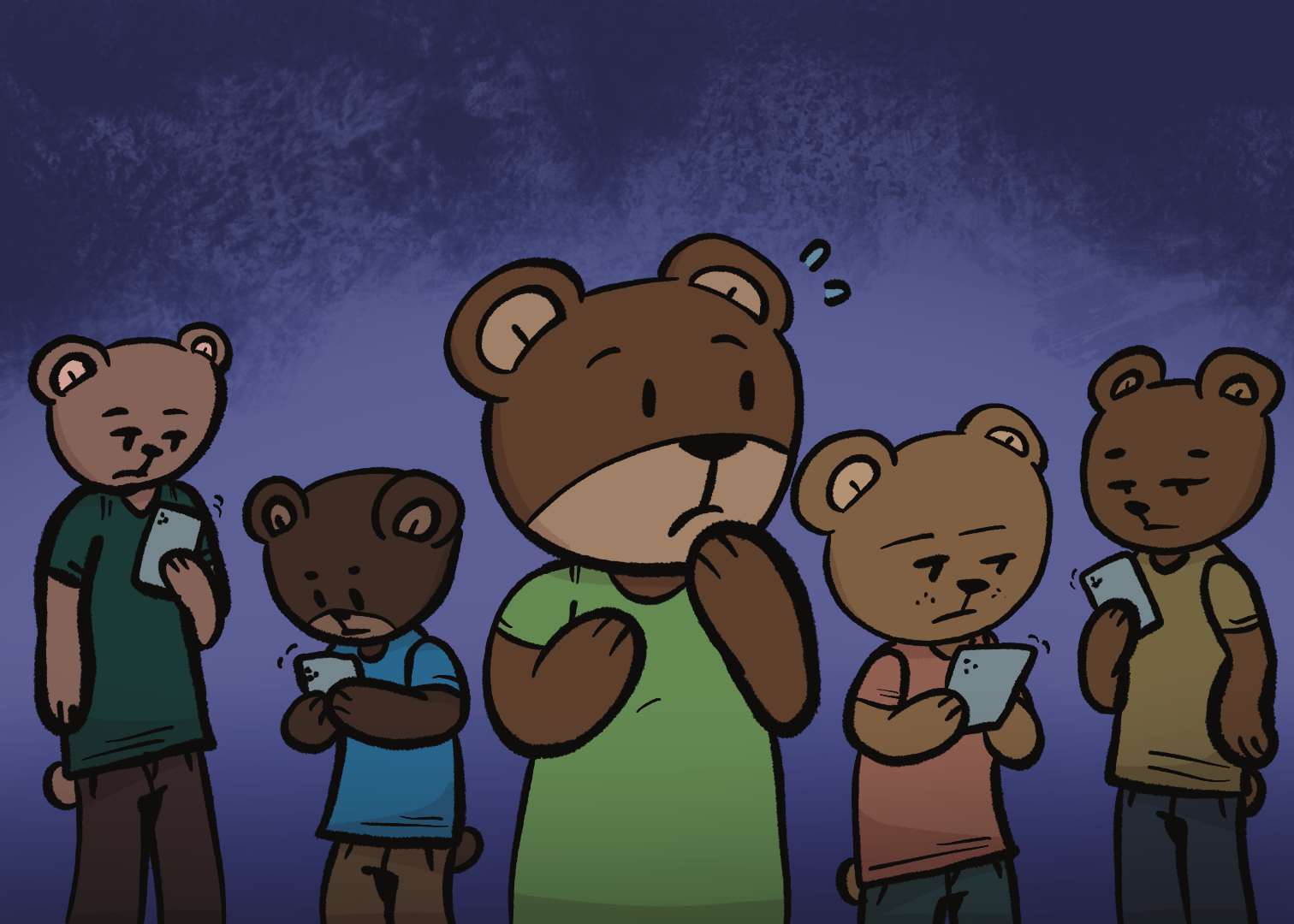
In a choose-your-own-adventure-esque series of events, the go-to reaction for college students right now is to rely on their phones as a digital crutch. Some of it may be the desire to catch up on what’s going on in their personal lives and the world. Other times, it comes down to avoiding conversations and connections with other people in the room.
No matter the reason, you are choosing to flip to a page that ends the adventure on purpose to prevent more reading.
Everyone on The Editorial Board has been in a position where dissociating and simply taking that time to shrivel away behind our phones is convenient and easy. Yet, we also recognize that by relying on this convenient hideout, we are missing out on valuable time that could be spent networking with professors or connecting with classmates.
While education is the primary focus of college, the experience is also about making friends and developing socially. In a New York Times article following the issuance of phone bans across primary education, students and teachers said students display this behavior to relieve boredom and satisfy an addictive craving for social connection and information from habitual places.
But isn’t that what the people around campus are for?
The contradictory nature of relying on technology to reaffirm the social connection when there are over 20,000 students on campus is problematic. In these 15-minute windows between classes, students would be far better off trying to connect with someone around them. While Baylor is fighting an “epidemic of loneliness” to spur conversation, these empty windows after class seem like the first issue to address. Because who knows, maybe someone you meet in one of these classes will become a longtime friend — or at least another professional connection.
Technology is prohibiting the human connection that college is built on, and unfortunately, change doesn’t start until professors and other students engage in conversations outside the class block. Some professors are already doing this by having lunch with students or simply opening the door to discussion about a passion in common with a student right after class ends.
Ask about your professor’s weekend plans. Talk to the woman in line behind you at H-E-B. Keep your heart open to connecting face-to-face with your peers without the hindrance of your phone.
Sure, the protective shield of AirPods and a phone works when trying to hide out, but if you want to get the most out of the college experience, it’s time to turn off the technology and choose a different path for your next adventure.