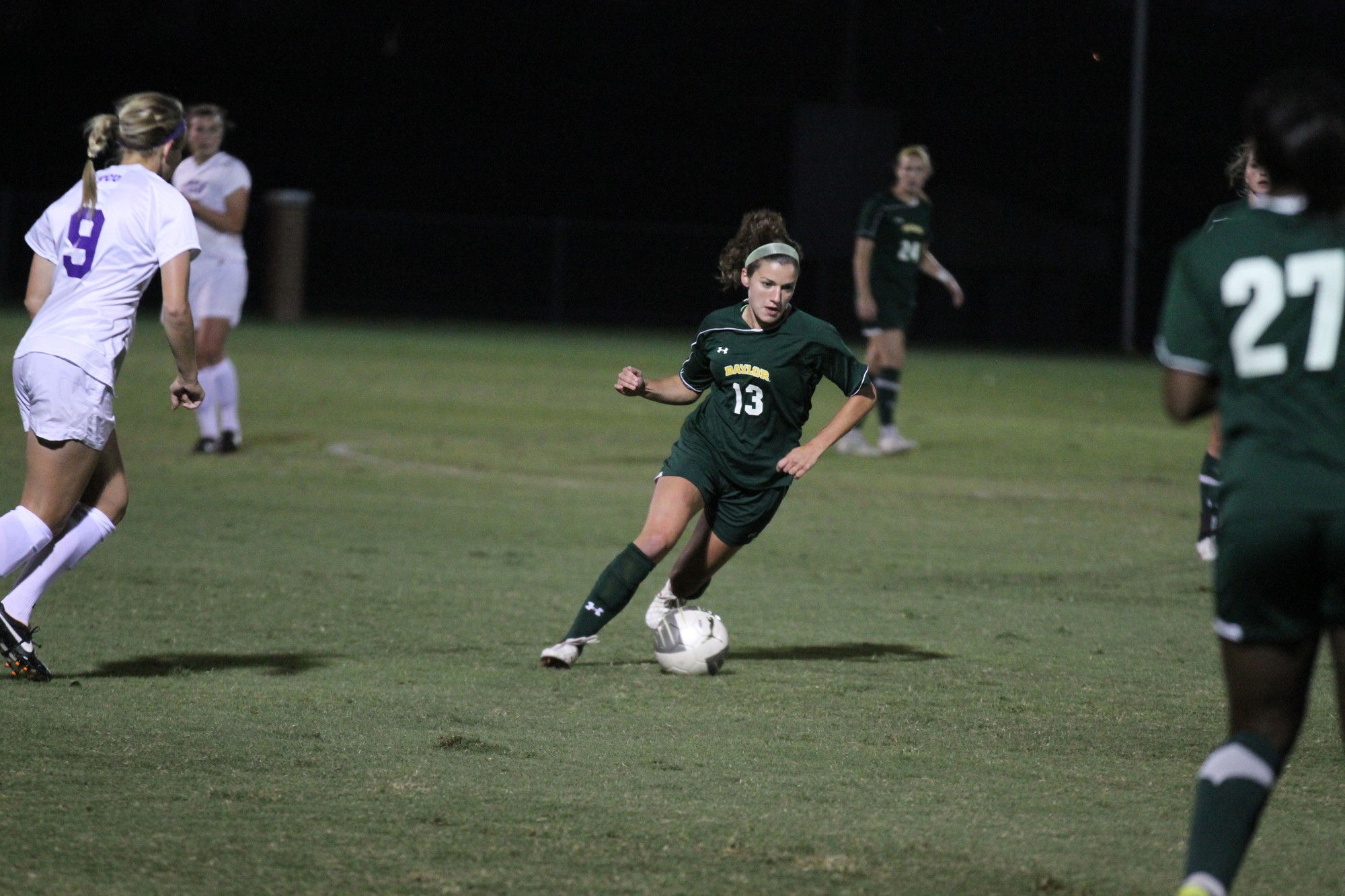
By Carson Vercoe | Sports Writer
When former Baylor soccer star Hanna Gilmore arrived in Waco in 2009, she saw a program that was in the depths of a lengthy rebuild.
The Bears entered that year not having a winning season since 2000 and had not reached the NCAA Tournament since 1999.
The tides immediately changed once Gilmore’s freshman class came in. Baylor had four winning records in her four-year stint, reaching the NCAA Tournament for the first time this century in 2011.
The team’s success culminated in Gilmore’s senior season. The Bears sweated out a Round of 32 win over No. 14 Georgetown for a date with No. 13 North Carolina for the program’s first Sweet 16 trip.
The historic season ended there in Chapel Hill, but the memory of her team has remained with Gilmore 14 years later.
“Those were awesome moments just from a success standpoint in the soccer world,” Gilmore said. “To be able to accomplish that, starting from where we were freshman year to our senior year was great.”
Gilmore knew Baylor wasn’t a powerhouse when she arrived, but she saw an opportunity to build something special and that was something she couldn’t pass up.
“The thing that initially brought me to Baylor was, one, Marci and Paul [Jobson] were great coaches, and they really invested in their players,” Gilmore said. “And two, it was a developing program, and I knew that I would get to have a hand in potentially being a piece that got a program to success.”
Players like Gilmore were key to the vision the Jobsons were trying to build at Baylor. They knew they had to add players who believed there could be success in Waco.
“We had a group of kids who committed during a time where we were rebuilding a program,” Paul Jobson said. “They believed in a vision that we set forward. Nothing was proven. We just said, ‘Hey, we think this is something that we can do.’”
Gilmore bought into the program and did everything she could to make it work.
“Her and her teammates, their fingerprints are all over the success of Baylor soccer,” Jobson said.
The Bears didn’t possess a handful of stars due to the program rebuilding, but they relied on taking pride in the team and each other on the pitch.
“We were more of a blue-collar team,” Gilmore said. “We had no superstars. We all worked together and worked hard.”
Jobson agreed with Hanna’s description of the team, adding that Baylor was the only option for lots of the players from those years.
“These were players that got bypassed by basically all the other programs in the Big 12 or, at the time, the Power Five conferences,” Jobson said. “Nobody thought they were good enough to play at this level. And we believed in them, and they believed in themselves.”
This mentality was instilled in every player, including Gilmore. That chip on their shoulders helped bring the team together. The Bears had become a team with Big 12 championship potential by Gilmore’s senior season in 2012.
The success showed years of hard work that Gilmore and her teammates spent putting into the program. She had seen everything from sitting toward the bottom of the conference to rising on the national stage. The tournament run in 2012 was not just built in one season; it was built in the previous four.
For Gilmore, the influence of her coaches and team went far beyond what the game of soccer could give her. The culture the team created was an environment where Gilmore could thrive spiritually. Through the culture, the way the team went into games was an expression of their faith.
“If you’re using God’s talent and abilities, it’s an act of worship at that point,” Jobson said. “You’re not really playing for your coach. Yes, you’re playing for your teammates, but ultimately, you’re playing for your creator.”
The players internalized that idea of incorporating faith into their competition.
“Marci and Paul instilled this idea of putting God into the way that you played and who you were,” Gilmore said. “How you play soccer was how you can be off the field, too.”
Baylor gave Marci and Paul a platform where their faith could create a culture around the team and its identity.
“One of the things that attracted Marci and I to Baylor was that we were going to be able to really be outward in our faith in building a culture that could embrace Christ and help develop young people through that,” Paul said.
This approach showed Gilmore that competing at a high level and caring for the well-being of those around her could coexist.
“You can be really tough and try really hard and love people and try to win and be your best and be excellent,” Gilmore said.
Gilmore added that with this mindset, she learned to love her teammates while playing right beside them. This became a key aspect of her personal growth while in Waco.
One lesson from former head coach Marci Jobson also stuck with Gilmore beyond her days of playing soccer.
“Learn the battle now, or else you’re going to have to learn it later,” Gilmore said.
Gilmore continues to use the advice about mental toughness she developed from her playing days now as a mother of four. The importance of staying strong and trusting the process has been important, although the challenges may not be the same
Although soccer is no longer in her life, Gilmore still views Baylor soccer as a special program. The program may look different now compared to 2009, but Gilmore still believes representing Baylor soccer is important.
“Baylor soccer is always special,” Gilmore said. “It’s a privilege, and it’s a responsibility.”
During her time in Waco, Baylor soccer gave Gilmore lots of memories of goals, wins and friendships, but what her coaches gave her was something more. As a freshman, Gilmore walked in looking to build a program from the ground up, and when she left she did just that through faith, hard work and perseverance.