By The Editorial Board
It seems as though each year the importance of election season grows, with 2026 being no exception. With the ever-growing political tension and scrutiny between parties, the responsibility to build bridges falls on us — those with the power to vote.
If you’re struggling with where to begin, here are five questions to help get you on the right path.
1. How will I navigate my own biases?
Regardless of whether we like it or feel they are warranted, we all hold biases that determine the way we think.
Perhaps we take after Thomas Aquinas, the philosopher and priest perhaps best known for refining the Scholastic Method of thought. This method guides the thinker through a process of placing contradiction and opposition against a held belief until the truth is revealed.
When we consider who and what we believe in, holding a perspective of scrutiny and skepticism is vital to reaching a legitimate understanding. Rather than placing what politicians and commentators say as the utmost truth or a complete heresy, running an in-depth fact check and challenging our thoughts is crucial.
2. Is it safe to vote with my religion in mind?
For the Waco community, many of us find ourselves wanting to be Christlike. Under the Constitution, we are set in a nation that protects the religious liberties of all. So the waters become muddied when it comes time to find a candidate that checks all our boxes.
Using religion as a way to appeal to the public is a tactic that isn’t uncommon for politicians to use. Claiming to be of strong faith may be a way to position themselves as a god-fearing, dedicated follower of Christ in an attempt to seem more relatable and trustworthy.
“The fact that something is political does not mean that it is not religious and it may be better described as the political manipulation or use of religion,” reads a piece by Religious Freedom Institute. “Much of this manipulation is done by people who are not especially religious, hence one of the main antidotes to the politicization of religion can be strong, committed religion.”
Our political candidates should be the ones whose honesty we should question the most. When we don’t, we run the risk of falling for a campaign that claims to be running off the guidance of Christ, when really it’s just a vehicle to attract a following.
3. What determines if a politician is “Christian enough” for me?
Currently, the two main candidates for the U.S. Senate boast their Christian faith loud and proud. Both Ken Paxton and James Talarico, however, have faced scrutiny for their beliefs and actions not representing the religion well.
Paxton, the Republican nominee, has faced criticism for alleged adultery, an act renounced in the 10 commandments. Additionally, his approach toward immigrants seeking refuge in Texas has been debated, as many claim his approach is unwelcoming to foreigners.
Talarico, the Democratic nominee, has stirred the pot with his pro-choice stance on abortion. Additionally, some have disagreed with his pro-LGBTQ+ positioning, specifically regarding the transgender community.
Recognizing that politicians may be using religion as a vehicle to appeal to the masses is an important step. It may be that you find neither nominee fits your ideal representation of a Christian leader, the standard of which seems to differ vastly voter to voter.
4. How will I interpret media coverage?
Whether we like to admit it or not, many news sources align with one side of the political spectrum. Biased news is not hard to come by, making it ever so important we know how to decipher what is reliable or not.
Organizations like the Associated Press, The Hill and the BBC are widely recognized as nonpartisan and objective. However, perhaps the best approach is to read articles from multiple outlets and never forgetting to read anything without a grain of salt.
5. What all am I voting for?
Many of us have a set of few issues that we feel particularly passionate about. Whether it be a specific social issue or economic policy, we may feel drawn toward a certain candidate because they align closely with a set of beliefs of our own. However, focusing on the promises regarding a single issue might come at the detriment of the rest of our communities who are affected by all the stances of our politicians, not just one.
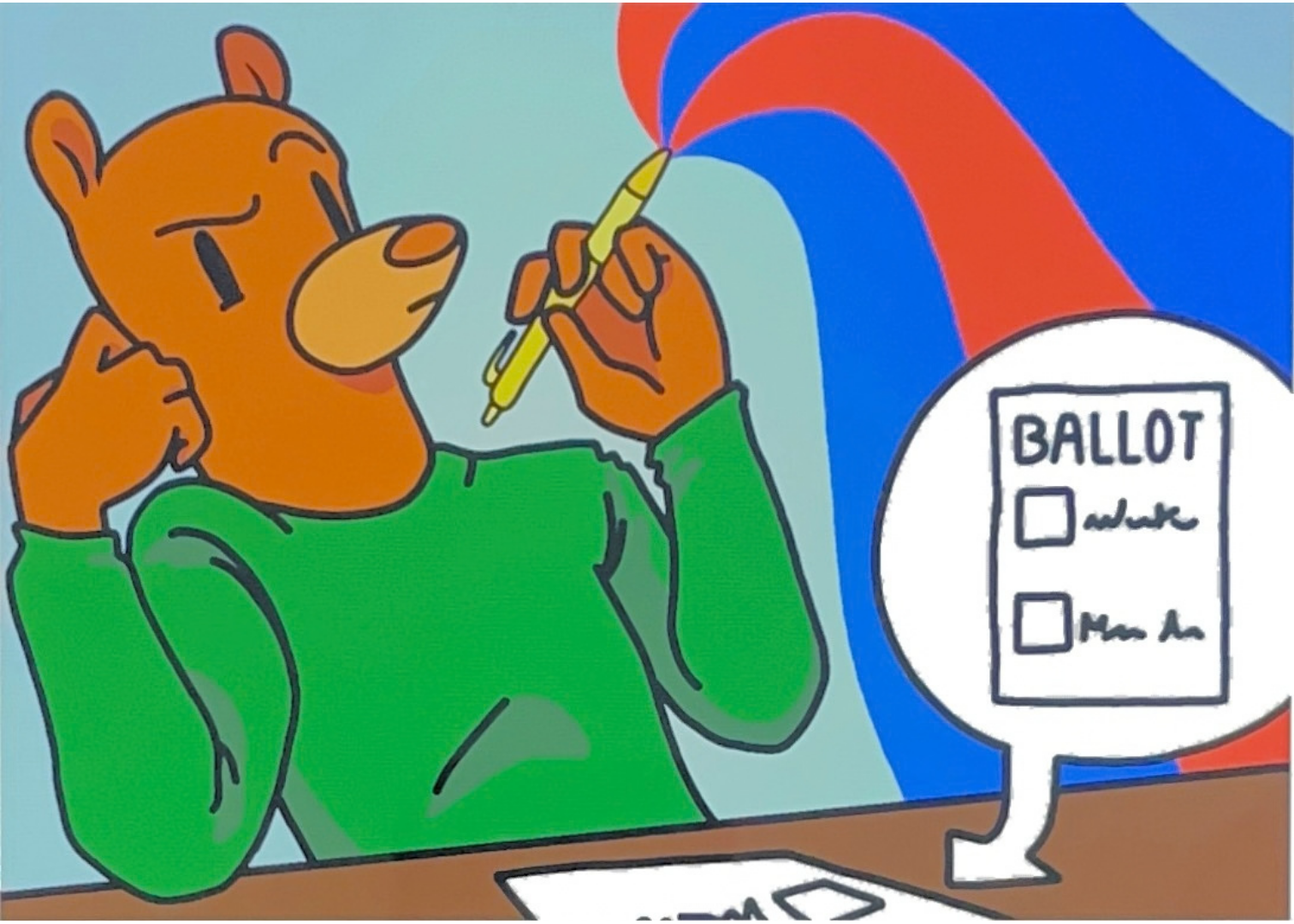
An easy way to vote is to see the party name in parentheses by a candidate and use that as your sole reason to mark the box. An educated voter looks past the party line to what the candidate stands for.
Fully researching a candidate and all they stand for is the only way to be fully informed. Start with what you’re passionate about, then work your way through their campaign promises until you understand them as a candidate.