By Josh Siatkowski | Staff Writer
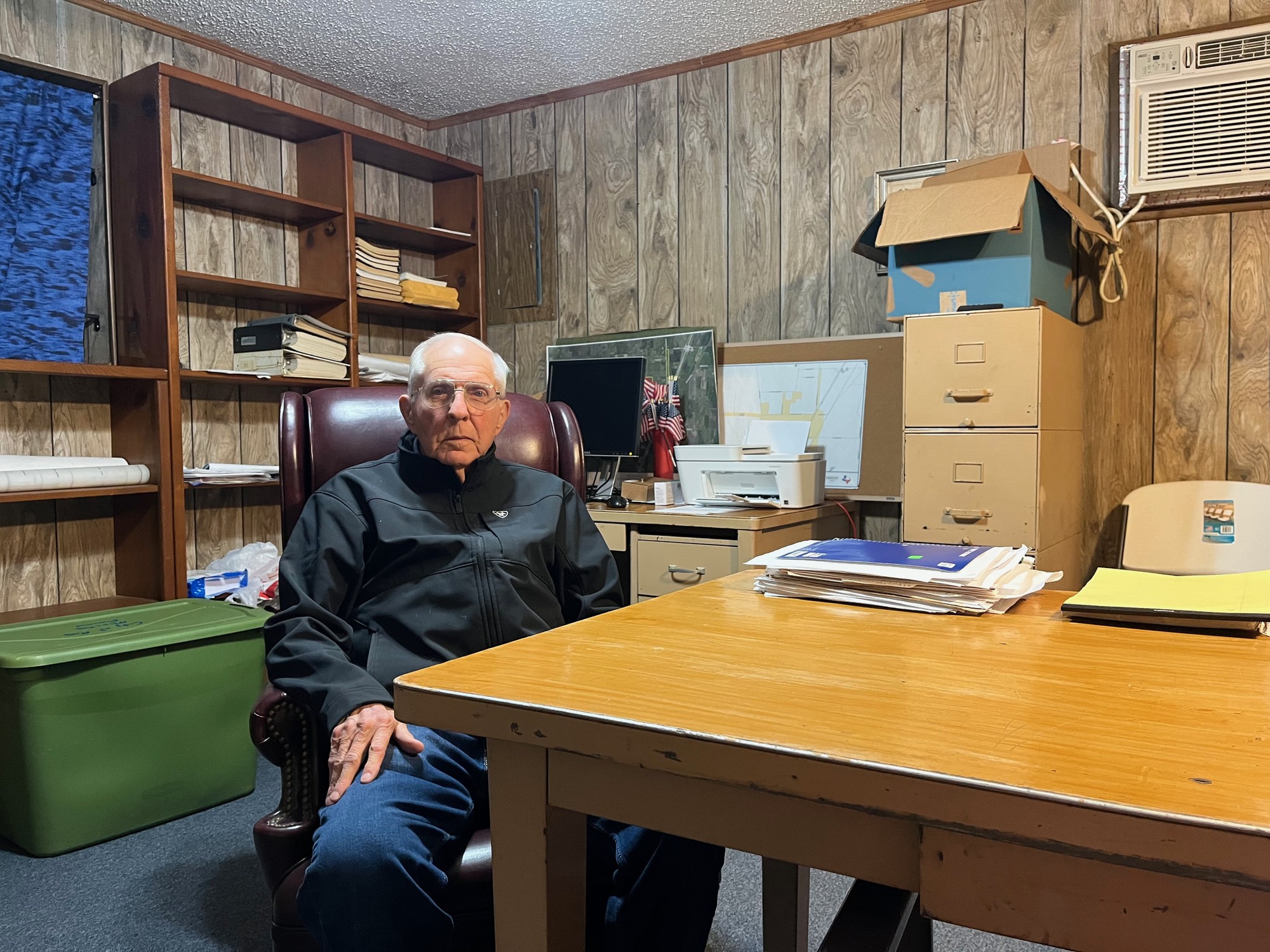
Jim Jaska has been the mayor of Ross, Texas, for 40 years. But in four decades at the helm of the 250-person community just north of Waco, he’s never seen a situation like this: plans for a $10 billion data center are underway right in the little town’s backyard, threatening its rural identity — and he wasn’t told anything about it.
Lacy Lakeview, a suburb about 5 miles north of Waco, has been in contact with data center developer Infrakey since April 2025, according to records. The discussions have centered on preparing a 526-acre plot of farmland for an industrial overhaul, featuring a complex of data centers and its own 1.2 gigawatt natural gas power plant.
The land is currently within the city of Waco’s extraterritorial jurisdiction, meaning it must be annexed by Lacy Lakeview. Upon annexation, Lacy Lakeview plans to supply the millions of gallons of water required by the complex each day — and receive the substantial tax proceeds promised by the project.
But Lacy Lakeview is over 7 miles from the proposed site, whereas Ross is only a few steps away. Despite this, Jaska and the Ross community only heard about the plans last Winter, when a reporter from the Waco Bridge contacted people in the town for an article.
“[It] really upset me because most of it is really good farmland,” Jaska said. “Now all of a sudden, these people down North Katy [Road], they’re going to get up every day to this monstrosity across the road.”
Jaska, a former teacher and coach, grew up working on the privately owned land. But today, the farming connection is weakened, he said.
“It got so many generations down the line that [the sellers] had no tie to the land,” Jaska said.
At a city council meeting on Tuesday night, council members and residents discussed the project and ways to prevent it, as they have since they learned about it late last year. Despite being at the center of the issue, Ross has found itself with little control over it.
“We checked with a second attorney, and he looked over the information that [the city attorney] gave us, and he said, ‘I don’t see anything else at this time that you can do,’” Jaska said.
But that doesn’t mean residents aren’t trying. Sara Mynarcik-Lenart, who owns 85 acres of land in Ross that shares a border with the proposed data center site, is a leader of the data center’s opposition party. She’s been at weekly meetings since December, spreading awareness about the project and its dangers, which range from water usage to noise pollution to Ross’ potential destruction.
Attendance at these meetings has often exceeded Ross’s population, with the most recent one drawing over 350 people, both in-person and online. Mynarcik-Lenart said Texas landowner rights are vast and give Infrakey power; she’s helped bring the Ross’ lack of control to a global stage.
“The opposition to it is no longer confined to the city, county and state,” Mynarcik-Lenart said at the County Commissioner’s office on Tuesday morning. “It has received national and international media exposure. This past weekend, Sharon Goldman, Fortune Magazine reporter, interviewed landowners who will be directly affected by the proposed data center project. She also met with local elected officials to understand their role in the project.”
The working title of Goldman’s piece, Mynarcik-Lenart said, is “Ross, Texas: When a neighboring city controls the data center vote.”
Mynarcik-Lenart also said that British YouTuber Josh Otten, who runs the account Ordinary Things and has over a million subscribers, visited Ross recently in preparation for a video.
In addition to public awareness and outrage, the only legal avenue of opposition has been to petition McLennan County to prohibit any future tax abatements for the developers. But just like Lacy Lakeview, McLennan County is also incentivized by future tax revenues promised by the data center, so they might not be on the small town’s side.
Direct communication with Infrakey, whose chief executive is data center professional Braham Singh, has been equally challenging. Mynarcik-Lenart said Singh came to a December meeting in Ross, but she has not heard from him since. She also said there were, at one point, websites on which residents could submit queries, but those have since been taken down.
“The phone numbers on their websites are not answered,” Mynarcik-Lenart said. “There’s no way of contacting these people.”
Even though Mynarcik-Lenart called Lacy Lakeview and Infrakey’s discussions “very secretive,” she and Jaska have refrained from villainizing Lacy Lakeview and Mayor Charles Wilson, whom Jaska, in small-town fashion, coached in high school. Jaska and Mynarcik-Lenart acknowledged the need for the tax revenue, and Mynarcik-Lenart, whose career was in education technology, said she understands the inevitability of advancement.
“Am I against AI?” Mynarcik-Lenart said. “Am I against data centers? No, because I know how important this is. It’s the location that concerns me the most. The steamrolling. The lack of transparency. The fact that they’re trying to put something in where the existing infrastructure doesn’t exist. And I know once that infrastructure is here, then all of this will blow up and be an industrial park.”