





By Rhea Choudhary | Staff Writer
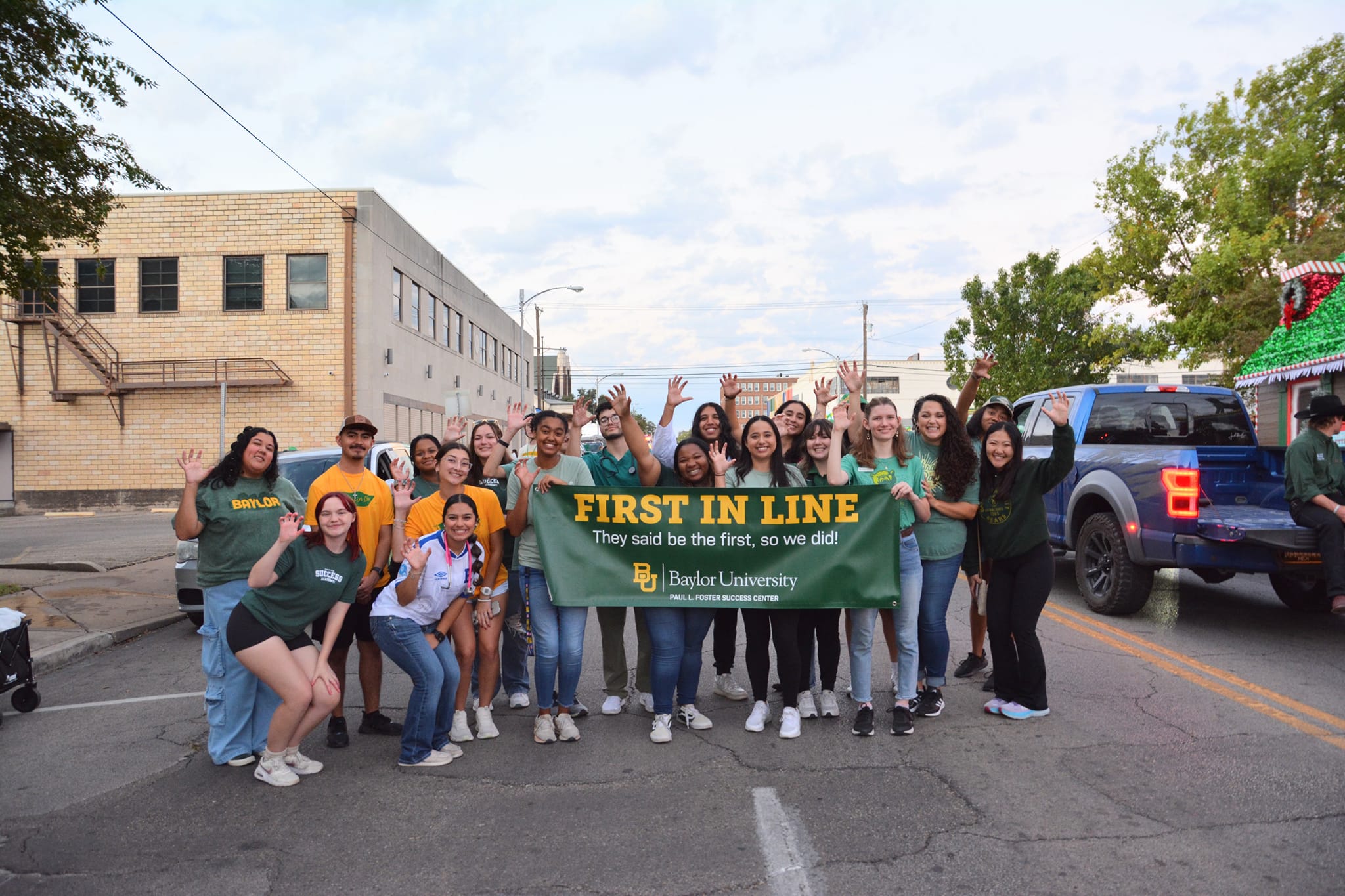
For students who are the first generation in their families to graduate from college, several initiatives aid them in their journey from the first day on campus to walking the stage.
Initiatives like the First in Line Success Academy (FILSA), the First in Line Leadership Scholarship, the First Abroad Fellows program or the Bear Textbook Scholarship, Baylor provides resources to support first-generation students with organized support. These programs consist of financial assistance, a mentor who contacts the student at the beginning of their college career and a fully funded global experience, all of which students have described as beneficial in helping them become more knowledgeable with their career goals.
Kiera Griffin, senior Science Research Fellow from Conroe, described those opportunities as what developed her understanding of what she hoped to achieve when starting at Baylor. Now preparing to pursue a PhD in genetics and genomics at Baylor College of Medicine, Griffin said she entered college unsure of how to go about accomplishing her goals.
“I always really wanted to be a scientist, but I didn’t really know what that meant,” Griffin said. “Being a Baylor student and getting connected here has really shown me just how much is possible, no matter where you’re starting from, especially when you have good mentors in your life.”
That accessibility for Griffin extended past learning exciting things in the science building classrooms. Last May, Griffin participated in a fully-funded First Abroad Fellows mission trip to the Dominican Republic, where she and other first-generation students built a house in three days, which was an experience made possible through her First in Line Leadership Scholarship.
“We talk about wanting to do good things, but getting to actually go out and do that was really meaningful,” Griffin said. “It was also really special to do that alongside other first-generation students.”
Programs like FILSA began to connect students early with resources from a specialized adviser to mentorship from upperclassmen, helping smooth the transition into college life, something Griffin said she needed when she first arrived on campus.
“I was terrified coming to Baylor because I was the only person I knew from my hometown,” Griffin said. “But Baylor does a really great job making sure anyone who wants community can find it. All you really have to do is look left and right.”
For Liberty Ferguson, a Frisco senior in elementary education with a minor in religion, those tools provided her with structure and confidence. After graduation, she plans to teach second grade here in Waco.
“The First in Line program helps set up students with every resource under the sun,” Ferguson said. “Whether that be peer mentorship programs, academic checkups or scholarships, first-generation students are set up to beat the glass ceiling put before them.”
Ferguson explained that programs like FILSA and the broader First in Line community were especially significant in helping her understand the more challenging aspects of college, from registration to long-term career planning.
“As a first-generation student, you don’t always know the answers or even the questions to ask,” Ferguson said. “The First in Line community opens up so many doors, conversations and opportunities to succeed.”
While first-generation students make up an estimated 16% of Baylor’s student body, Ferguson said significantly fewer take advantage of the available scholarships and programming, making student engagement a key success factor.
“What you get out of Baylor is what you put in, and pouring into that community was one of the greatest joys of my collegiate career,” Ferguson said.
Mentorship is still one of the most impactful aspects of Baylor’s selling point and approach. Ferguson said her mentor helped guide her through times where she felt uncertain and remained a resource long after her first year.
“I remember being so overwhelmed and feeling like I didn’t even know the questions to ask,” Ferguson said. “However, no matter who I went to, they didn’t view me as less than because of that.”
In Ferguson’s experience, being a first-generation student has meant more to her than academic and personal success.
“Being a first-generation college student means that you are working towards something so much greater than yourself,” Ferguson said. “I worked so hard growing up to be able to do something no one in my family has had the opportunity to do. So being here at Baylor isn’t just for me and my own goals. It’s for my family and future family.”
She explained how her college experience here has been transformative to her personal and spiritual growth.
“I have been able to have an incredible experience at one of the greatest schools in the nation, pursue a degree that I love and that I am passionate about, meet the best people on Earth, be stretched in every way possible and fall deeper in love with Christ,” Ferguson said.
Ferguson also accounted for the financial support being an important part of her journey, giving her the chance to attend Baylor without the burden that many first-generation students face.
“I have been able to go to Baylor on a full ride, and that is simply because the Lord is good, kind and sovereign,” Ferguson said. “He put me right where I needed to be and right where he wanted me. I believed he would provide, and he did.”
When looking back, Ferguson described her college experience as one she will carry with her long after graduating in a couple of weeks.
“Baylor has been one of the greatest joys of my life,” she said. “I am so thankful to be a Baylor Bear.”


