By Ashlyn Beck | News Editor
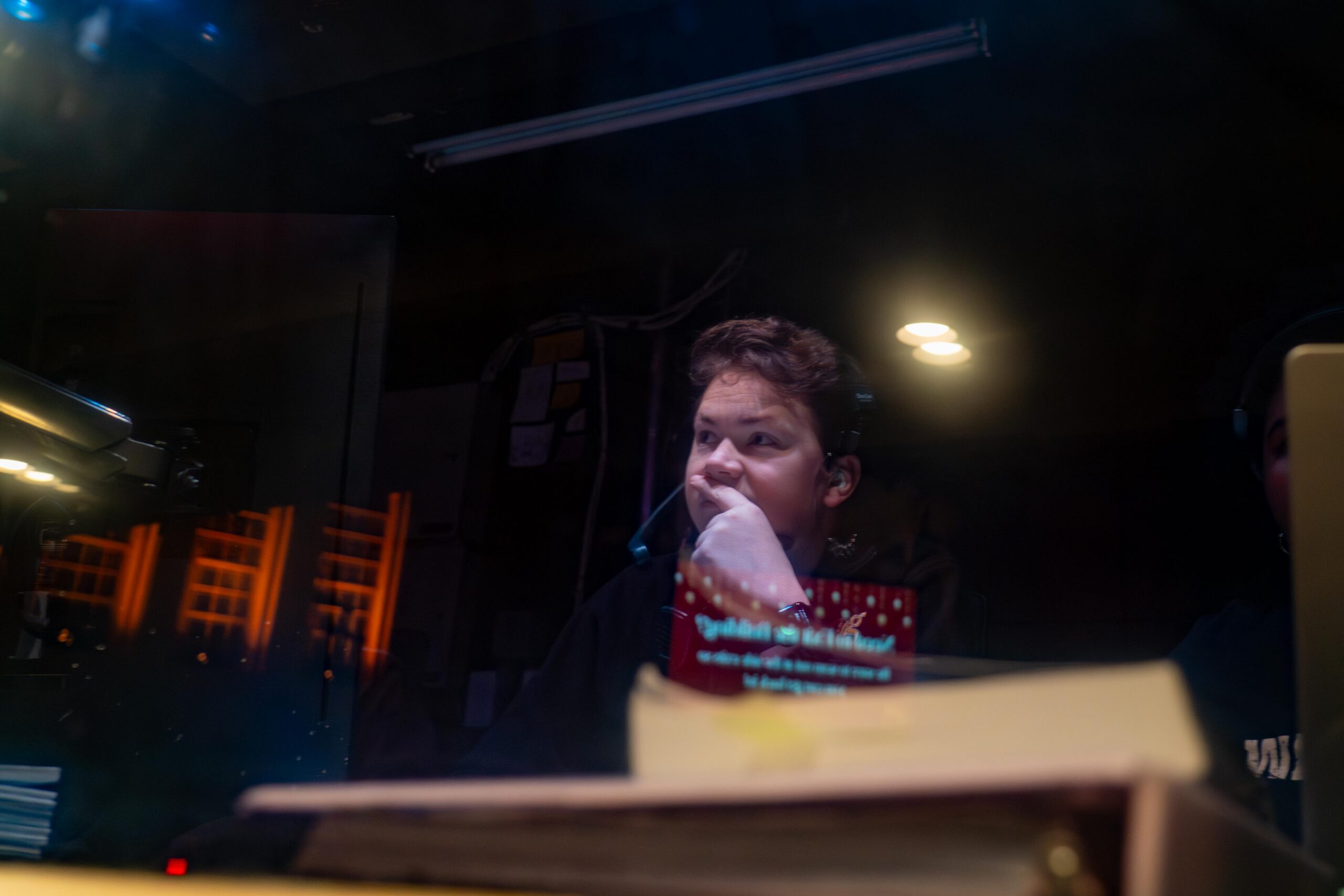
As All-University Sing participants deliver performances with their usual flair, Waco Hall student staff members wait in the wings with one objective — throw focus to the performers.
Sorority, fraternity and Sing Alliance members put in the work for months to prepare for the anticipated event, but guidelines only allow them to practice 12 hours a week. While they pore over choreography, vocals, costumes and backdrops, Waco Hall staff do work of a different kind: running tech rehearsals, manning the ticket office, organizing props and more.
Spring senior Jillian Herman is the Sing stage manager, and for the past three weeks, her evenings have consisted of hours-long lighting rehearsals, tech rehearsals and dress rehearsals. Herman said her work for Sing started before any performers even set foot on the stage.
“We get started before rehearsals even start,” Herman said.
Herman’s work for Waco Hall caps at 20 hours a week, but that doesn’t include the work she does outside the building. Herman has spent the last few weeks perfecting lighting cues, audio cues and props during rehearsals.
“Before rehearsals even start, we get a binder full of all of their sheet music and then rehearsals start, and we do lighting techs,” Herman said.
On her own time, she has extensively studied the sheet music for the nine acts she manages and practiced giving cues. Though she only attends rehearsals in Waco Hall 20 hours a week, Herman said all of her work and practicing add up to 25 to 30 hours a week.
While acts perform on stage, Brazoria senior Isabella Davis sits in the rafters — literally. Davis is a stage crew member, and her job has been jovially nicknamed “rail dog.” Her responsibilities include manually lowering and raising any hanging props used in acts. Most of the time, flying and hanging props only come in and out at the beginning or the end of an act. For the rest of each act, Davis has spent time learning its choreography. Once Davis sufficiently mastered the choreography of each of her nine Sing acts, she was dubbed not just a rail student manager, but a “rail dog.”
“We spend, like, I don’t know, 10 to 20 hours a week with these people, and when we are looking at their acts, it’s for an hour at a time,” Davis said. “During that, you get bored … so you just learn the dances with the groups.”
In general, the stage crew arrives at Waco Hall 30 minutes before rehearsal starts and stays for about 30 minutes after. Once Sing opens, though, all bets are off. Herman said it’s normal for the Waco Hall staff and stage crew to stay for about 45 minutes after the show ends to clean and prepare for the following day. On closing night, though, the staff stays hours past the finale. Last year, Herman finally left Waco Hall at 2:30 a.m. on closing night.
While the stagehands and managers work behind the scenes, Plano junior Oliver Dillard mans the Waco Hall ticket booth, a job that might go unnoticed by attendees but has a big impact. For weeks now, Dillard has received phone calls and emails from people hoping to secure a Sing ticket.
“Most of them are about how they didn’t get a Sing ticket,” Dillard said. “So they’re just curious how to get one. And so we always say … show up an hour before. We usually have an extra allotment, and you can buy them in person.”
Once Sing actually starts, Dillard said the time in the ticket booth is usually spent answering questions and helping people navigate their Apple Wallets.
Despite the work that goes into each position, Herman, Davis and Dillard all pointed to others as the essential pieces in Sing’s success. Herman noted the efforts of the performers themselves, Davis the dedication of professional Waco Hall staff and Dillard the importance of stagehands. All three conveyed Sing as a tradition not marked by performances or ticket sales, but by the cooperation of all parts in one machine.
Despite the grueling hours and manual labor, the novelty and excitement of Sing haven’t worn off for those who work behind the scenes. According to Herman, being a stage manager has given her an inside look and new appreciation for the commitment each performer puts into their act.
“They are not dancers, they are not performers, but they do so good,” Herman said. “They put their all into it every single time that I watch them, and it’s amazing to me that people that are also full-time students or maybe have a part-time job, just like me, like they have the time to go and rehearse and put on a show that is that much fun.”