By Rhea Choudhary | Staff Writer
In 1953, eight of Baylor’s male social clubs hosted a small-scale singing competition in Waco Hall to 13 viewers and titled the performance All-University Sing. Even now Baylor celebrates the same event as elaborate, Broadway-style productions.
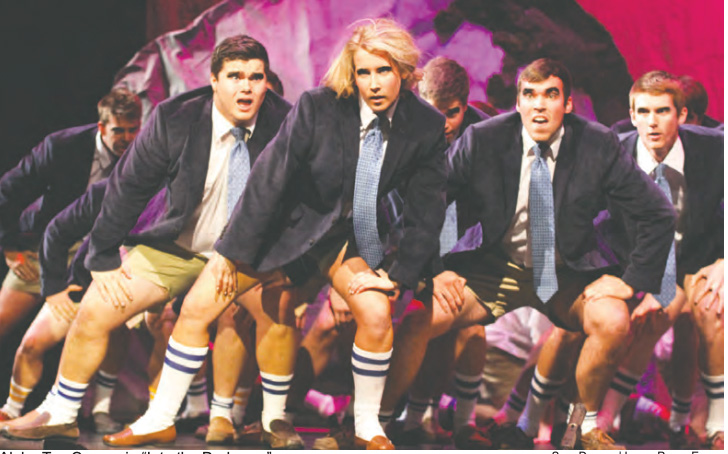
Modern Sing acts display custom-built sets, exquisite costumes, lighting design, live vocals and synchronized choreography, all conceptualized and produced by students.
Throughout the 1960s and 1970s, Sing became a staple part of Baylor’s campus culture. Performances became more thematic, and production values increased as organizations began competing not just vocally but visually as well.
By the 1980s and 1990s, Sing’s transformation became a fully staged theatrical event to look forward to. Student groups began to prepare months in advance for their acts, often starting rehearsals early during the fall semester for February performances.
According to the University Archives, the materials preserved include early programs and scripts, photographs documenting set progress, scrapbooks created by Sing participants, costume sketches, design plans, organizational records detailing rule changes and the criteria used to judge each performance.
Baylor University Archivist Dr. Elizabeth Rivera emphasized the importance of returning to the archives to understand how traditions such as Sing evolve and change over time.
“When you really want to know the story, you always need to come back to the archive because you need to understand the past and where you have been to see where they currently are and where they need to grow or go in the future,” Rivera said.
Rivera’s emphasis on understanding the university archives reflects, in a broader context, Baylor’s philosophy that traditions do not remain static. Instead, they are moved forward by each class, decade by decade, year by year.
Describing Baylor’s traditions as layered, Rivera correlated the university’s annual events with “dovetailed furniture,” in which generations of students are connected through shared experiences and material culture. The university’s stored scrapbooks and photographs illustrate how much students invest in their Baylor pride, whether it is through the pasted pennants on their dorm walls or their Sing costumes shining bright on the Waco Hall stage each spring.
Sing largely correlates to this framework. It is reflective of a few of Baylor’s core values, including student collaboration, artistic excellence, community identity and multi-generational continuity.
With traditions such as Diadeloso or Christmas on Fifth Street, Sing focuses on the student experience, giving students the opportunity to excel outside the classroom and be part of something lasting.
For many freshmen who are about to experience Sing, the tradition is something they have heard many exciting things about before even enrolling, including Southlake freshman Grace Kuruvilla.
“Even while touring Baylor, Sing was a very big part that was talked about on the tour,” Kuruvilla said. “I’m excited to see what all the sororities come together to put on in the show, and I’ve always loved watching productions.”
Kuruvilla’s anticipation for the upcoming weekend full of Sing shows how exciting the event is not just as a performance for an audience to view, but as a visible motif of Baylor’s culture, being one that prospective students hear about on tours, current students spend months of work into and alumni end up remembering long after graduation.
Rivera also described that what institutions choose to continue is representative of what they value.
“Sometimes what you do regularly shapes and forms who you are and who you’re becoming more than anything else,” Rivera said. “It is not just the big events in life that matter.”
Sing’s annual return each February makes its significance that much stronger. It is not revived just for milestone anniversaries; rather, it is sustained and produced year after year.
Throughout the years, Sing has shifted from a social club vocal competition in 1953 to a high-level production design with professional lighting and sound, multi-month rehearsals, and performances at Waco Hall.
While every act feels brand new every year, Sing stands on decades of choreography notes, costume sketches, rehearsal photos and late-night practices that came before it.
Sing is not simply a show. It is a living archive, time capsule and collection, rebuilt every February by the next class of Baylor Bears.