By Juliana Vasquez | Staff Writer
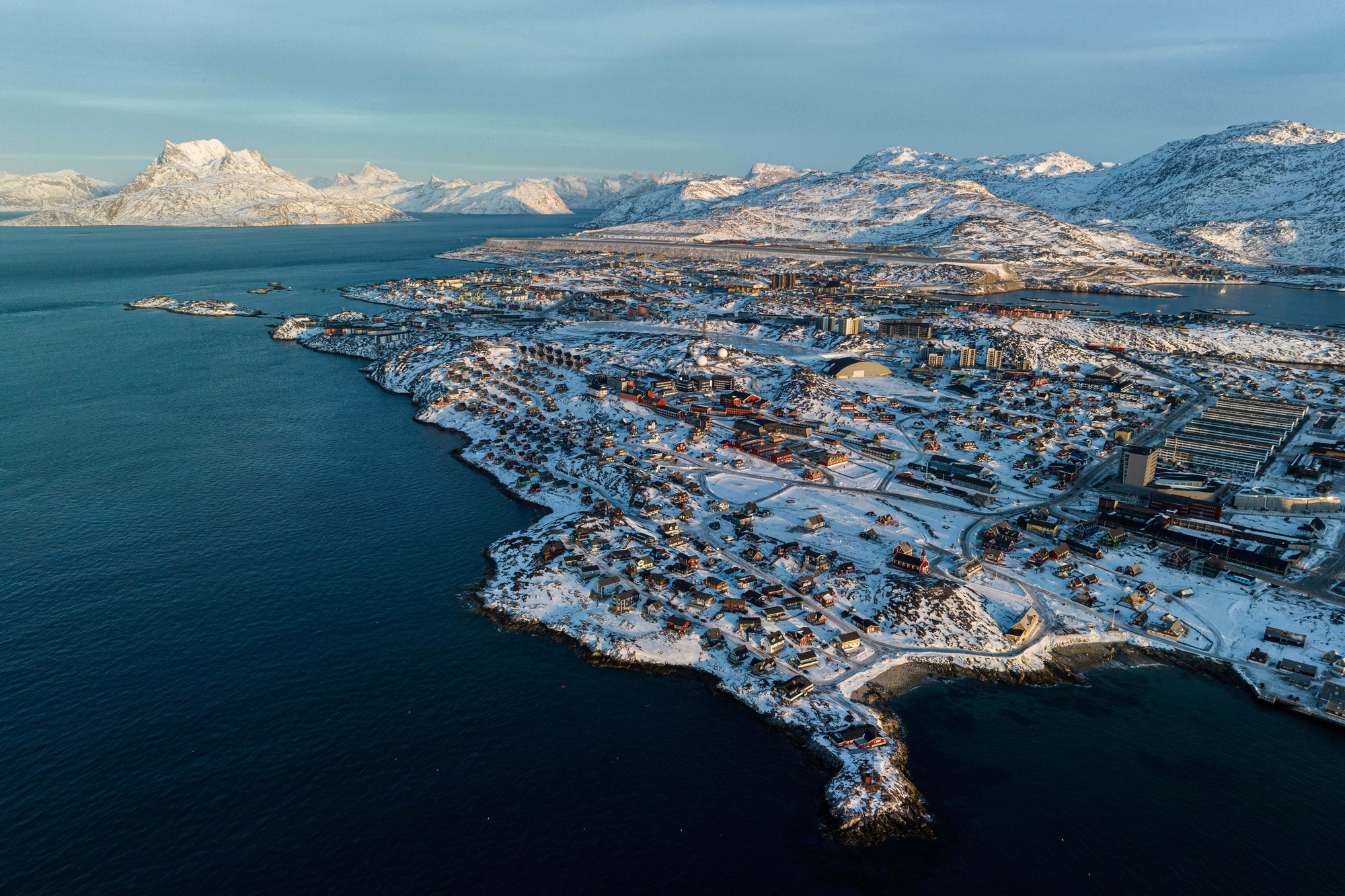
The U.S. is hoping to allocate funds toward a new strategic purchase: the Danish territory of Greenland.
President Donald Trump stated that Greenland is “imperative for national and world security” in an AlJazeera article, warning several European nations, including the U.K., Denmark, France, Germany and the Netherlands, that the U.S. will impose a 10% tariff on the nations unless they support his plans to secure the territory.
Dr. Joshua Alley, assistant professor of political science, said part of the Trump administration’s interest in Greenland has to do with America’s national security strategy.
“The Trump administration [is] particularly interested in what the new national security strategy calls hemispheric defense … the idea that U.S. security in the Western Hemisphere is the most important thing,” Alley said.
Acquiring Greenland would be beneficial to the U.S. due to its rare Earth elements and natural resources, with these materials having the power to decrease America’s reliance on Chinese exports of resources.
Additionally, as global warming continues to melt the Arctic ice caps, the Northwest Passage is predicted to become a more active trade route. Connecting East Asia and Western Europe, the route will serve as an Arctic version of the Panama Canal. This will incite further competition between the U.S. and China, Alley said.
“Greenland is strategically important in that you have key radar facilities, and there’s increasing access to sea routes through the Arctic with global warming, so you can get ships over the poles, and that’s a lot faster than going around,” Alley said.
Alley said the territory is also strategically beneficial due to the proximity of Greenland to Russia and China.
“If Russia or China were to launch nuclear missiles at the United States, they go over the North Pole, and that’s the most direct route,” Alley said.
The U.S. utilized Greenland’s location during the Cold War, with Pituffik Space Base, originally Thule Air Base, established in 1951 as a Cold War defense base. Today, the base is used to monitor missile launches by U.S. opponents.
But because the U.S. already has a presence in Greenland, Alley said that acquiring the entire territory is unnecessary.
“It is [a] strategically important territory, but direct control itself isn’t really necessary … and the way that they’ve been going about it is not especially strategic,” Alley said.
Initially, the threatened tariffs against European allies sparked concern with Political Science Lecturer Frank Enriquez, who said it only highlighted Trump’s America-first policy.
“There’s some infighting because America has an interest in obtaining [Greenland] for ourselves,” Enriquez said. “Trump is not looking at how we can include our allies in this consideration … because he wants to emphasize America first.”
The act of threatening allies however, is not new to The Trump administration, Alley said.
“During the 1956 Suez Crisis, where France and the U.K. collaborated with Israel to seize the Suez Canal from Egypt, the Eisenhower administration explicitly threatened the British in particular with economic coercion,” Alley said.
The difference today is The Trump administration’s willingness to threaten utilizing military force to reach a deal, something Alley said may threaten NATO’s strength.
“I don’t think at the moment the Europeans still need the United States,” Alley said. “At this point, it would take a long time to restore credibility in a consistent working relationship. What The Trump administration is doing is a serious threat to the cohesion of the Atlantic Alliance.”
However, as a deal was quickly reached, Enriquez said the escalation of the event only highlights Trump’s history as a businessman.
“He’s a negotiator,” Enriquez said. “He’ll always offer the most extreme response first and then you start meeting closer and closer toward the middle.”
The U.S. is currently exploring a deal on the future of Greenland and stopped making threats to European and NATO allies. Nonetheless, Alley said the events of the last few weeks are concerning to reflect on.
“The United States has made semi-veiled military threats about seizing Greenland from one of the stronger members of NATO, that’s a pretty unfathomable thing,” Alley said. “If you had sat me down 10 years ago and said … [there’s] going to be this conversation about the United States forcibly annexing Greenland, I might have laughed you out of my office.”