By Arden Berry | Copy Editor
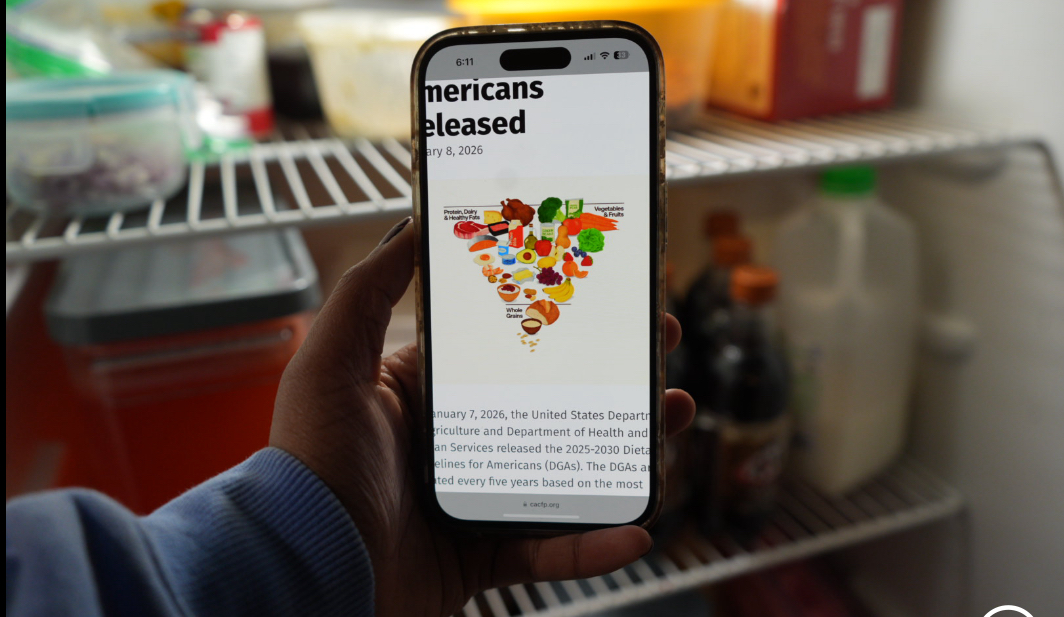
The Department of Health and Human Services and the Department of Agriculture released new dietary guidelines earlier this month, along with a flipped and adjusted version of the food pyramid used from 1992–2005.
Stanley Wilfong, senior lecturer and program coordinator for the nutrition sciences department, said the government typically makes “little tweaks” to the dietary guidelines every five years based on new scientific evidence. The most recent representation of these guidelines was MyPlate, introduced in 2011.
“They asked for volunteers to come and be part of the study,” Wilfong said about the MyPlate guidelines. “And they basically forced them to eat what the dietary guidelines recommended. And you know what happened when they followed the old guidelines? Their lipid panels improved. Their hemoglobin A1C, which shows risk for diabetes and or diabetes itself — it decreased. So all their health markers improved when they followed them.”
Despite this evidence, the HHS website cites the prevalence of unhealthy Americans under these guidelines as a reason for introducing the flipped pyramid. According to the website, the new guidelines focus on prioritizing protein, avoiding highly processed food and sugars and allowing healthy fats.
“For decades, the U.S. government has recommended and incentivized low-quality, highly processed foods and drug interventions instead of prevention,” the website reads.
Allen senior Abby Fair said she was “really happy” about the flipped pyramid. The previous pyramid, she said, wasn’t in line with what she saw as the healthiest way to eat.
“[It has] the most focus on grains and trying to minimize protein and healthy fats,” Fair said. “So now that’s the opposite, where protein and healthy fats are the biggest part that you’re supposed to eat in your diet.”
According to an article published in 2011 by The Nutrition Source, a news source created by the Harvard School of Public Health, MyPlate didn’t include healthy fats or mention specific differences between whole grains and refined grains or different types of protein.
However, Wilfong said that it is not due to previous guidelines that Americans are unhealthy, but despite them.
“America has the issues it does in terms of health, obesity, heart disease, cancer because Americans weren’t following the previous guidelines,” Wilfong said.
Further, Wilfong said if Americans do follow the flipped pyramid’s guidelines, it will be damaging to their health. The new pyramid is unreliable, contradictory and controversial among members of the nutrition sciences community for its basis in ideology, scientific inaccuracies that ignored provided evidence, focus on protein and seemingly high saturated fat recommendations, Wilfong said.
United States Secretary of Health and Human Services Robert F. Kennedy Jr. said to “flip the pyramid upside down,” Wilfong noted. But from Wilfong’s perspective, flipping the pyramid would introduce excess saturated fat.
“What I don’t think he understood is that the width of pyramid, when it’s upright, that base … is what you should eat the most of,” Wilfong said. “And as it gets narrower and narrower, you eat smaller and smaller amounts of that … So he’s recommending … a lot of saturated fat.”
Wilfong also said the way the old nutritional guidelines were presented was misleading.
“The other issue that is a little more insidious is the fact that they are lying when they say Americans have been lied to for decades,” Wilfong said. “And they have a picture of the old pyramid that hasn’t been used for over 20 years. And that’s even on their new website.”
Ultimately, Wilfong said students should follow the old MyPlate guidelines that emphasized balance, rather than the new flipped pyramid. The old pyramid, recommending limited added sugars and processed food, is a much better option than the flipped one, according to Wilfong.
“It’s about balance and moderation,” Wilfong said. “You just need to make sure that you’re getting plenty of fiber, fruits, vegetables, all that protein through the rest of the day. So there’s room for having some foods that are palatable and enjoyable, and they’re not toxic and they’re not harmful unless you eat too much of them.”