By Jackson Posey | Sports Editor
Editor’s note: This story has been updated to include comments from Baylor head coach Scott Drew and an NCAA spokesperson.
Baylor men’s basketball made history Wednesday afternoon, signing former NBA Draft pick James Nnaji. He will be immediately eligible to join the team.
The 21-year-old center is expected to make his collegiate debut within the next two weeks. When he does, he will become the first former NBA Draft pick to play NCAA basketball, part of a larger trend of players from professional leagues jumping to compete at the college ranks.
“James is a really talented young player with a ton of potential, and we’re excited to welcome him to the Baylor Family,” Baylor head coach Scott Drew said. “Any time you add someone to the roster midseason, it’s going to be a process to get them acclimated and up to speed, but we know James will do everything he can to make it a seamless transition. Our immediate focus is on helping him take things step by step to ensure it’s best for both him and the team when he’s able to take the court.”
Nnaji spent three seasons playing for Barcelona in the EuroLeague, the world’s second-best professional league behind the NBA, in addition to stints in the top Spanish and Turkish leagues. The 7-foot, 251-pound center was originally drafted by Detroit with the No. 31 pick in the 2023 NBA Draft.
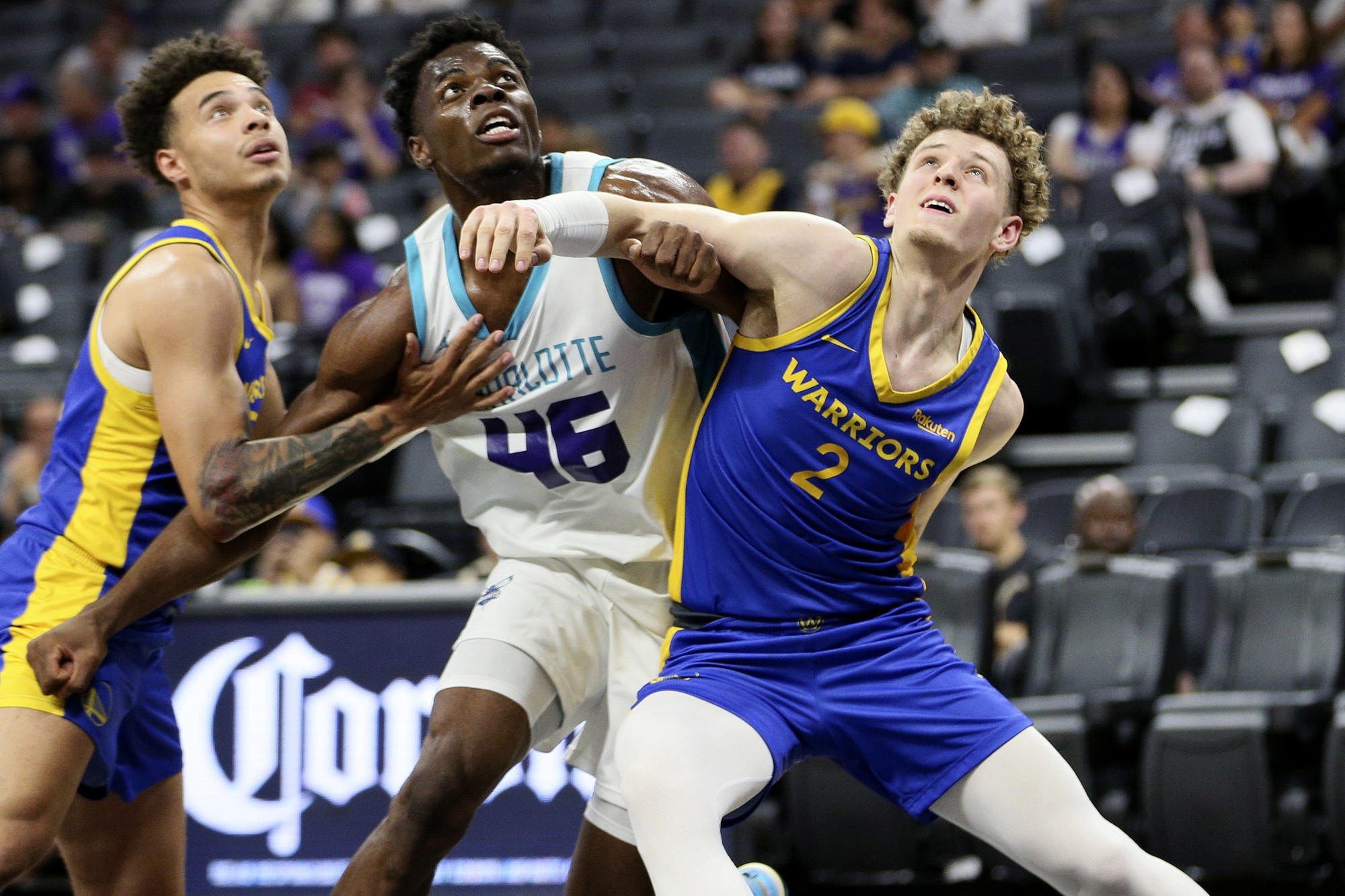
As a draft-and-stash selection, Nnaji never officially signed a standard NBA contract. Instead, he continued to develop overseas while NBA teams swapped around his draft rights. He was first traded to Charlotte, then to the New York Knicks as part of the Karl-Anthony Towns trade. He played five games for New York in this year’s Summer League, averaging 3.2 points and 3.6 rebounds in 12.9 minutes per game.
Because the Knicks own Nnaji’s rights, they could theoretically sign him away from Baylor during the season with no repercussions.
The NBA and NBA Player’s Association did not immediately respond to requests for comment on Nnaji’s draft rights, NBA eligibility and NBPA membership.
With a 7-foot-7 wingspan, Nnaji will immediately fill the void left by Juslin Bodo Bodo, a defensive-minded center who has missed the entirety of this season with an injury. The team’s official roster lists all five of the Bears’ current starters as guards.
Baylor head coach Scott Drew has previously criticized the NCAA’s new eligibility structure. The association has loosened its eligibility enforcement as it focuses more attention on the House settlement, NIL regulations, lobbying for the SCORE Act and managing the transfer portal. With former professional players and NBA Draft picks now eligible to play collegiate basketball, it is unclear where the current rules stand.
In October, Michigan State head coach Tom Izzo vocalized frustrations with the NCAA after the organization granted eligibility to London Johnson, a former G-League player who signed with preseason No. 11 Louisville.
“I am not real excited about the NCAA or whoever is making these decisions without talking to us,” Izzo said. “To me, it’s ridiculous. It’s embarrassing for our sport.”
Several other coaches chimed in to agree with Izzo’s post, including St. John’s head coach Rick Pitino, who called dibs on two-time NBA MVP Giannis Antetokounmpo. Drew reposted Izzo with the caption “100%.”
“I learned yesterday you can sign G-League guys,” Drew said at Big 12 media day. “Who knows what I’ll learn tomorrow.”
Two months later, Drew has taken things a step further. Nnaji is immediately eligible and expected to make his collegiate debut soon. When he does, he’ll make history as the first former NBA Draft pick to play NCAA basketball.
In a statement to The Lariat, an NCAA spokesperson confirmed that Nnaji was eligible and appealed for Congressional intervention to allow more eligibility enforcement.
“Each eligibility case is evaluated and decided individually based on the facts presented,” the NCAA’s statement reads. “Schools continue to recruit and enroll individuals with professional playing experience, which NCAA rules allow with parameters. As NCAA eligibility rules continue to face repeated lawsuits with differing outcomes, these cases are likely to continue, which underscores the importance of our collaboration with Congress to enable the Association to enforce reasonable eligibility standards and preserve opportunities to compete for future high school student-athletes.”