By Tolga Sahin | Intern
Texas Democrats gathered in Waco on Saturday at the Performing Arts Community Center for a McLennan County Democratic Party candidate forum ahead of the March 3 primary. The group was optimistic about state races following decades of Republican dominance, focusing on public education, healthcare access and affordability.
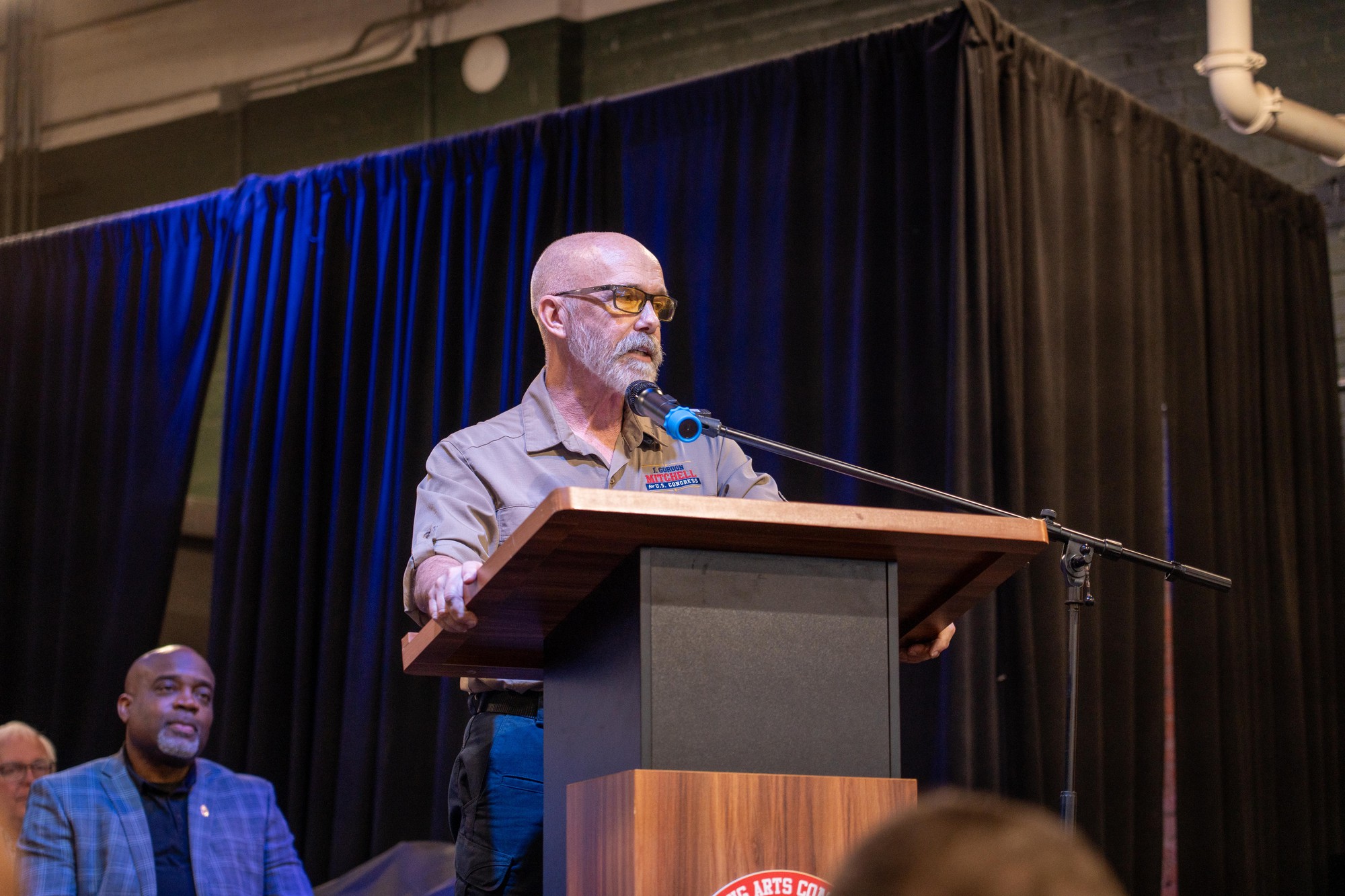
The forum’s lineup included local and statewide Democratic candidates — Alfred Freeman for McLennan County constable, Jeremy Davis for McLennan County commissioner, Holly Taylor for the Texas Court of Criminal Appeals, Amy Martinez-Salas for Texas Senate District 22 and U.S. House District 17 candidates Jamilah Flores, Casey Shepard and J. Gordon Mitchell.
After intermission, attorney general candidates Joe Jaworski, Nathan Johnson and Tony Box appeared, followed by lieutenant governor candidate Courtney Head and Marcos Vélez and gubernatorial candidates Gina Hinojosa and Zach Vance.
From local races to statewide races, speakers talked about everyday pressures: property taxes, housing costs, health care coverage, prescription prices and public school funding. Attorney general candidates like Jaworski leaned on résumés and credibility, arguing the office should be defined by enforcement and public trust rather than partisan branding.
“I will lead with integrity, not indictments,” Jaworski said.
As the forum moved from domestic policy to local concerns, one issue repeatedly surfaced — AI data centers. A data center is a large facility that houses numerous servers to store and process information for cloud services; AI systems can intensify that load because training and running models require significant computing power. These facilities operate continuously, requiring reliable power and large-scale water-cooling.
Mitchell said the projects are often pitched as economic development while shifting long-term costs onto communities, including water use and grid strain.
“Data centers are not the boon,” Mitchell said. “They are not the savior that they’re being marketed as.”
He described concerns about air and water impacts, agricultural disruption and what he called overlooked “sound pollution,” arguing that communities are usually promised economic benefits without a full accounting of costs.
The ongoing debate around data centers is also driven by growth. Grid planners say demand forecasts have jumped as large users, including data centers, seek new connections. According to the ERCOT board update, large-load interconnection requests in 2025 accounted for a 270% megawatt-demand increase since January, a surge that has intensified scrutiny of how quickly Texas can add generation and transmission.
Mitchell argued that pace is the point.
“It is going to strain our ERCOT system to the point of failure,” Mitchell said. “It’s not ‘if.’ It’s ‘when.’”
He questioned why permits continue to move forward as load requests rise, and he said a faster approval pipeline without stronger standards shifts risk onto residents who rely on the same grid.
Lacy Lakeview and McLennan County are negotiating a major data center project, a proposal described as a multibillion-dollar development that would pair a large data center campus with new power infrastructure.
Vélez said Texas’ business climate can mean no guardrails.
“The only way we can allow data centers to be built in the state of Texas is with very strict regulations,” Vélez said, calling for standards that address groundwater, job quality and contamination risks while still allowing technological growth.
Both Mitchell and Vélez said the issue is not banning data centers, but regulating them — tying permits to enforceable limits on water use and grid strain and requiring clear community benefits.
“If we’re going to have these data centers, they’re going to pay their fair share,” Mitchell said. “It’s not unlimited water and unlimited electricity.”
Turnout was treated as a key part of their campaign going into the 2026 midterm elections. Attendees were encouraged to register to vote at the entrance of the event, and candidates repeatedly encouraged supporters to show up to vote, volunteer and organize. Some candidates expressed concerns about democratic accountability, citing the Trump administration’s actions.
Democrats face an uphill climb in Texas, where Republicans hold the governor’s mansion and majorities in both chambers of the Legislature. All 150 Texas House seats are on the ballot in November, and the chamber remains one of the clearest paths for narrowing the GOP’s statewide advantage.
National political conditions could shape those contests. A Pew Research Center survey conducted Jan. 20 to 26 said 37% of U.S. adults approve of Trump’s job performance, and 61% disapprove. In a midterm year, anything is possible.