





By Jeffrey Cohen | Sports Writer
Former Baylor student George Baines Rosborough offered a $5 gold piece to the student whose entry won President Samuel Palmer Brooks’ student vote in 1914 to name the university’s teams.
Buffalo, antelope, frog and ferret were among the two dozen possibilities included, but Baylor students chose the mighty bruin to represent their school.
“And the Baylor Bears it shall be hereafter,” a Baylor Lariat article proclaimed on Dec. 17, 1914. “Perchance it will be the Bruins or the Grizzlies but anyway the designation of the Baptists will be some form of the cognomen of the carnivorous, fearless Orsus.”
Three years later, the name took physical form.
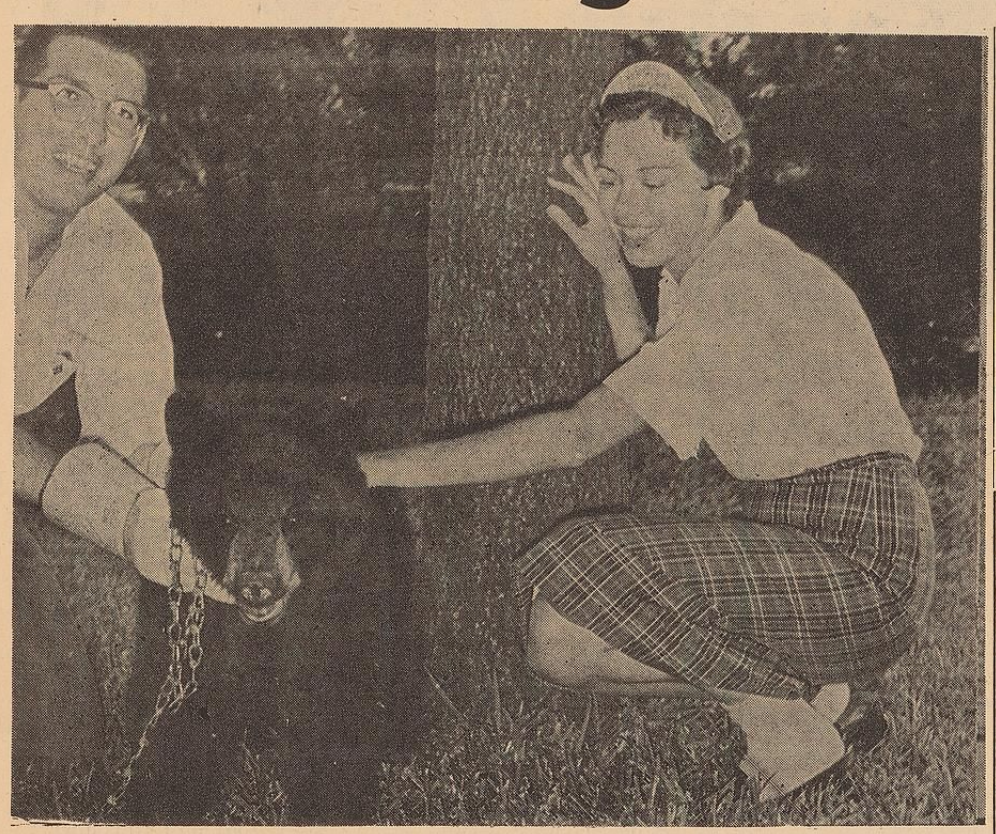
The tradition of having live bear mascots began in 1917, when a Camp MacArthur soldier allowed students to parade Ted, commonly known as “Bruin,” on the football field during games. He would leave Ted to the students when he was overseas.
“You see several of the old black-and-white pictures of the bears at Carroll Field,” said former Baylor live mascot training advisor Clint Patterson. “Football and the Baylor Bear mascots have been together for a long time.”
The live mascots continued to make appearances at football games throughout the years, as well as around campus and at other events, such as homecoming.
The bears became a special memory for those who grew up going to Baylor events and getting to see their beloved furry friends.
“I’ve missed a handful of home games for the past 20 years,” Houston junior Eric Hollingsworth said. “We would go see the bears more often when we were younger. We’d go to the bookstore and then go see the bears before or after the game.”
Baylor is one of several universities that have live mascots. When the bears were spectators on the sidelines, they occasionally reciprocated the same fighting spirit as the team.
One instance came in the 1957 Sugar Bowl against No. 2-ranked Tennessee. Judge, a full-grown black bear, was introduced to Smokey II. While the Volunteers’ hound was intrigued by his counterpart by sniffing and barking, Judge was not very fond of Smokey and had enough of his antics. The trainer “held on for dear life” as the hound “managed a quick tactical retreat.”
Like Judge, the Bears did not take too kindly to their opponents. No. 11 Baylor upset the Volunteers 13-7 in front of a crowd of 78,000 at Tulane Stadium. The Bears handed Tennessee its only loss of the season, finishing 10-1, while Baylor ended up 9-2.
Joe College, a true showman, was one of many bears who got into mischief on the sidelines. Once, during a game, he stretched his paw across the playing field and tripped a Longhorn player. In 1952, Topsy ran onto the field and stole a penalty flag. In 1954, mascots Nip and Tuck ripped apart a 30-foot banner that read “Ruin the Bruin.”
Several bears, inspired by Joe College, also drank Dr Pepper out of a bottle on the sidelines. A popped cap, though, allowed the nectar to flow too quickly. Trainers learned to poke a small hole in the top of the cap, allowing only a narrow flow of soda and extending the Dr Pepper drinking time from a few seconds to a “much more crowd-pleasing 10 minutes.”
The custom of the live bear mascots watching the football team lasted into the early 2000s. Sisters Lady and Joy had their own area on the sideline where they watched multiple underwhelming seasons.
“This was back at Floyd Casey Stadium,” Patterson said. “We would stay over in that south end zone area.”
Judge Lady and Judge Joy captivated the hearts of Baylor fans as the team struggled to collect wins, not surpassing three in a season between 1997 and 2004.
Patterson said “the bears were the highlight” during football season as the program was 19-71 in those eight years.
“We, in the hot games, had a large horse trough, and we would fill it with ice and water, and the bears would get in it,” Patterson said. “There’s a cute picture of Lady leaning on the signage right behind the end zone that I believe Sports Illustrated took one year.”
As some began to question the practice of having the bears out and about in Floyd Casey Stadium, the idea of making a new habitat in the football stadium arose.
“There were always whispers on campus, ‘What about an on-campus stadium?’” Patterson said. “‘Is there a bear habitat at the stadium? What does that look like?’ And there were certainly early talks with design company with what could that be.”
Despite rumors floating around about the future of the bear habitat and its connection with Baylor football, keeping the two combined never came to fruition.
“When you think of an exhibit or when you think of a facility at a football stadium, we really never got a clear direction from the USDA of what they would approve,” Patterson said. “So, it never really materialized at McLane.”
Baylor ended the tradition of hosting the bears on the sidelines in Oct. 2003. The change came at the recommendation of the Texas A&M veterinarians that took care of Lady and Joy.
The Bill and Eva Williams Bear Habitat was opened two years later in 2005 and serves as the current home for the live mascots.
Students are now able to visit Indy and Belle frequently in between classes and on walks through campus.


