


By Juliana Vasquez | Staff Writer, Aiden Richmond | Broadcast Reporter
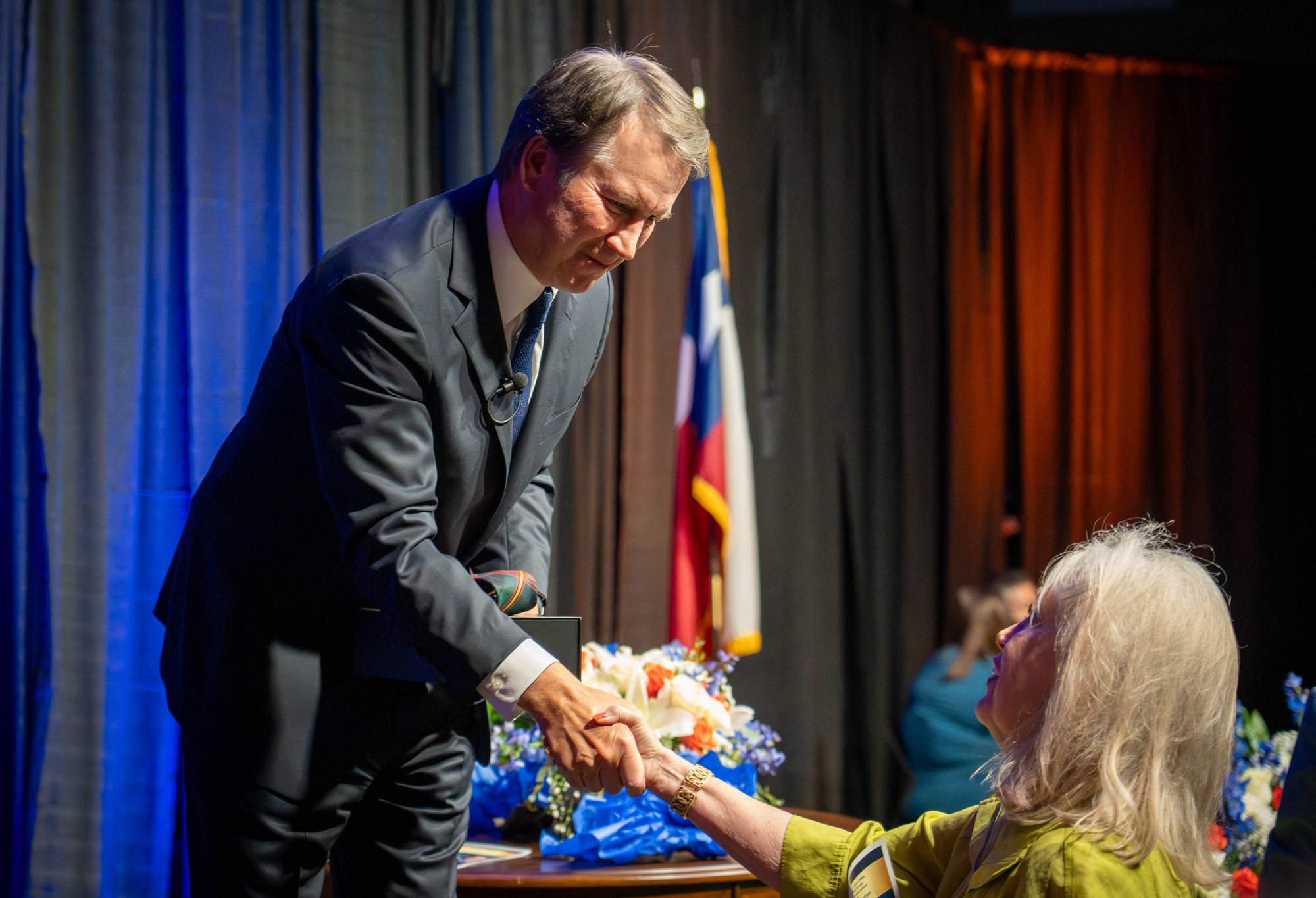
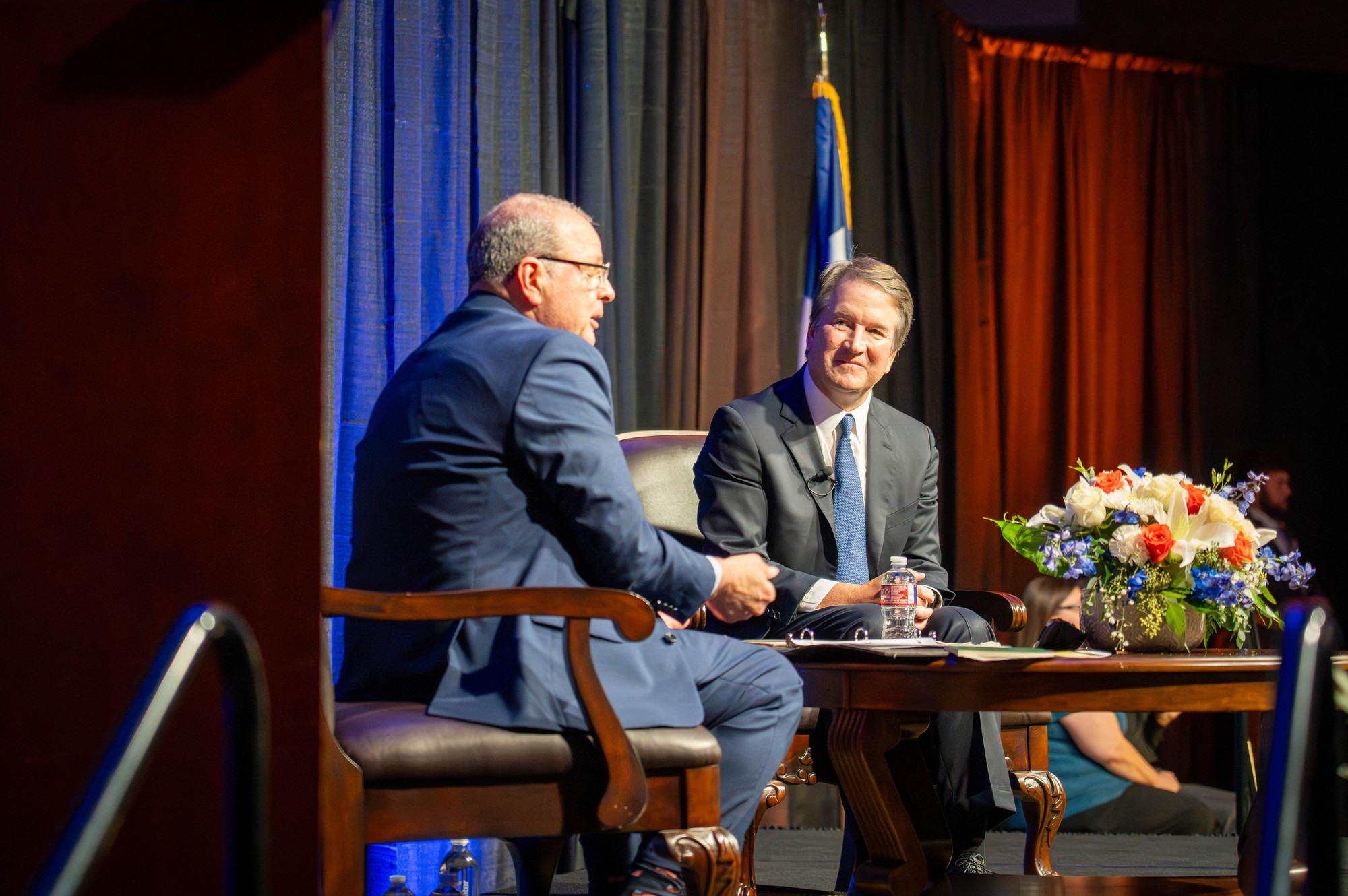
Donning a blue tie with no court robes in sight, Supreme Court Justice Brett Kavanaugh sat down to have a conversation with McLennan Community College history professor Ashley Cruseturner as part of the Ken Starr Lecture Series hosted by MCC Thursday evening.
LTVN’s Aiden Richmond talked to protesters outside of McLennan Community College.
Kavanaugh was confirmed to the Supreme Court in October 2018, appointed to the High Court by President Donald Trump during his first term. Kavanaugh is a Yale alumnus with a long history in politics, having clerked for Justice Anthony Kennedy (whose seat he later filled) and served as staff secretary to President George W. Bush. He was also a close family friend with former Solicitor General of the United States and Baylor President, Ken Starr, the namesake of the MCC lecture series.
As an avid defender of the Constitution, Kavanaugh said the secret ingredient to the success of the American Constitution is the political doctrine of separation of powers.
“It protects individual liberty by dividing powers, preventing concentration of power and thereby ensuring that each person can live in liberty,” Kavanaugh said.
Critics have argued, however, that the Supreme Court holds power that is seemingly limitless. Constitutional Lawyer Michael Waldman has a weekly newsletter where he discusses these concerns.
“If we’ve ever needed an independent judiciary, we need it now,” Waldman wrote in the newsletter. “If guardrails crumble and the powerful quail before Donald Trump, the high court may be one of the last — indeed, at times, the only — protectors of the Constitution.”

Kavanaugh responded, acknowledging the fact that the Supreme Court does lay the law of the land, but did not firmly agree or disagree.
“We follow our own precedent. We can narrow it. We can overrule it. We should do that by a high bar and under specified conditions, but we can do that,” Kavanaugh said.
As Kavanaugh spoke inside, several gathered to protest outside the event, including the McLennan County Democratic Party. McLennan County Democratic Party Chair Mark Hayes was one of the protesters in attendance and said he believes the fundamental problem with the government is the lack of separation of powers. According to Hayes, the executive branch has exercised a disproportional amount of power.
“[The Supreme Court] seems to have the philosophy that the president should be able to do whatever he wants to do,” Hayes said. “And that is not the job that they’re supposed to do. They’re supposed to be protecting the Constitution.”
When asked about political differences potentially interfering with SCOTUS rulings, Kavanaugh said the justices are not there to discuss their political views, but rather to examine the Constitution and how the case does or does not align with it.
“Our role as justice is not to solve all the economic or social problems in the United States. That’s for Congress, the president, the legislative process and the states,” Kavanaugh said. “It’s a mistake to think of the court as something that’s going to solve this problem. We have to preserve democracy for the people.”
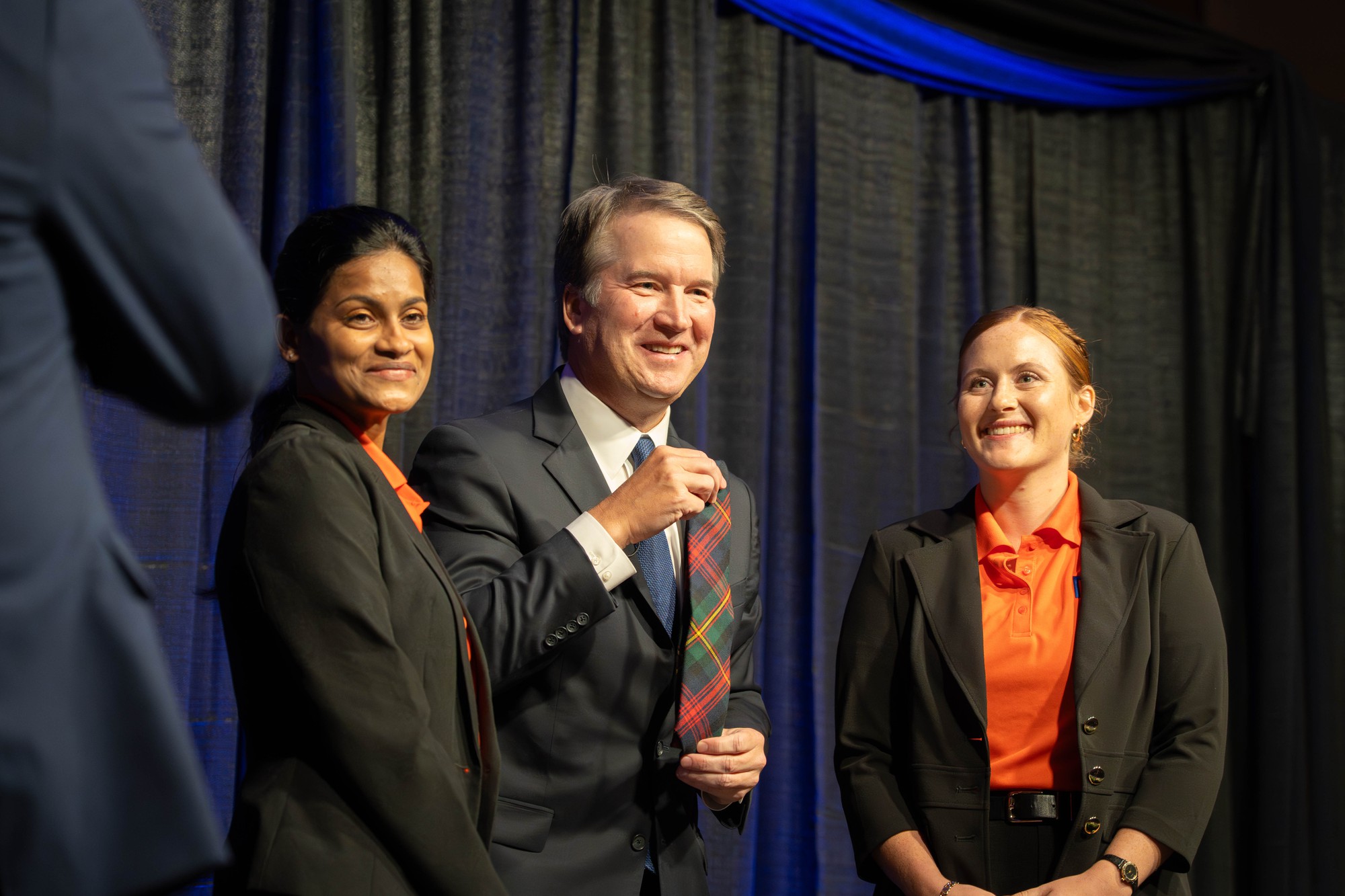
But preserving democracy isn’t only in the hands of the Supreme Court. It also lies within the hands of American citizens — voters — who participate in the nation’s politics. Kavanaugh, who has had a lot of experience coexisting with those who may not share his views, said the best thing to do is learn how to listen to others.
“If there’s one lesson that I’ve learned over 20 years as a judge, it’s to try to understand other people’s perspectives as best you can,” Kavanaugh said.
Kavanaugh said he holds his position as a justice to the highest degree, celebrating his fellow justices, acknowledging their differences and championing the enduring document that formed the bedrock of American society.
“It’s not our job to rewrite the principles with the text of the Constitution at the same time, it’s important for everyone to understand. We do it all. It’s not frozen in time,” Kavanaugh said. “We apply the principles to modern conditions. The Constitution is enduring … It’s not our job to rewrite it, [but] to stick to what the text, history and traditions tell us.”
