

Close Menu
The Baylor Lariat
    Facebook X (Twitter) Instagram YouTube LinkedIn
    Trending
    • Junior Mazie Ann Petelski challenges norms through tattoo apprenticeship
    • Beyond boba: Cha Community’s Eighth Street location now serves meals
    • New places are hard; it’s OK to move back home
    • Reach out to old friends, it’s worth it
    • Bears fall to 1-7 in conference following underwhelming performance at Cincinnati
    • How to decompress when headlines cause stress
    • US interest in Greenland — here’s what to know
    • Flip or flop? What new HHS food pyramid means for daily diets
    • About us
      • Fall 2025 Staff Page
      • Copyright Information
    • Contact
      • Contact Information
      • Letters to the Editor
      • Subscribe to The Morning Buzz
      • Department of Student Media
    • Employment
    • PDF Archives
    • RSS Feeds
    Facebook X (Twitter) Instagram YouTube LinkedIn
    The Baylor LariatThe Baylor Lariat
    Subscribe to the Morning Buzz
    Thursday, January 29
    • News
      • State and National News
        • State
        • National
      • Politics
        • 2025 Inauguration Page
        • Election Page
      • Homecoming 2025
      • Baylor News
      • Waco Updates
      • Campus and Waco Crime
    • Arts & Life
      • Wedding Edition 2025
      • What to Do in Waco
      • Campus Culture
      • Indy and Belle
      • Sing 2025
      • Leisure and Travel
        • Leisure
        • Travel
          • Baylor in Ireland
      • Student Spotlight
      • Local Scene
        • Small Businesses
        • Social Media
      • Arts and Entertainment
        • Art
        • Fashion
        • Food
        • Literature
        • Music
        • Film and Television
    • Opinion
      • Editorials
      • Points of View
      • Lariat Letters
    • Sports
      • March Madness 2025
      • Football
      • Basketball
        • Men’s Basketball
        • Women’s Basketball
      • Soccer
      • Baseball
      • Softball
      • Volleyball
      • Equestrian
      • Cross Country and Track & Field
      • Acrobatics & Tumbling
      • Tennis
      • Golf
      • Pro Sports
      • Sports Takes
      • Club Sports
    • Lariat TV News
    • Multimedia
      • Video Features
      • Podcasts
        • Don’t Feed the Bears
        • Bear Newscessities
      • Slideshows
    • Housing 2026
    • Lariat 125
    • Advertising
    The Baylor Lariat
    Home»Opinion»Editorials

    Editorial: High-speed rail will benefit Texas, US

    webmasterBy webmasterFebruary 4, 2014 Editorials No Comments4 Mins Read
    Share
    Facebook Twitter LinkedIn Pinterest Email

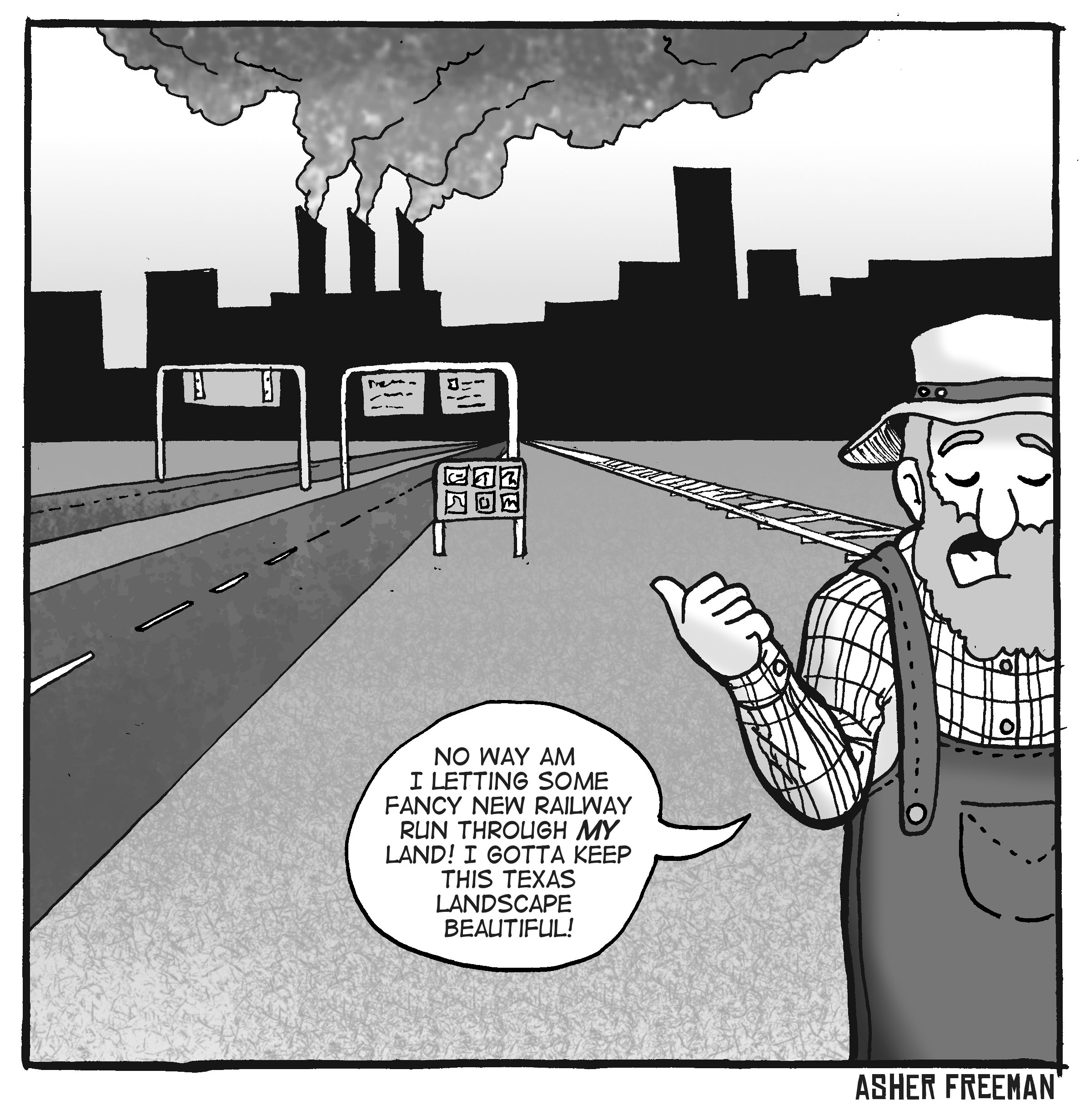
    NewFangledRailroad

    The Texas Department of Transportation is conducting a study on the benefits of building a high-speed rail connecting Dallas, Waco, Austin and San Antonio. The plans for the rail include 16 trains a day that would run along a dedicated 100-foot right of way.

    While Texas DOT officials have said the costs of the rail are undetermined, they estimate that it would cost around $10.5 billion.

    The trains would average 100 to 140 mph and have peak speeds of 220 mph. In addition, officials estimate tickets would be about 80 percent the cost of flying.

    A rail system that would connect the four cities along a 300-mile stretch of land is a great idea, especially because it would run through Waco. The study is ongoing and will be completed by the end of the year.

    High-speed rails are a sign of progress. The technology is expanding as more countries around the world build these trains. They zoom between cities in countries such as Japan, Italy, Turkey, the United Kingdom, China and Morocco. The United States has one too that runs between Washington D.C. and Boston, with stops in New York, Philadelphia, Baltimore and New Haven.

    Those opposed to the trains, especially some people in Texas, have expressed concern that a train would fragment land and properties. This was a concern of the main opposition a decade ago with the Trans-Texas Corridor that would have spanned nearly 4,000 miles and included high-speed rails, commuter trains and freight trains. However, this particular project could be considered too ambitious, because it would have also built tollways and infrastructure for utilities across the state instead of just building a rail. Eventually the project was canceled in 2011 after the Texas public spoke out about the actual cost of building such a massive system.
    The current project is not nearly as big and not nearly as intrusive to Texas land.

    As reported by the Waco Tribune Herald, Texas DOT spokesman Mark Werner said the study is making it a priority to avoid fragmenting land and instead use land that is already adjacent to railroads and highways.

    The urban development director for the Greater Waco Chamber of Commerce, Chris McGowan, said the rail has the potential to increase connectivity between Waco and other cities.

    This means that people would have an easier time of commuting between cities along the rail. For Baylor students, this means a faster way to make it to the Dallas-Fort Worth airport or make it home for breaks. For students without cars, the rail would make traveling out of town more convenient. The rail would also help students who want to take advantage of a program at a particular college, such as Baylor, but who originally did not have the time.

    Some people may think the time saved during travel is not worth the money spent to build the rail. The study is ongoing, so the statistics on how much time will actually be saved is yet unknown. Interstate 35 does offer a connection between the cities the rail would connect, but oftentimes travel is slow due to construction, accidents or weather. These things would not affect the rail. In fact, a rail could potentially decrease congestion on the interstates.

    The other benefits of the rail make it worth the cost. Gas is expensive and traveling by rail cuts oil consumption costs. In a world that has an ever increasing call for “green” products, the rail would run on electricity. According to the US High Speed Rail Association, the rail pays for itself as it reduces the United State’s need to purchase oil. High-speed rails are green, fast and convenient, as well as profitable with potential 14 percent revenue over maintenance costs.

    As the study continues, people should be open to the possibilities the rail would bring to Waco and surrounding cities. They’ll most likely find that the benefits outweigh the costs.

    high-speed rail Texas Department of Transportation trains
    webmaster

    Keep Reading

    New places are hard; it’s OK to move back home

    Reach out to old friends, it’s worth it

    The warmth that changed how I see winter

    Baylor’s bottom 5 bathrooms on campus

    Leasing companies should offer student discounts

    Finding the perfect roommate is hard; Baylor can help

    Add A Comment

    Comments are closed.

    Recent Posts
    • Junior Mazie Ann Petelski challenges norms through tattoo apprenticeship January 28, 2026
    • Beyond boba: Cha Community’s Eighth Street location now serves meals January 28, 2026
    About

    The award-winning student newspaper of Baylor University since 1900.

    Articles, photos, and other works by staff of The Baylor Lariat are Copyright © Baylor® University. All rights reserved.

    Subscribe to the Morning Buzz

    Get the latest Lariat News by just Clicking Subscribe!

    Follow the Live Coverage
    Tweets by @bulariat

    Facebook X (Twitter) Instagram YouTube LinkedIn
    • Featured
    • News
    • Sports
    • Opinion
    • Arts and Life
    © 2026 ThemeSphere. Designed by ThemeSphere.

    Type above and press Enter to search. Press Esc to cancel.

    Insert/edit link

    Enter the destination URL

    Or link to existing content

      No search term specified. Showing recent items. Search or use up and down arrow keys to select an item.