By Giselle Lee | Staff Writer
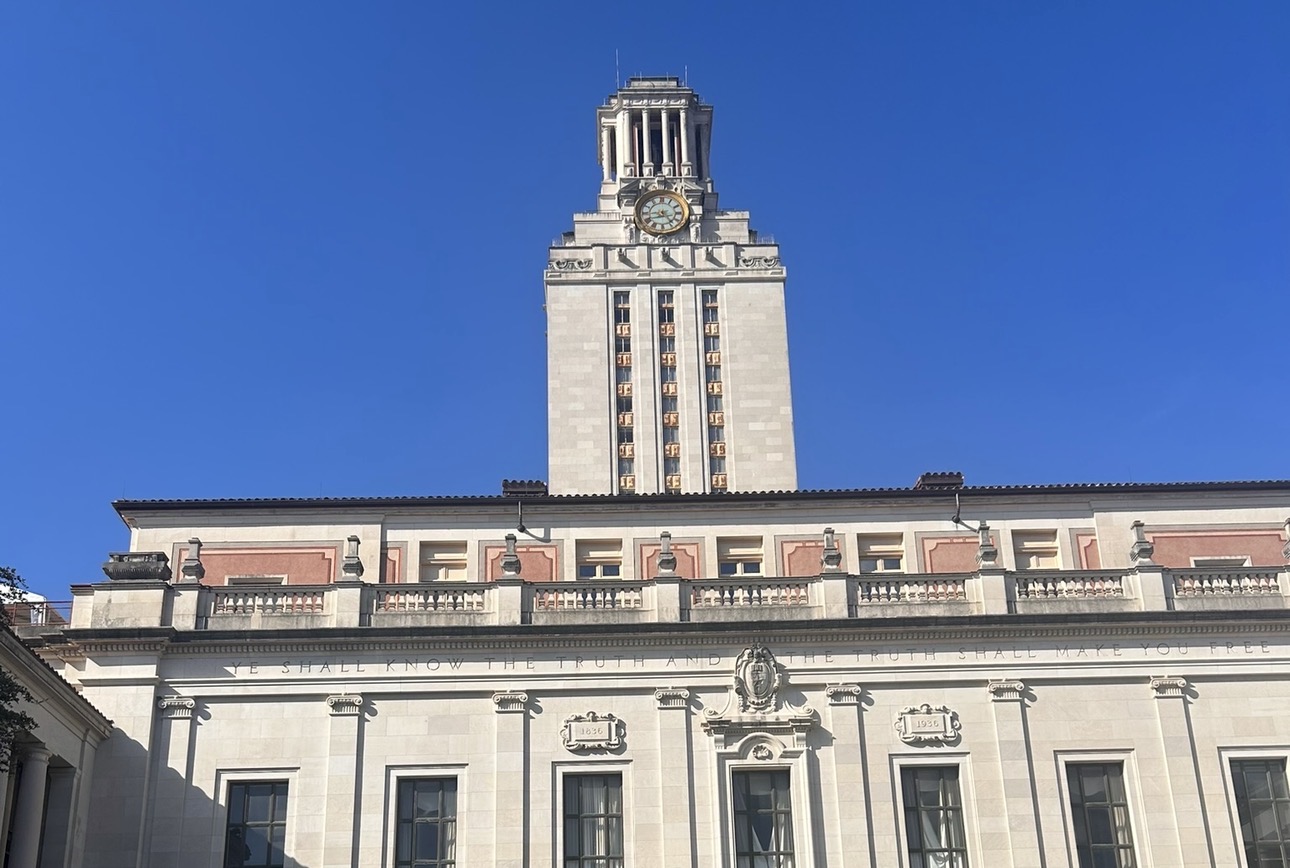
Outrage continues across social media platforms more than a week after Republican Railroad Commission candidate Bo French made a series of comments Sept. 13 targeting students of South Asian descent at a University of Texas football game.
French shared an image of South Asian students celebrating at the game and referred to them as “foreigners,” despite not knowing their citizenship status.
According to The Texas Tribune, French drew heavy criticism from “several high-profile Republicans” asking to remove the posts, but French “vigorously defended” his words, sparking wider debate across Texas over racism and diversity in institutions of higher education.
After watching the game on his MacBook, University of Texas freshman Aryan Sundaram remembered his campus being “ecstatic.” He rushed out of his dorm toward the stadium to celebrate with fellow students, only for that feeling of unity to crumble after seeing French’s posts the next day.
“I saw his tweet, and even though I wasn’t photographed because I wasn’t at the game, I felt completely unsafe because it was a politician coming after my people at my school,” Sundaram said. “I was happy to see that there was some condemnation, but I also was upset because he kept on doubling down.”
Sundaram called the situation “disgraceful” and said the comments exposed a larger problem he has witnessed among students.
“I was completely appalled too, on student apps like YikYak that students at our own school are saying Indian students at our school are a problem,” Sundaram said. “I’ve always been outspoken on the normalization of Indian racism or racism towards Indian people, and I thought this was just gone too far.”
Racism, according to Sundaram, is a “huge problem” that extends beyond the confines of his own university. He said schools should be more vocal in condemning it instead of “taking measures in the opposite direction.”
The controversy at UT has also raised questions among Baylor students about how their own university approaches conversations surrounding race, discrimination and diversity.
In Baylor’s strategic plan, Baylor in Deeds, the university emphasized civil discourse and is committed to “preparing active, engaged citizens” who interact with “civility and respect.” Baylor’s Multicultural Affairs Office aims not only to celebrate or recognize different cultures but also to explore “opportunities to dialogue across differences.”
Austin sophomore Sharvi Joshi said that, compared with a larger university like UT, Baylor’s smaller campus can make different cultural communities more visible and “recognizable.”
“All the different ethnic groups have their own cultural groups, unlike big public schools,” Joshi said. “[Baylor’s] pretty set about incorporating cultures into like the small community here at Baylor, and I feel like that’s what really sets it apart from [other universities], because it’s hard to see every different community at bigger schools.”
Despite what she sees as positive steps, Joshi said more can be done to promote those resources to the wider student body.
“Baylor has done like a really good job of … making sure that everyone has people to talk to, even if they’re international students or out-of-state,” Joshi said. “I think they can advertise these things more, because I don’t hear a lot about the Multicultural Affairs Office’s events.”
Beyond Baylor’s public commitment, San Antonio senior Eseabasi Akai said he believes the university should also address what he called the “quiet moments of discrimination.” Akai said he experienced microaggressions on campus last year.
Mental Health America defines microaggressions as “indirect, subtle, or unintentional discrimination against members of a marginalized group. Microaggressions are verbal or nonverbal insults that target a person’s ethnicity, country of origin, race, age, gender, sexuality, disability status, religious affiliation, or economic status.”
“I did not report [the microaggression] because I was conditioned to believe that it wouldn’t be a big deal,” Akai said. “I don’t hear anything about microaggressions being handled properly on campus. I think if Baylor were to start shedding light on these smaller moments, it would give more students the opportunity to think they can talk about it more, because Baylor actually cares about the problem.”
Akai said that programs such as the Multicultural Affairs Office or the Title IX Office are setting Baylor in the right direction for “students of color” and “people who are heavily scrutinized in American society,” but agreed with Joshi over the visibility of addressing racism.
“Baylor does a lot with Title IX to try and deal with discrimination, harassment or something along those lines that fall under the Title IX bracket,” Akai said.
Akai said resources available through the university are a step in the right direction, but he believes more can be done to make students aware of them.
“I think it’s great that Baylor is offering these avenues to combat discrimination, but I don’t believe it’s enough,” he said.
Moving forward, Sundaram called hate speech “un-American” and said universities should encourage civil discourse that allows students to have political conversations while respecting one another.
“I don’t think [xenophobia is] what we stand for in this country, especially because we were built by immigrants,” Sundaram said. “We belong here; we helped build this country. We’re all Americans, right? I think sticking together, uplifting people and calling out any incidents of racism or xenophobia, from any targeting of any race, is important.”
Sundaram hoped this experience at UT would unify students from other Texas universities such as Baylor in condemning French’s posts.
“All universities should call this heinous act out because right now it’s UT Austin, but maybe tomorrow it’s Baylor and another day it’s A&M,” Sundaram said. “It could happen anywhere to any marginalized group at any time. I think we need to stick together as colleges, as minorities and as Texans.”