By Abby Rathburn | Staff Writer
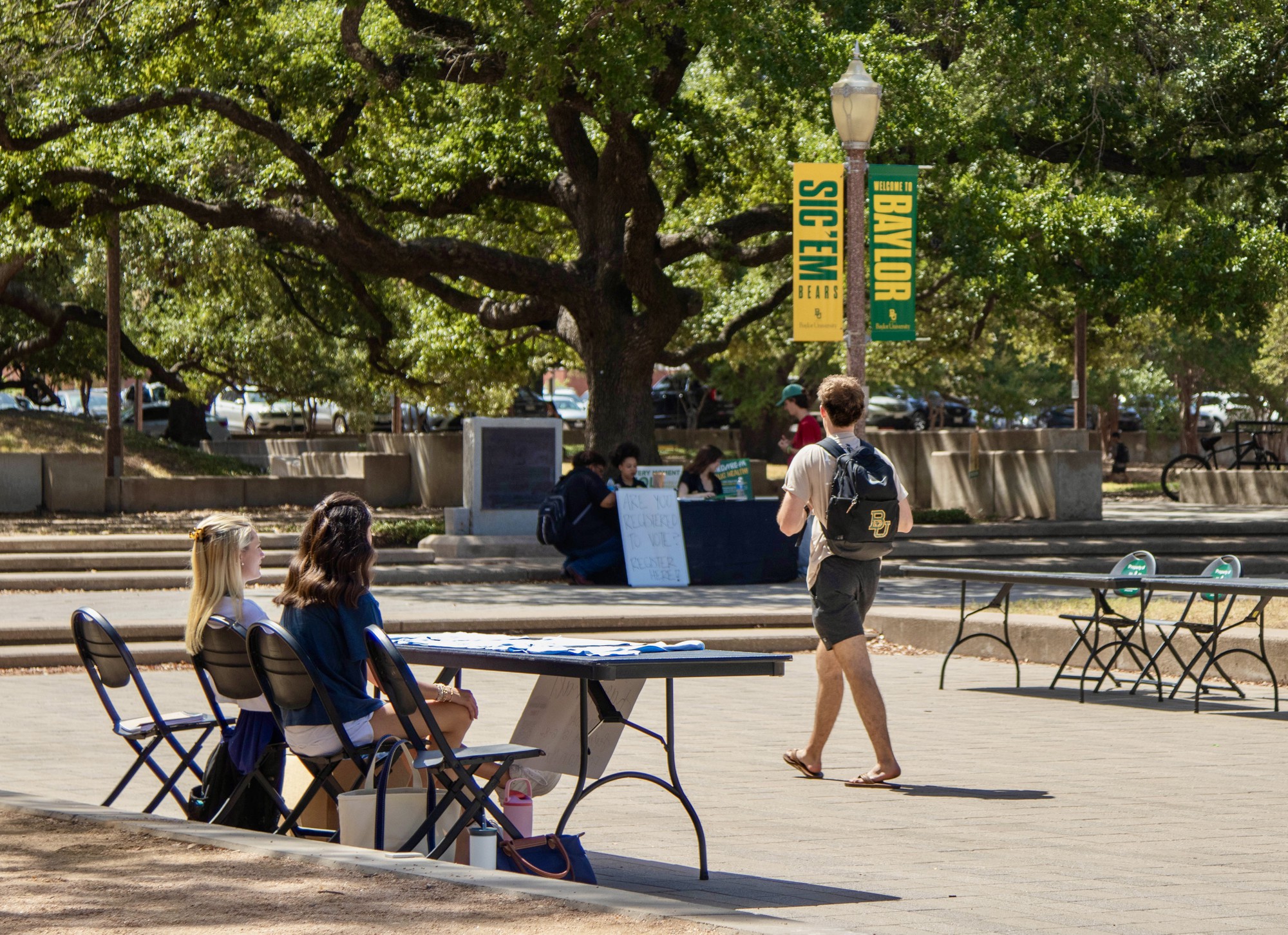
At Baylor, students looking to find their community rarely have to look far. Almost every day, student organizations line Fountain Mall, hoping to turn a passing student into a new member, event attendee or supporter.
Tables covered with banners, flyers, candy and free merchandise can be found in some of Baylor’s busiest areas. Known simply as “tabling,” the practice gives student organizations a chance to stop students between classes, start conversations and promote everything from upcoming events to membership opportunities.
But does tabling actually increase awareness of organizations?
Lauren Danforth serves as a campus staff leader for Reformed University Fellowship. She said it is hard to define what success for tabling really looks like.
“We definitely give out a lot more cups than people who come, but I don’t think that means it’s unsuccessful,” Danforth said. “We’re just trying to have opportunities to get the word out, and I think it’s helpful with that.”
While RUF draws people in with cups, other organizations give out food, candy and flyers to make their tables more inviting and capture students’ attention.
“Usually, people are coming to us, especially when we have food there because people are attracted by that,” China Spring senior Caleb Brown said. Brown is the president of the Accounting Society.
Even so, what is on the table is not the only factor that determines whether students stop. Location can be just as important.
During the first week of classes, RUF, Cru and other campus ministries set up a table outside of the dining halls, while Greek life typically chooses to set up around Fountain Mall. Major-specific organizations, including the Accounting Society, often table inside academic buildings.
Each location serves a purpose. Organizations can position themselves where they are most likely to encounter students who may be interested in what they have to offer. But finding the right spot is only part of getting students to stop.
“A lot of times, people are just walking past us really fast, so wanting to make a connection, but also not trying to keep them from wherever they’re going [can be difficult],” Danforth said.
Goldthwaite senior and Theta President Avery Graves said she takes a more proactive approach to getting the attention of students passing by.
“I feel like they usually only come up to the table by themselves if they know someone at the table or if they’re in a group,” Graves said. “We’ll usually have to be like ‘Hey, you want unlimited burgers,’ or ‘What do you know about CASA,’ and then they’ll come up, but it does take some prompting sometimes.”
Despite the challenge of getting students to stop, Graves said tabling offers something that social media and other forms of online communication cannot: a face-to-face conversation.
“We can at least guarantee that they are hearing the information because we can’t guarantee that they’re gonna read some little caption or post that we make,” Graves said. “It’s more of a guarantee that you can explain it, and they can ask their questions and have answers because you can’t really ask questions on a social media post.”