


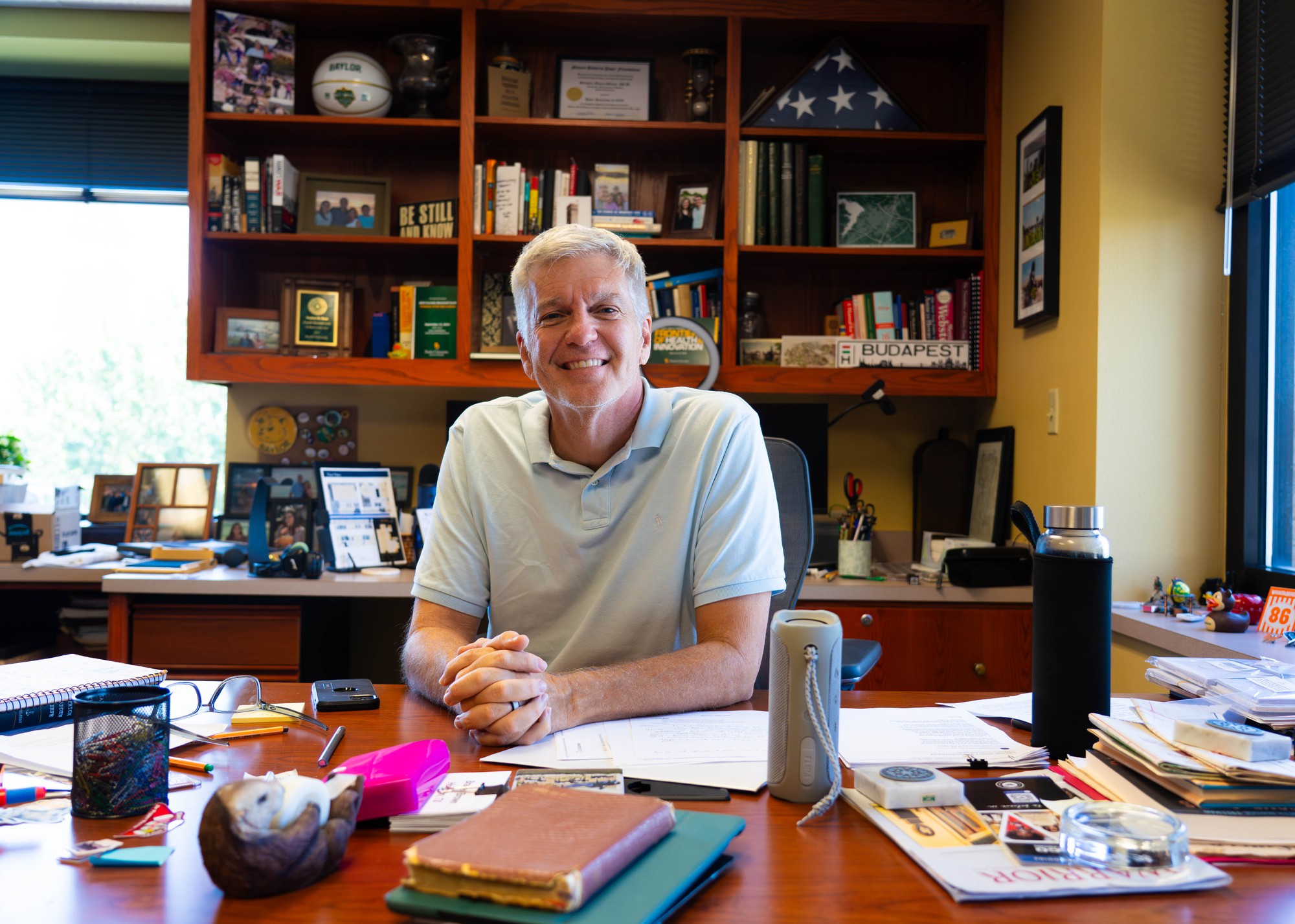
By Tripp Henderson | Staff Writer
Dr. Stephen Sloan, Baylor history professor and director of the Institute for Oral History, has been named a 2026 Piper Professor, an award recognizing 10 Texas professors each year for outstanding achievement and dedication to teaching.
The Minnie Stevens Piper Foundation awards the honor, and university presidents nominate candidates. Sloan is the 15th Baylor professor to receive the award since its inception in 1958.
“It’s an honor just to be nominated,” Sloan said. “It means a lot that a neutral party would look at what I have done and affirm that it’s worth something.”
For Sloan, the recognition is the latest chapter in a career he did not initially plan to have.
A first-generation college student, Sloan describes his career path as “unconventional.” After graduating from Baylor with an accounting degree, Sloan did not originally intend to teach. A history class he took for fun changed his plans.
He said he was “bit by the bug” and became drawn to the discipline because it offered something he could continue pursuing throughout his career.
“History is everything that’s ever happened, and I’m never going to have mastery over that,” Sloan said. “… There’s always new questions to ask and angles to examine.”
The award specifically highlights Sloan’s work in the classroom. He incorporates oral history into his teaching through live interviews and encourages students to listen deeply and join the conversation.
“Reaching across difference and engaging difference is really what college is supposed to be about,” Sloan said. “There’s a silo of experiences and perspectives sitting beside us.”
Although it is countercultural, Sloan says engaging with different people and having “a sensitivity and interest in trying to understand a point of view is something we need more of.”
Professor Steven Siefall, a former student of Sloan’s in his oral history seminar, said he fell “in love with the profession of oral history.” That passion led Siefall to serve as the senior editor and collections manager for the Institute for Oral History.
Sloan’s focus on listening extends beyond the classroom and influences his work at the Institute for Oral History, which Sloan has led since 2007.
“All throughout its history, especially in the digital age, the Institute for Oral History has kind of led the way in remote and digital education and teaching new generations of oral historians,” Siefall said. “And a lot of that can be attributed to Dr. Sloan’s leadership.”
The Institute for Oral History has recorded and preserved oral histories since 1970. Its collection includes more than 8,000 interviews documenting the experiences of people who have shaped history and those shaped by the events around them.
In a time when we are wondering what it means to be human, Sloan said, “an affirmation of the human experience is important, and we need to document and understand it.”
The institute does not just exist to amplify well-known stories, but also to amplify people who are absent or underrepresented in the historical record. Sloan says there are “great silences” in parts of history, and they deserve a voice.
One of Sloan’s favorite parts of his job is “when you get a deep truth about the human experience in a place that you didn’t expect it from.”
As technology and social media increasingly shape how people encounter information, Sloan said oral history can provide an alternative to the echo chambers created by personalized digital content.
“I think the best way to begin to understand is by interacting and encountering one life lived,” Sloan said.
