





By Elliott Nace | Assistant News Editor
Baylor’s College of Arts and Sciences announced a restructuring of the Creative Arts Experience (CAE) requirement for all undergraduate students in the college, effective June 1.
The new system eliminates CAEs as a standalone degree requirement and instead incorporates them into existing courses, following faculty discussions about how best to engage students in practical and creative settings.
Previously, students were required to attend 12 CAE events across subjects such as art, theater and music. Under the new system, CAEs will be incorporated directly into existing courses. As such, the restructured Creative Arts Experiences will be requirements for individual course completion.
“Faculty within the College of Arts & Sciences are exploring how to incorporate aspects of this requirement into other courses across the Arts & Sciences core curriculum,” according to a May 26 statement sent on behalf of the dean of the College of Arts and Sciences.
The email also exempted all Arts and Sciences students graduating in August from fulfilling the 12-event requirement.
Dr. Paul Martens, an associate dean for undergraduate studies, strategic initiatives and special programs in the College of Arts and Sciences, explained how the prior CAE system upheld the college’s academic values but proved logistically challenging and difficult to enforce consistently.
“What we found is over the last few years, because of the way in which this is a co-curricular that was not assigned any credit, and the way in which the administrative pieces of our institution work, students were advised every semester to include these in their practices for the semester, and yet a month, three weeks, two weeks from graduation, you had hundreds of students who hadn’t completed them,” he said.
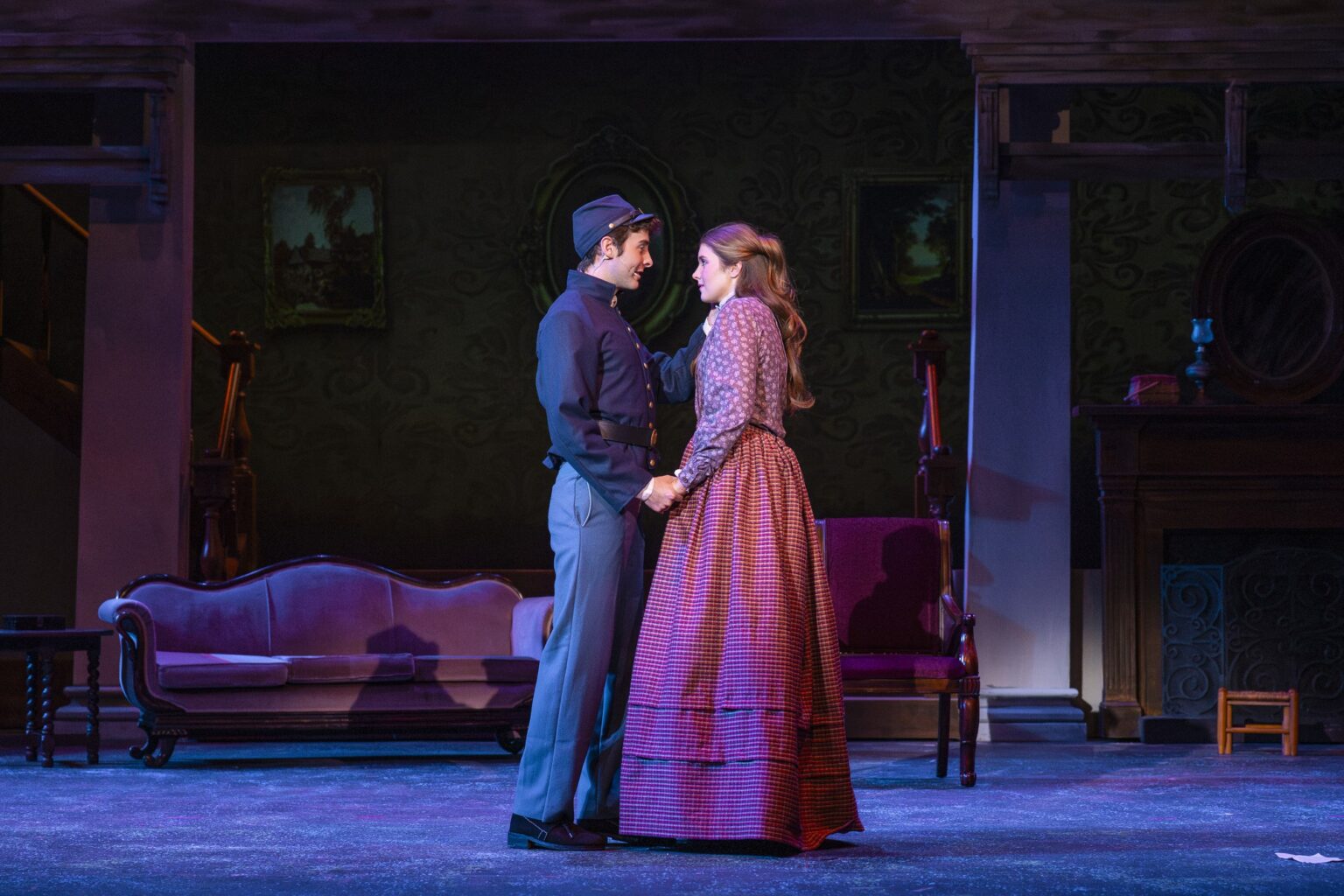
Prosper senior and theater performance major Noah Smith first noticed a “mass influx” of students attending CAE events last spring, particularly at the two plays put on by Baylor Theatre over the last four weeks of the semester.
“As a theatre arts student, it’s frustrating when your work on stage as a student is being viewed as ‘Oh, I just need to go see this to graduate,’” Smith said.
Martens explained that, in contrast to the spirit of the College of Arts and Sciences’ mission statement and its commitment to “experiential learning,” last-minute virtual events created solely to fulfill the CAE degree requirement became increasingly commonplace.
“A lot of these last-minute online options were run in the background of other activities that students were doing,” he said. “It wasn’t fulfilling what the aim was for this experience, so that’s what drove an attempt to rethink or reimagine.”
Martens said deliberation over implementing a new CAE model spanned a year in the dean’s office and primarily involved the department chairs of theater, film, digital media, art and art history.
“What we’ve attempted to do is find an alternative that integrates these experiences into the fine and performing arts distribution list,” Martens said. “The goal here is to then integrate the required experiences into [courses] where students are thinking about on a daily and a weekly basis what performing arts are, what fine arts are.”
Smith said his experience in an Introduction to Theatre class, which requires students to attend performances and then write about their experiences, showed him how CAEs can be naturally incorporated into an undergraduate course.
“When, as a part of a class, you are required to engage with theater, that is the whole point of the art,” he said. “We ask people to come in for 90 minutes or two and a half hours of the day and engage with the story.”
Department Chair of Art and Art History Dr. Heidi Hornik explained that direct faculty oversight, especially when reinforced by academic advisers, will improve the quality and enjoyment of CAEs and help students progress through their degrees.
“We want to broaden the Creative Arts Experience to include actually practical knowledge,” she said. “For instance, our printmaker is going to talk about the difference between intaglio and etching and woodcut, and then [students] will do that within the class.”
Martens said the plan for the new academic year is to directly tie CAEs to courses within the various core curriculum distribution lists.
“For this first year, we’re going to keep it as simple as possible, learn what we can, hope it functions the way we intend it to and if it doesn’t, we’ll tweak accordingly,” he said.
Hornik said students taking the Introduction to Art course will now have to attend three art history CAEs alongside one each in digital media and theatre.
“We wanted to make it manageable for students,” she said. “At this point, we have 13 confirmed events [in the Department of Art History]. Some of them are one-day, one-time, others are the duration of a show.”
Completion of core curriculum courses, according to Hornik, now hinges on attending CAE events and completing a brief evaluation about what took place at the event.
“That’s the big bear in the room, if you will,” she said. “We want this to succeed because from the beginning, [this program] was an essential part of a Baylor education to learn how to think about arts.”
Although Arts and Sciences students will have a smaller pool of CAEs to choose from, Martens clarified that the new events, along with new offerings in departments that have never had CAEs before, will be more refined and more directly engage students.
“The actual number of Creative Arts Experiences that students are encountering won’t change,” Martens said. “It’ll just be spread more broadly, and I’m also quite excited about that.”


