By Maggie Meegan | Reporter
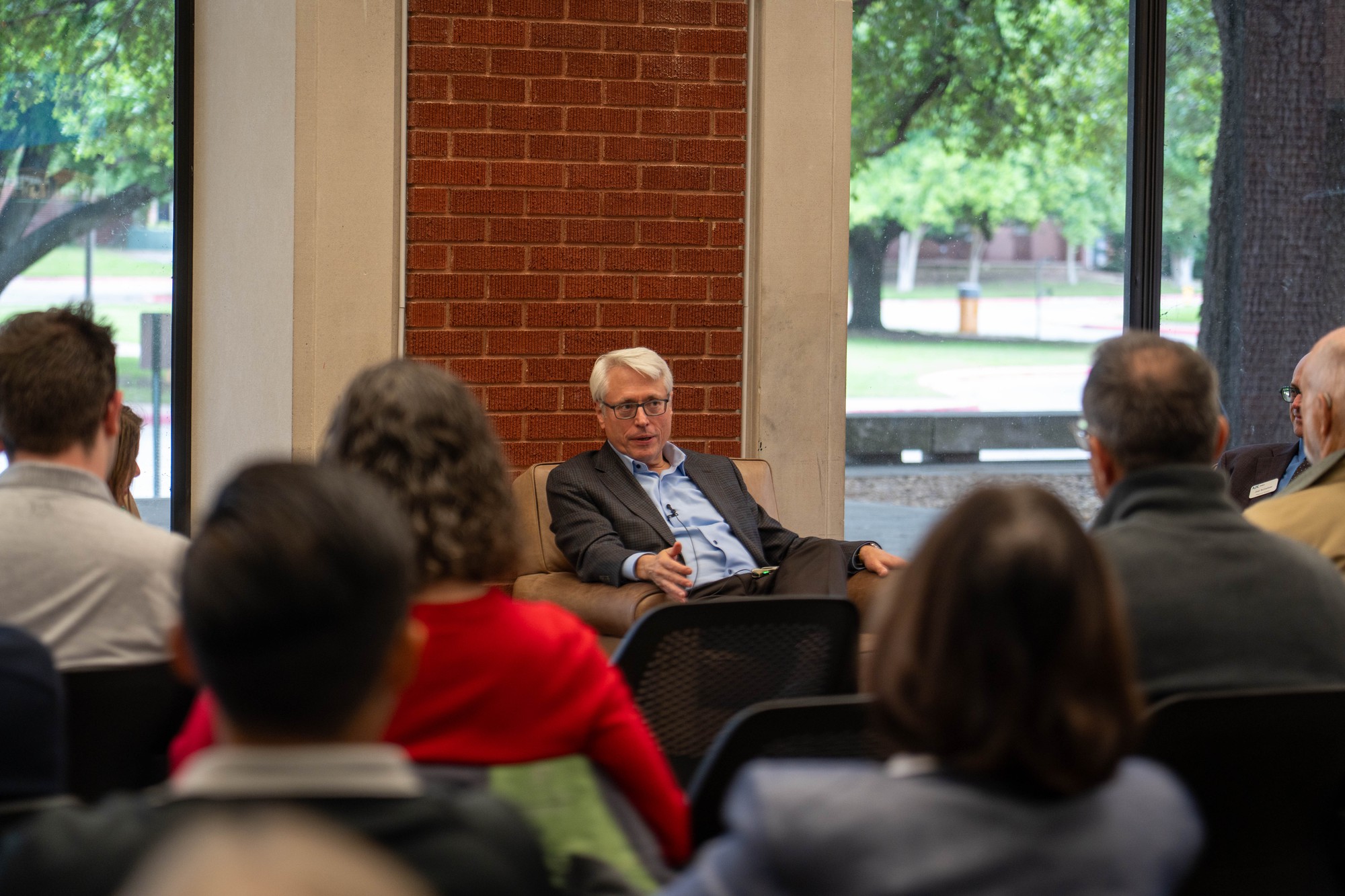
Dr. Dan Barish, an associate professor and undergraduate program director in the history department, brought a multicultural panel to speak on the importance of inclusivity in Moody Memorial Library on Monday.
But Barish’s previous position at Baylor as president of the Jewish Faculty and Staff Association is what inspired him to host “Judaism and Jewish American Life in 2026: An Interfaith Conversation.”
The panel Barish put together consisted of Rabbi David Stern, senior rabbi of Temple Emanu-El; Dr. Elisabeth Rain Kincaid, director of the Institute of Faith & Learning; and Joel Schwitzer, regional director of the American Jewish Committee in Dallas.
“With Jewish American Heritage month just a week away, I’m honored to introduce to you a distinguished panel to talk about Judaism, Jewish American life and the importance of interfaith cooperation in America in 2026,” Barish said.
Kincaid, representing the Baylor population and Protestant perspective on the panel, noted that Christian students on Baylor’s campus feel free to wear apparel that represents their faith. She asked other members of the panel to compare how college-aged and young adult members of the Jewish faith feel about representing their faith through their clothes.
“I think Baylor is probably a place where Jewish students, I hope, feel less pressure to hide their identity,” Kincaid said. “What would you like for us to think about relationships and the sense that Jews, and particularly our Jewish or even our Jewish faculty here at Baylor, are living in a world where they may feel they can’t display their Jewish identity?”
According to the American Jewish Committee, Jewish people feel less comfortable sharing their Jewish identities as boldly as Christians. According to the poll, 27% of Jews have felt the need to hide their true identity when meeting a new person in fear of how the other will react.
“Jews today on college campuses and in communities are both facing challenges,” Schwitzer said. “[For] Jewish families that are considering where to send their kids to college, eight in 10 are taking into consideration how antisemitism is perceived to be handled when it occurs on a campus.”
According to AJC, after the attacks on Oct. 7 in the Israel-Hamas war, Jewish people reported feeling more connected to their faith and their heritage in their personal lives. Stern said sharing one’s faith is a good practice for feeling more comfortable with interfaith conversations.
“We must build the muscle memory for those strong relationships with other faith communities and other communities of diversity,” Stern said.
All three speakers emphasized that community and inclusivity are important in each of their professional roles in their communities.
“I think we look from a faith perspective,” Stern said. “I know these conversations for a fact … are a manifestation of our faith commitments. That means the dialogue is real as opposed to letting us only talk about things we have in common.”