By The Editorial Board
Take a scroll on social media, and it’ll be almost impossible to avoid a message telling you to “fix” the way you look. Open the app to a video about a way to change your body, scroll to start a fresh workout routine and again to find a new diet that fixes everything.
On social media platforms like TikTok and Instagram, influencers dominate our feeds, showcasing their lifestyles and coaxing others to follow in their footsteps. Videos titled “What I eat in a day” or “What I eat in a day to stay skinny” have found their way into our algorithms, planting the all-too-familiar seed of comparison in the mind of viewers.
If you make it to the end of one of these videos, you’re likely to see a few things.
First, you may watch a slim or toned person on your screen, making a point to showcase their flat stomach or ideal curves.
Second, their diet may fail to account for numerous necessary nutritional factors, such as a healthy, adequate number of calories or may focus unrealistically on protein while ignoring other necessary food groups.
Lastly, a sea of comments likely follows, as dozens ask for further advice on how to change themselves to better mirror the original creator.
Basing your diet on the advice of online influencers is a dangerous route to take, as it often lacks critical information that allows consumers to make healthy, responsible choices on their own.
Taking diet advice from anybody online is a risky gamble at best.
There is no way to verify if the food an influencer claims to be eating actually shaped their potentially desirable physique. With current technologies like filters and AI, access to cosmetic surgeries and simple genetic differences, we cannot expect diet changes to deliver the healthy, satisfying results we see on the other end of the screen. Not to mention the power of camera angles and strategic lighting alters our perspective. It’s unrealistic to think we can truly know how someone’s diet plays into their appearance.
The largest food production companies aren’t often concerned with providing the most nutritionally dense products to their consumers; rather, they aim to maximize profits by keeping costs low and market interest high.
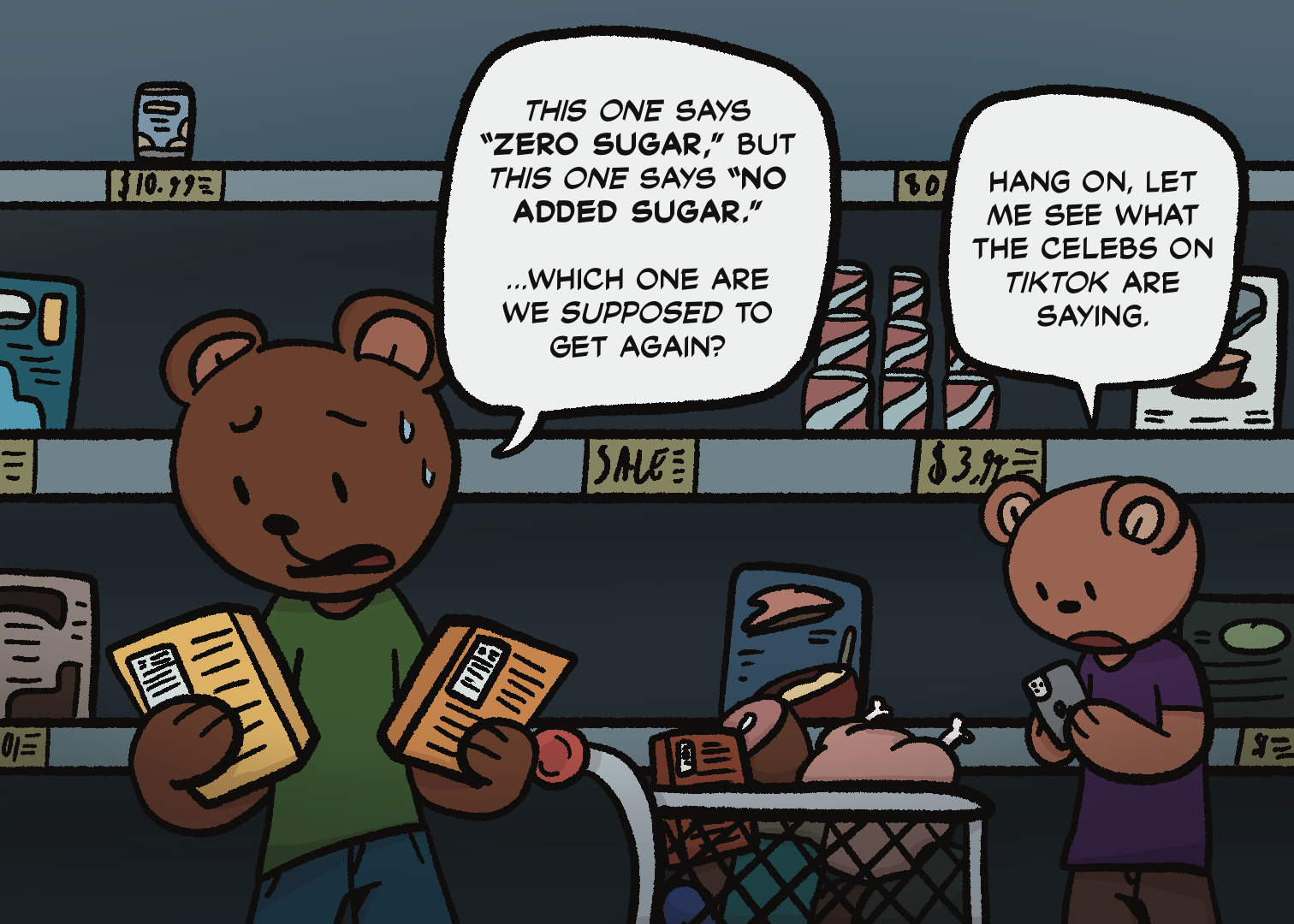
Influencers may not be trying to help their audience either, but rather jumping on the newest fad to help propel their accounts on the algorithm. We have seen this year after year, with the food industry and popular voices walking hand in hand to sell you on the newest craze.
We’ve seen this in the 1990s when avoiding carbohydrates was all the rage. We witnessed it again when low-sugar alternatives flooded store shelves a decade later. Now, we are seeing a new surge with everything from popcorn to soda packing a protein punch.
Constantly consuming media that shovels unrealistic dieting advice into your psyche can, and often does, disrupt your relationship with food. Eating disorders continue to be a prominent issue among millions, with teens and young adults being the most vulnerable.
A 2023 study published by the National Library of Medicine found significant possible correlations linking disordered eating, anxiety and body dissatisfaction and the use of social media. More likely than not, being continually exposed to videos critiquing your habits and reminding you of ways you can change your body will damage your perception of yourself and your diet.
When mixing social media and dieting, stick to simple content like recipe ideas or restaurant recommendations. When we get into the weeds on nutritional needs or closely tracking our intake, consulting with a healthcare professional or nutritionist is the best route.
Food is fuel, and food can — and should — be fun. Eat good food, consult with your doctor and find what makes you feel good.