





By Rhea Choudhary | Staff Writer
Moving from discussions in Baylor Science Building classrooms to conversations in federal agency meetings, Austin senior Miriam Daniel has seen firsthand how healthcare policy takes effect.
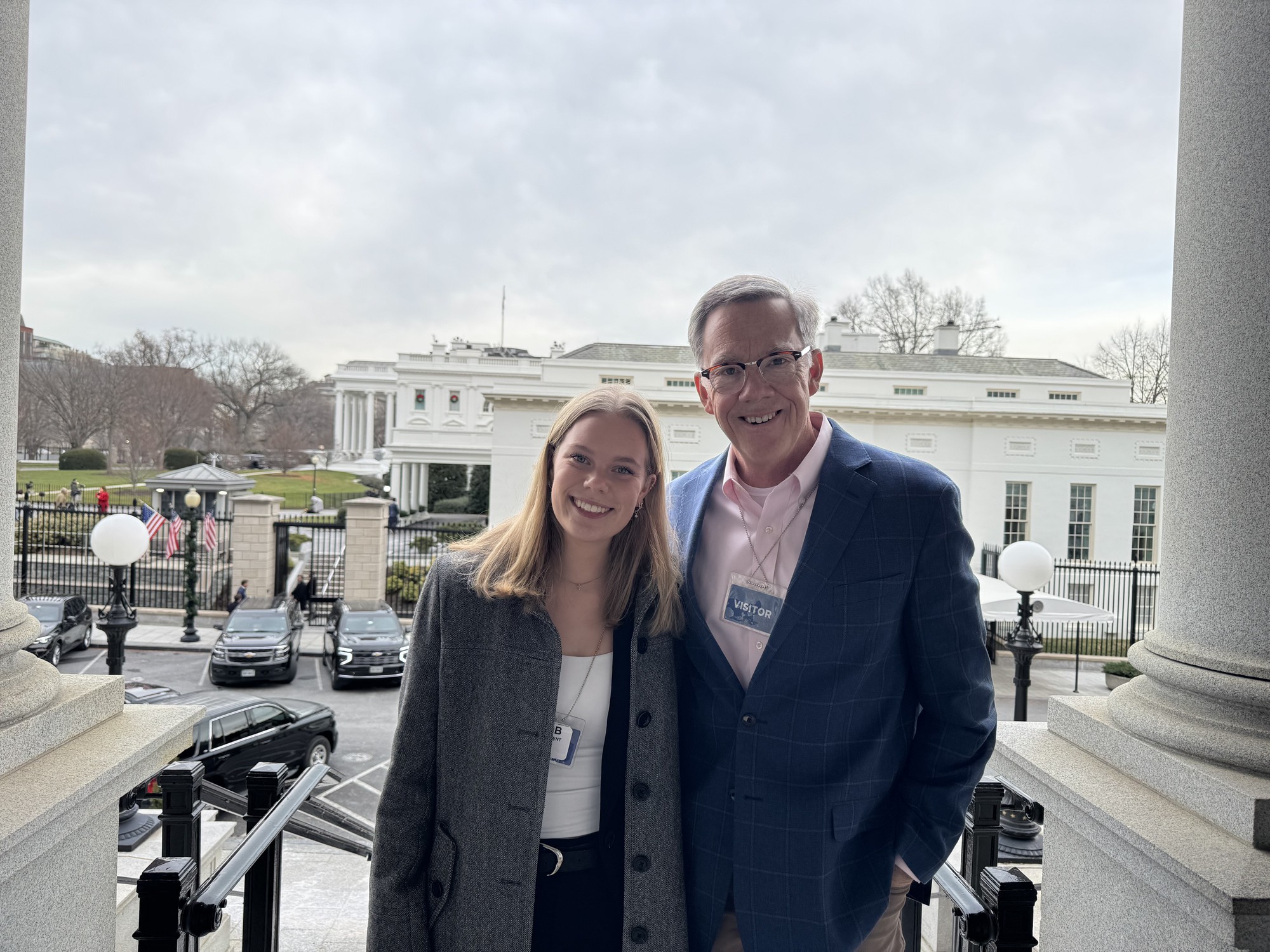
As a medical humanities major and DeBakey Scholar, Daniel traveled to Washington over winter break with Christian Community Health Fellowship CEO Dr. Rick Donlon — and now she prepares to return this summer.
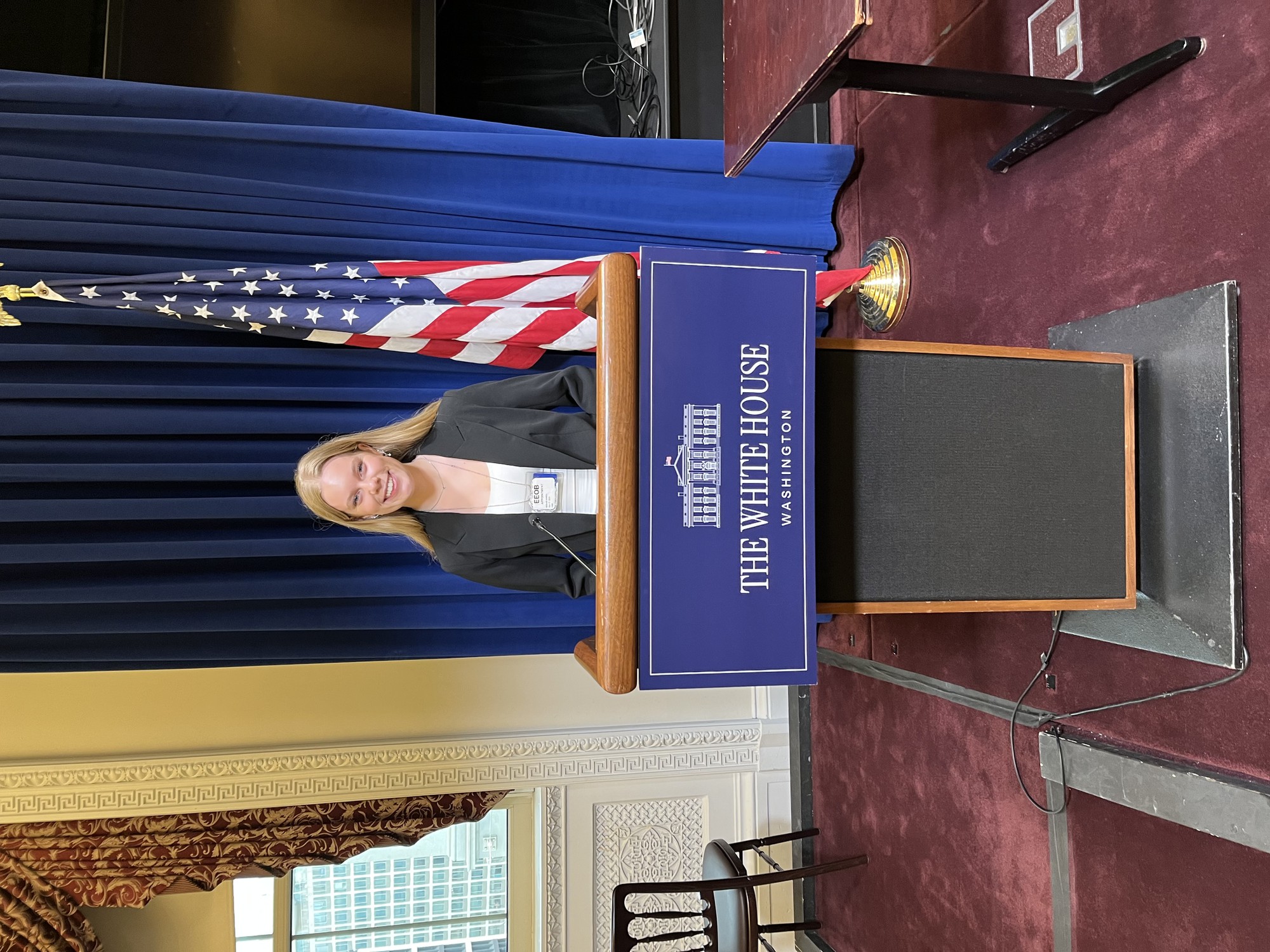
Receiving support from Baylor’s medical humanities department, she sat in meetings with leaders from the White House Faith Office, the U.S. Department of Housing and Urban Development, the Health Resources and Services Administration and the U.S. Department of Health and Human Services.
Being included in these high-profile meetings allowed Daniel to gain insight into how faith-based healthcare organizations navigate government systems while serving vulnerable populations.
“I was able to witness conversations surrounding the intersection of health and policy as we discussed Federally Qualified Health Centers who feel called to love their neighbors by providing care to everyone who needs it,” Daniel said.
The trip came together on short notice, as Daniel reconnected with Donlon after giving a guest lecture at Baylor, focusing on the challenges for Federally Qualified Health Centers — clinics that receive government funding to provide care regardless of a patient’s capability to afford it.
In meetings, leaders discussed new regulations, funding access and the balance between policy requirements versus faith-driven missions in providing care to marginalized communities.
Daniel explained that the experience gave her a stronger understanding of how healthcare nonprofits operate within government frameworks.
“What I learned was how nonprofits that are funded by the government operate, especially when it comes to healthcare and insurance,” Daniel said. “If you take anyone that walks in your doors and serve them, the government will help fund it. It is kind of the reverse of what a lot of private hospitals do.”
Daniel’s academic path depicts that larger interest. Originally a pre-medical, health science studies major freshman year, Daniel switched to medical humanities on a pre-law track after finding her passion for healthcare systems and advocacy rather than clinical practice. Through coursework in U.S. healthcare systems, disability studies and healthcare disparities, Daniel described how Baylor’s coursework and opportunities prepared her well to engage in complex policy conversations at a national level.
“I feel like I would have been a little bit lost in conversations that were super detailed about various parts of the healthcare system had I not had a medical humanities foundation,” Daniel said.
As head of a network of hundreds of clinics serving low-income communities, Donlon regularly meets with federal officials to advocate for both patients and providers. He said the meetings usually involve advocating directly to state and federal leaders on behalf of clinics and the communities they serve, making trips to Washington significant in continuing the work they do.
Donlon explained that the work these clinics do is especially critical in a healthcare system where many individuals still face challenges in accessing consistent care due to financial and systemic barriers.
“Healthcare is really expensive to deliver, and our system is less than ideal, where a lot of people are unable to get reliable healthcare,” Donlon said.
Bringing a student into these more important spaces where change actually occurs was intentional for Donlon.
“This was an opportunity for Miriam to begin to see some of the way that those policy issues get formed and how you communicate with government leaders,” Donlon said.
Founded in the late 1970s, the Christian Community Health Fellowship connects clinics across the country that provide care to underserved populations, providing care to small free clinics to large, multi-site operations. Many of these clinics rely on federal funding streams tied to FQHC designation, making policy discussions in Washington critical to their sustainability.
According to the Kaiser Family Foundation, Federally Qualified Health Centers serve more than 30 million patients nationwide, with most patients from low-income or uninsured populations, highlighting the significance of federal decisions on funding and regulation.
This experience also shaped Daniel’s long-term career goals in health policy and advocacy, specifically serving underserved communities, including individuals with disabilities and members of the deaf community.
“I learned how to advocate for people who don’t normally have a seat in the room,” Daniel said. “That is something I can take into every space I go into moving forward.”
As she prepares to return to Washington this summer through Baylor’s Summer Fellowship for Religion & Social Life program, Daniel said the trip sent her back with more than just a preview of how policy systems operate on a daily basis. It provided her with knowledge of how what she has learned in her medical humanities classes has directly formed into real-world impact.
“I think everything kind of tied together,” Daniel said. “Being in those meetings gave me a way to connect what I’m studying to the people I want to serve.”
This experience not only helped Daniel see where she wants to go but also showed her how she plans to get there.


