By Mackenzie Grizzard | Assistant News Editor, Jacob Stowers | Broadcast Reporter
Exactly a month after Baylor announced a 6.5% tuition increase and a $35 million budget decrease, the administration defended its decision, explaining that it was part of a larger plan to save students money in the future.

LTVN’s Jacob Stowers has more.
A webinar featuring President Linda Livingstone, Chief Financial Officer Curtis Reynolds, Vice President and Provost Nancy Brickhouse and Vice President for Marketing and Communications Jason Cook provided an open forum for the Baylor community to ask questions about the decision.
“We need to steward each other’s resources in ways that enable students to flourish,” Brickhouse said. “And that means making decisions that prioritize their success at Baylor.”
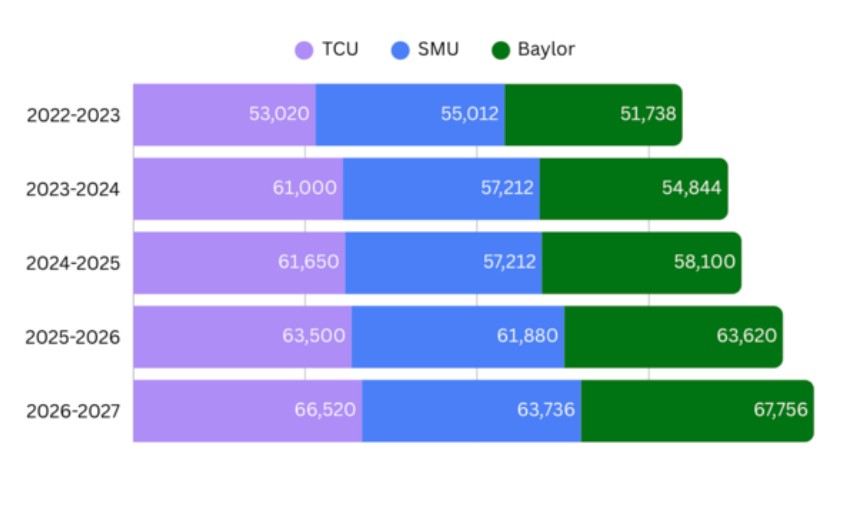
Baylor’s decision to increase tuition by 6.5% followed a 9.5% increase in the 2024-2025 school year. Baylor’s operating budget for the 2025-2026 school year was $995.8 million, and will decrease by $35 million in the 2026-2027 school year. Reynolds explained that Baylor operates on a three-year budget model, which provides the administration with better trend analysis going forward, and that the tuition increases are seen as a way to balance next year’s budget.
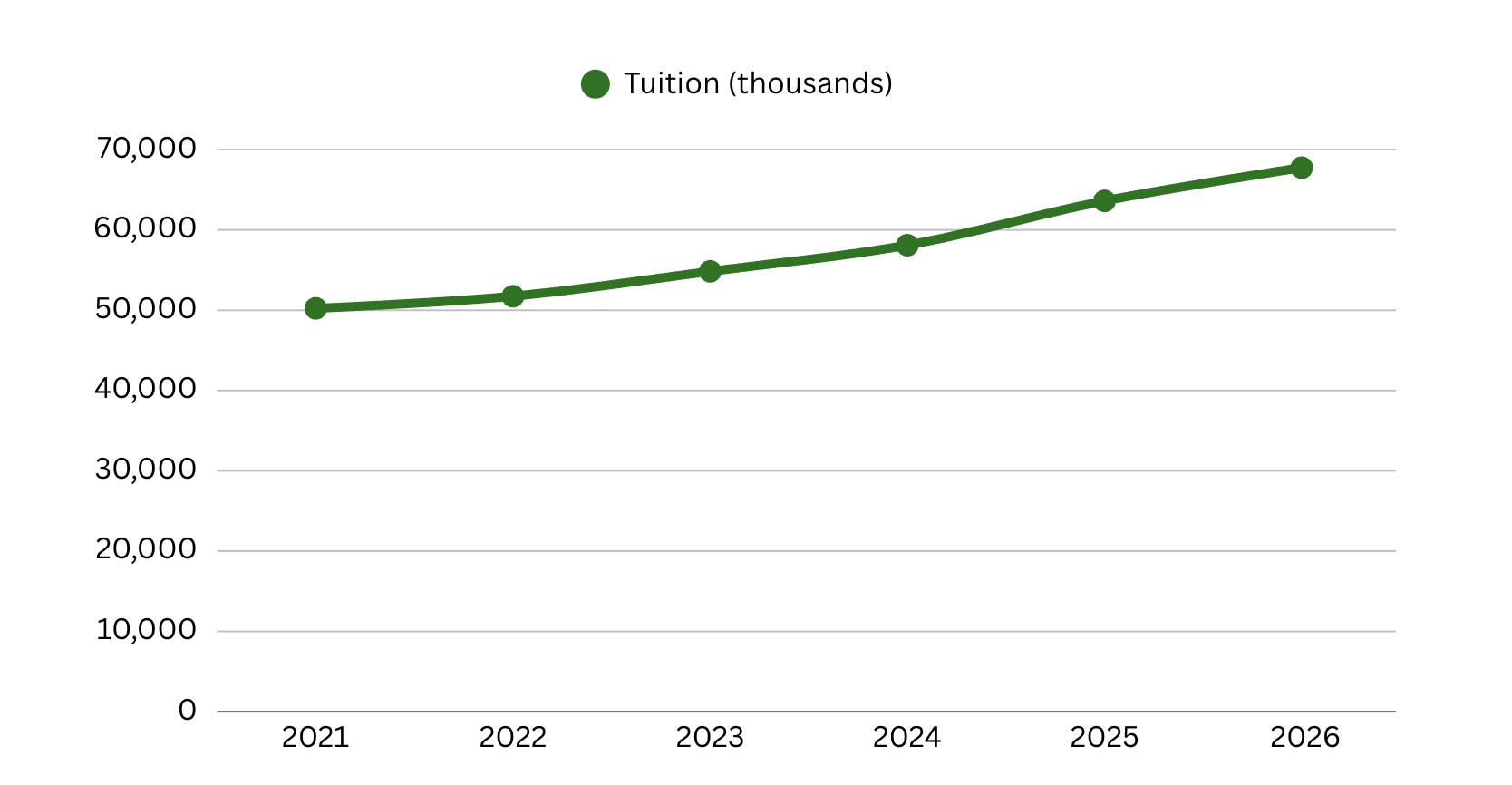
“We determined that we simply just could not take that high of a gain in tuition in the coming year,” Reynolds said. “So in order to bring the tuition down to the increase, even the 6.5%, we had to make some adjustments in our expenses.”
Per last month’s announcement, Baylor will maintain a 3% merit pool for faculty and staff in the 2026-27 fiscal year but will lower its retirement contribution from 10.8% to 8% effective Aug. 1. This decision, Reynolds said, was where most of the budget “flexibility” was.
“The cost of the merit pool is about $12 million,” Reynolds said. “The retirement reduction of the 2.8% generated about $10.4 million, so we’re trying to neutralize that additional merit cost with the offset of the retirement reduction.”
Additionally, Reynolds emphasized that without this multi-pronged approach, repercussions would have been felt at the individual level rather than at the institutional level.
“If the entire $35 million budget reduction that we received, seeking to get to a 6.5% tuition position, was absorbed by the colleges, the schools or the units, that would have caused another high budget reduction increase into the units, potentially impacting north of 100 positions overall,” Reynolds said.
Reynolds also pointed to additional costs related to the merit pool and other university expenses. According to Reynolds, a 1% increase in tuition generates around $6 million in revenue, while a 1% increase in the merit pool costs approximately $4 million on the expense side.
“To provide a 3% merit increase with no retirement reductions at all, no budget reductions … and then continue the recurring investments through Baylor in Deeds, students would have faced approximately an 11% tuition increase,” Reynolds said. “However, to also balance the FY28 budget … we would have had to increase tuition an additional 14% in the coming year.”
Despite the changes, Livingstone said Baylor is still “financially strong” and looks to retain the “value of a Baylor education.”
“We made some really difficult strategic budget decisions that helped the university to generate really significant momentum,” Livingstone said. “It is a large part of why we are in such a strong position today.”