By Stacie Boyls | Arts & Life Writer
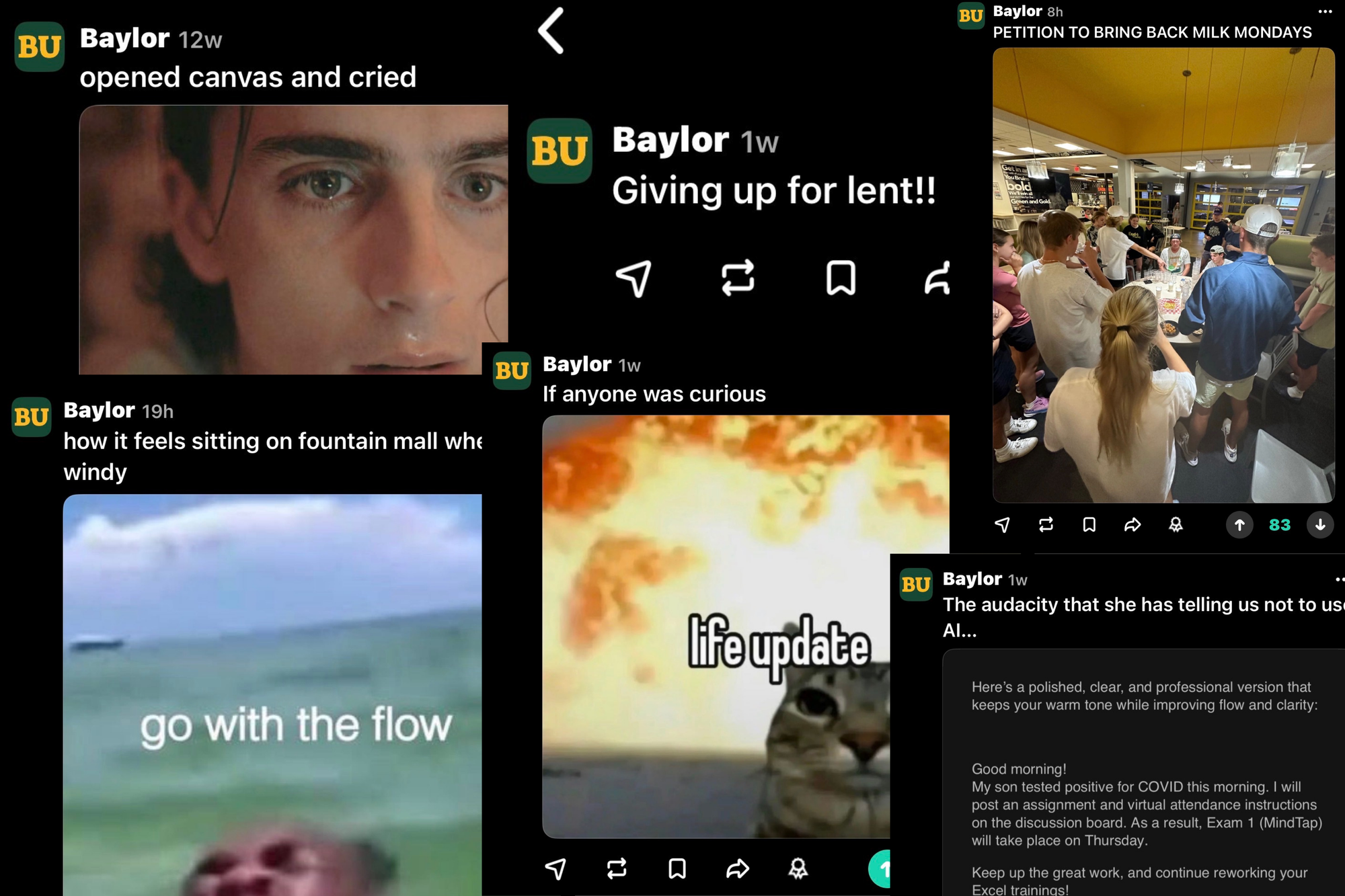
From Sing beef to parking complaints, Yik Yak has once again found its footing on Baylor’s campus — delivering everything from lighthearted memes to anonymous drama.
The location-based social media app allows users to post short, anonymous messages visible to others within a five-mile radius. On Baylor’s campus, that has translated into a digital stream of inside jokes, event commentary and, at times, pointed criticism.
For Southlake senior Austin Smallwood, the app offers a front-row seat to campus culture.
“I definitely do feel more connected to campus,” Smallwood said. “There’s lots of drama I wouldn’t have realized was going on. For example, right now all the groups from Sing are beefing and it’s pretty funny to read through — especially not having seen any of the acts yet.”
Smallwood said he no longer posts frequently but checks the app occasionally. His favorite moments, he said, are hyper-specific posts about niche campus experiences that unexpectedly resonate with hundreds of students.
“You’ll see something really specific that happened, and somehow tons of people relate to it,” he said.
Still, the humor can become repetitive.
“I’d say the worst part is how repetitive some of the posts can be sometimes — like, all right bro, I got it the first time,” Smallwood said.
Highland Park, Ill., junior Annika Blom, had a different experience. She used Yik Yak during her freshman and sophomore years but deleted it in her junior year.
“Honestly, it was a pretty toxic app when I was on it,” Blom said. “A lot of talking bad about people, talking bad about things on campus — just generally negative energy.”
Blom acknowledged that the platform occasionally felt useful, particularly during major Baylor events, when students posted live reactions or shared attendance updates. After big sports wins, she said, the app is often filled with jokes and celebratory memes.
“I also enjoyed when I could relate to people about stuff,” Blom said. “Like knowing I was not the only student who didn’t get parking this year.”
But the anonymity that fuels the humor can also intensify harm, she said.
“I have known multiple girls who have been badly talked about on this app, organizations being badly talked about,” Blom said. “People say things they would never say if their name was attached to it.”
Smallwood echoed the double-edged nature of anonymity.
“The biggest pro is that people post things they might not otherwise say,” he said. “You end up with some pretty funny posts that way. But the con is that some people take it too far.”
Blom added that while anonymity can provide an outlet for students who feel isolated, it can also encourage unhealthy dependence.
“I have known of people who would post multiple times a day about everything in their life,” she said. “I think that’s very unhealthy to rely on a social app like that.”
Not every student experiences Yik Yak directly. McKinney graduate student Katie Cox cannot download the app because she uses an Android device. Still, she encounters Baylor’s Yik Yak culture through reposted meme accounts on other platforms.
“I do get lots of laughs from the Yik Yak meme pages that have started circulating,” Cox said. “Especially the Baylor one — or even the Texas A&M one will pop up sometimes.”
Cox began at Baylor in 2020, when pandemic-era meme accounts surged in popularity. Various Baylor-specific meme accounts served as an online forum for relatable content, much of it stemming from Yik Yak.
“To see a sort of return to a similar era of shared life has been a bit cathartic,” Cox said. “It helps me stay up to date on whatever may be happening — whether it’s the latest Snowmageddon, ‘Milk Monday’ madness or one of the delivery robots flipped upside down again.”
For Cox, even secondhand exposure to Yik Yak content fosters connection.
“It’s nice to be able to relate to fellow students through the crazy and mundane that is college life,” she said.
Still, she cautioned that anonymity does not guarantee invisibility.
“Our public image matters,” Cox said. “What you say or do can come back to you in good ways and bad. You can find anyone on this campus somehow.”
As Yik Yak continues to circulate through screenshots, meme pages and word of mouth, students describe it as a mirror of campus itself — sometimes funny, sometimes messy and often revealing.
Whether it strengthens connection or spreads toxicity, one thing remains clear: on a campus the size of Baylor, even anonymous voices rarely go unheard.