By Rhea Choudhary | Staff Writer
Faculty members gathered for Baylor’s annual Mentoring Research Dinner with one overall question in mind: how does one start a research journey that actually leads to tenure?
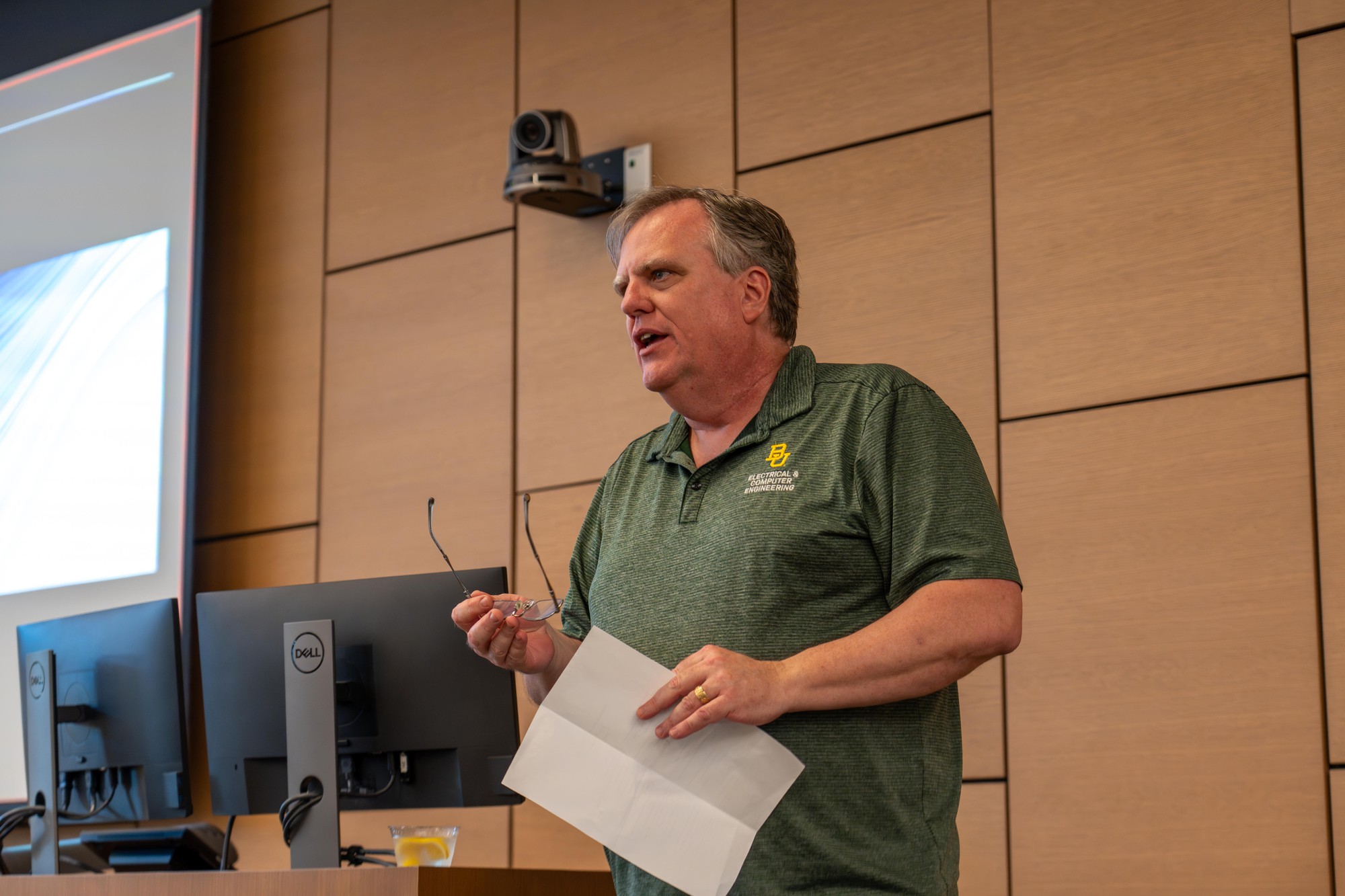
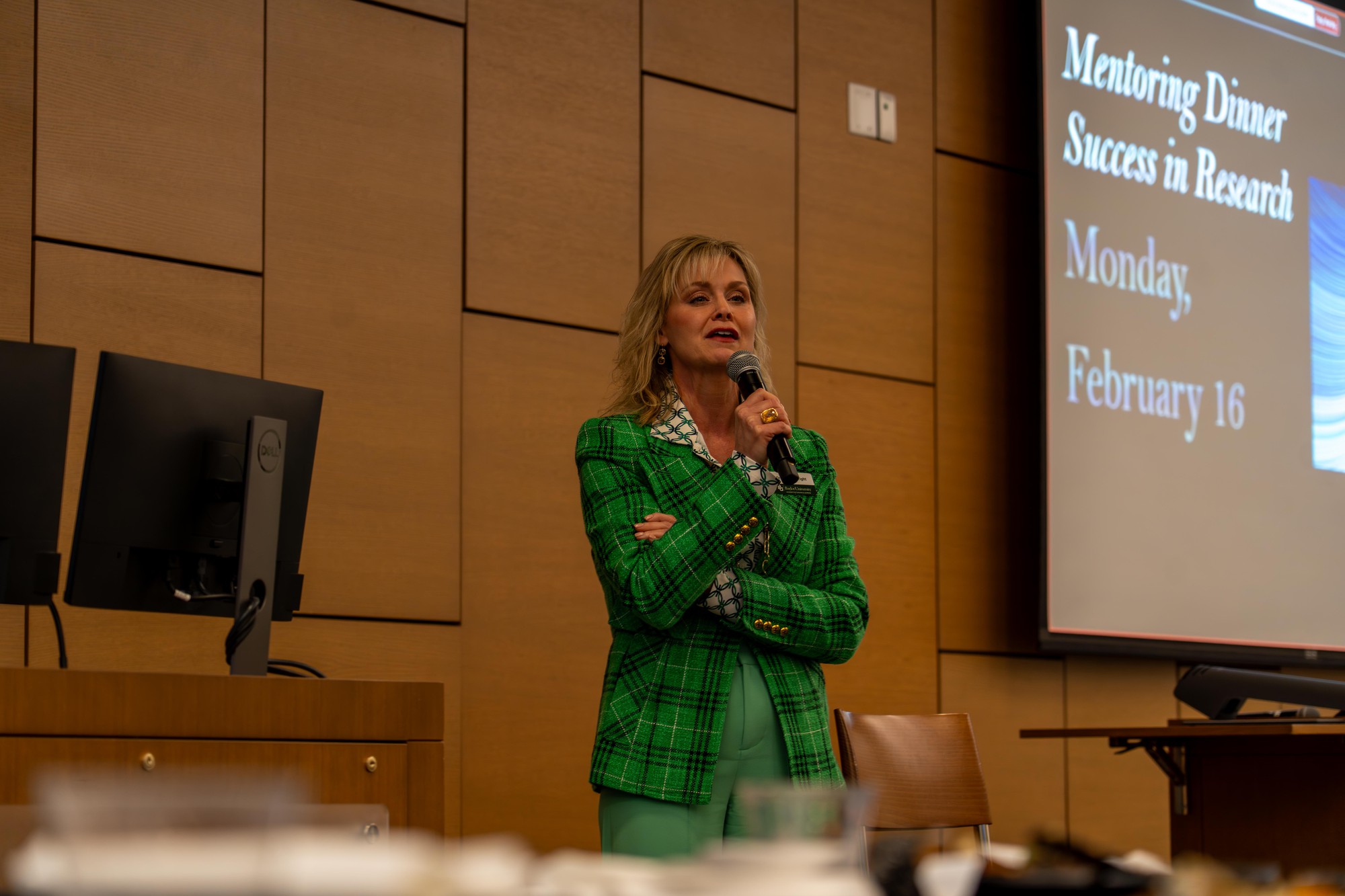
According to Dr. J. Lenore Wright, professor of philosophy and Baylor Interdisciplinary Core, and Dr. Keith Evan Schubert, electrical and computer engineering graduate program director and professor, the answers start with a simple step — just sit down and begin writing.
The two faculty members shared practical advice on Monday evening, drawing on their tenure-track experiences, providing guidance and support on everything from daily writing habits to crafting an effective, successful five-year plan.
When Schubert stepped up to speak at the dinner, he did not begin by listing publication numbers or grant totals. He started with time.
“What is effective is 30-minute write blocks, maybe an hour write blocks,” Schubert said. “As long as you don’t let anybody disturb you, that is your time.”
For incoming faculty in the early years of the tenure track, Schubert focused on habits, including the daily disciplines that gradually lead to and shape one’s long-term success. The most repetitive piece of advice he gave was simple: start.
“Start before you’re ready,” Schubert said. “Just start writing. You can fill it in later, but the search for information without writing it down is eternal.”
Schubert explained that the most common mistake made by new faculty is stalling while gathering sources or perfecting ideas before drafting. Writing first, even if it is imperfectly, helps clarify what information is actually missing. Waiting until everything feels complete can mean never beginning at all.
“Finish before you’re done,” Schubert said. “Leaving thought slightly incomplete at the end of a writing session, which creates momentum for the next day. Instead of staring at a blank screen, you return knowing exactly where to pick up. It will force you to start.”
Schubert also acknowledged a tension that many new faculty may immediately feel of balancing research with a heavy teaching load.
“Research will take you longer than teaching to get started,” Schubert said.
Because classes begin right away, faculty spend extensive hours preparing lectures, but research pipelines often take time. Papers can take months to publish, and grants often take six to 12 months to secure funding. Since tenure packets are usually submitted in the fall of a faculty member’s sixth year, long-term planning has to begin early.
“You really want to get this going as early as you can,” Schubert said. “Don’t put it off. If you prepare too much stuff, you want to get through it. It’s like trying to drink from a fire hose.”
After Schubert discussed the practical formation of actually beginning research work in the process of getting tenure, Wright began explaining that research is considered more than just a requirement.
“I love writing,” Wright said. “I love doing research. It enables us to be a part of the big conversations in our disciplines and maybe even change those conversations, or gives us the chance to create new conversations.”
Nonetheless, she also immediately acknowledged the pressure faculty feel when writing under tenure timelines.
“You’re writing under specific conditions,” Wright said. “Those conditions don’t always lead to that inspiring reminder of why we do research and writing. Think past isolated publications and actually build a coherent research agenda, and that begins by mining dissertation chapters for articles or book chapters. Your writing should be promotion-driven at this stage.”
Instead of trying to cover multiple unrelated topics, faculty should build a connected body of work that shows growth in their research over time. Wright explained that during her own tenure-track years, she formed a tabular five-year research plan to help reviewers easily identify the coherence and timeline of her work. She encouraged new faculty to create accessible, jargon-free five-year plans that reflect upward, annually-updated progress.
“You want reviewers to see a trajectory, one that makes future achievements feel like a natural extension of past work,” Wright said. “You will want to speak succinctly because preparation can reduce stress during evaluations.”
Both speakers noted that research improves within a community. Schubert encouraged faculty members to annually review expectations with their department chairs and find a mentor who strengthens their work. Wright recommended using writing groups, such as Baylor’s Women’s Faculty Writing Program, to stay on track and remain consistently productive.
In her philosophy writing group, members review one another’s drafts a week in advance to provide productive feedback to the writer.
“We do everything from copy editing to having conversations about where [their work] is going and why it matters,” Wright said. “The accountability and feedback are invaluable. Go talk to your chair. Go talk to your colleagues.”
The message given was clear. Tenure does not take a single year, nor does it require a specific population. It takes consistent writing, strategic and effective planning and helpful collaboration. As stated, for faculty beginning their careers, the most important place to begin is simply to start writing.