By Arden Berry | Copy Editor
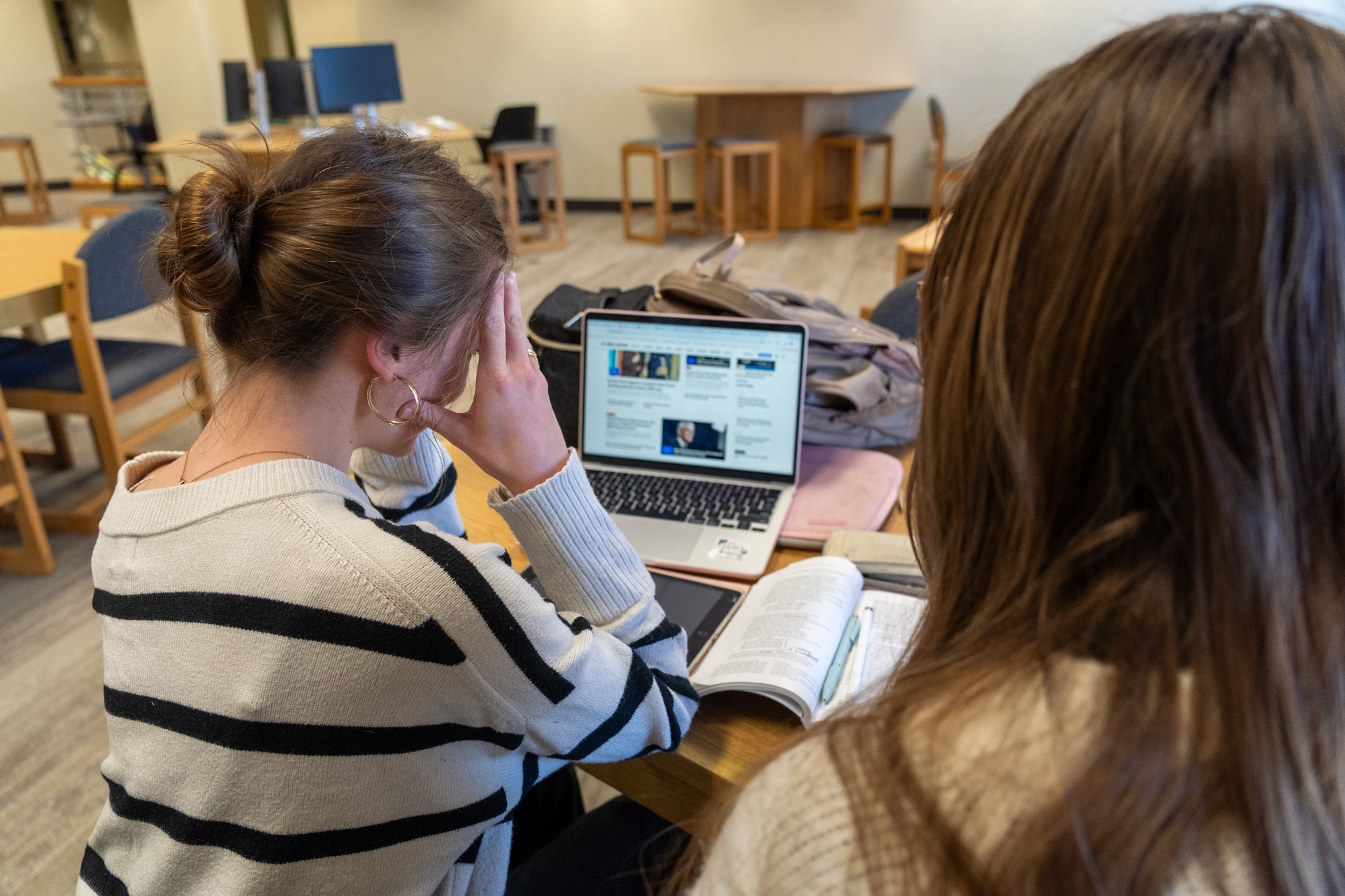
Whether it’s done between classes, during a meal or even first thing in the morning, doomscrolling has become a frequent pastime for students.
Dr. Ed Rogers, assistant director, training director and senior psychologist for the Counseling Center, said too much exposure to negative news affects one’s mental health. These effects occur because the human brain struggles to distinguish between remote and current threats.
“We experience a significant amount of stress even about things that are not immediate dangers to us,” Rogers said. “So just consuming that level of news, it causes a stress response for most people. It kind of activates the body’s flight or fight response. And when that response gets activated over and over again, you can kind of stay in this kind of chronic stress.”
Rogers said stress on an acute or “quick” level is good, organizing one’s response and providing motivation. After an acute stress level, the stress levels return to normal when the crisis is over. But chronic stress created by frequent exposure to negative news contributes to anxiety, depression and even physical and relational effects.
“Chronic stress causes a lot of physical issues, digestive issues or even tension, headaches and stuff like that that can come up,” Rogers said. “On the mental health level, it can start to change how we interact with others. It can affect our relationships. If we’re kind of in a negative mental space about the status of humanity, it can make us more hesitant to form relationships.”
Rogers said this “negative mental space” generally causes one to have a negative perception of the world. People tend to think what they see exactly reflects reality.
“By its nature, news is showing us the most intense things that are happening at any given moment,” Rogers said. “And so it can kind of distort your perception of what’s real in the world and make it overly negative.”
Lakeville, Minn., sophomore Kate Kremer said she seeks out good news but often finds bad news when she’s scrolling.
“It’s really frustrating that every time I open social media or I go to read the news, it’s something devastating or something horrible,” Kremer said. “I feel like the news should be used to spread information that everybody wants to hear. And sometimes, yeah, it does have to be bad news, but sometimes I look to the news to see good news, and there’s never any good news on there anymore.”
According to Mental Health America, one can “protect” their mental health by identifying what media triggers their anxiety or depression, reading the news instead of watching it in video form, limiting their time with the news, checking the accuracy of their news sources and finding active or enjoyable activities.
“Enhance optimism in your life by doing more of what brings you joy and satisfaction,” the Mental Health America website reads. “Some examples include social activities, spiritual practices, physical movement, mindfulness, creative hobbies, journaling, and gratitude practices. Or, it could be something simple like spending time with a pet.”
It can be a challenge to stay up-to-date and informed without becoming overwhelmed by the news. Rogers also said changing the way one interacts with news can help.
“Let’s be intentional about it,” Rogers said. “When in the day are you going to look at news? And for how long? And particularly, when are you going to get off? Because the hard part is [you] keep scrolling to the next thing.”
Rogers said students struggling with the news or any other issues can go to the Counseling Center, the Office of Spiritual Life or even Campus Recreation to work through their stress.
“Being a student at Baylor gives you a lot of advantages and resources,” Rogers said. “I think it’s an amazing resource that Baylor provides free access to mental health care for all students. Therapists are literally trained to help students sort through their distress and develop skills to better manage the stress of interacting with negative events, or even just hearing about them.”