By Kaylee Hayes | Reporter
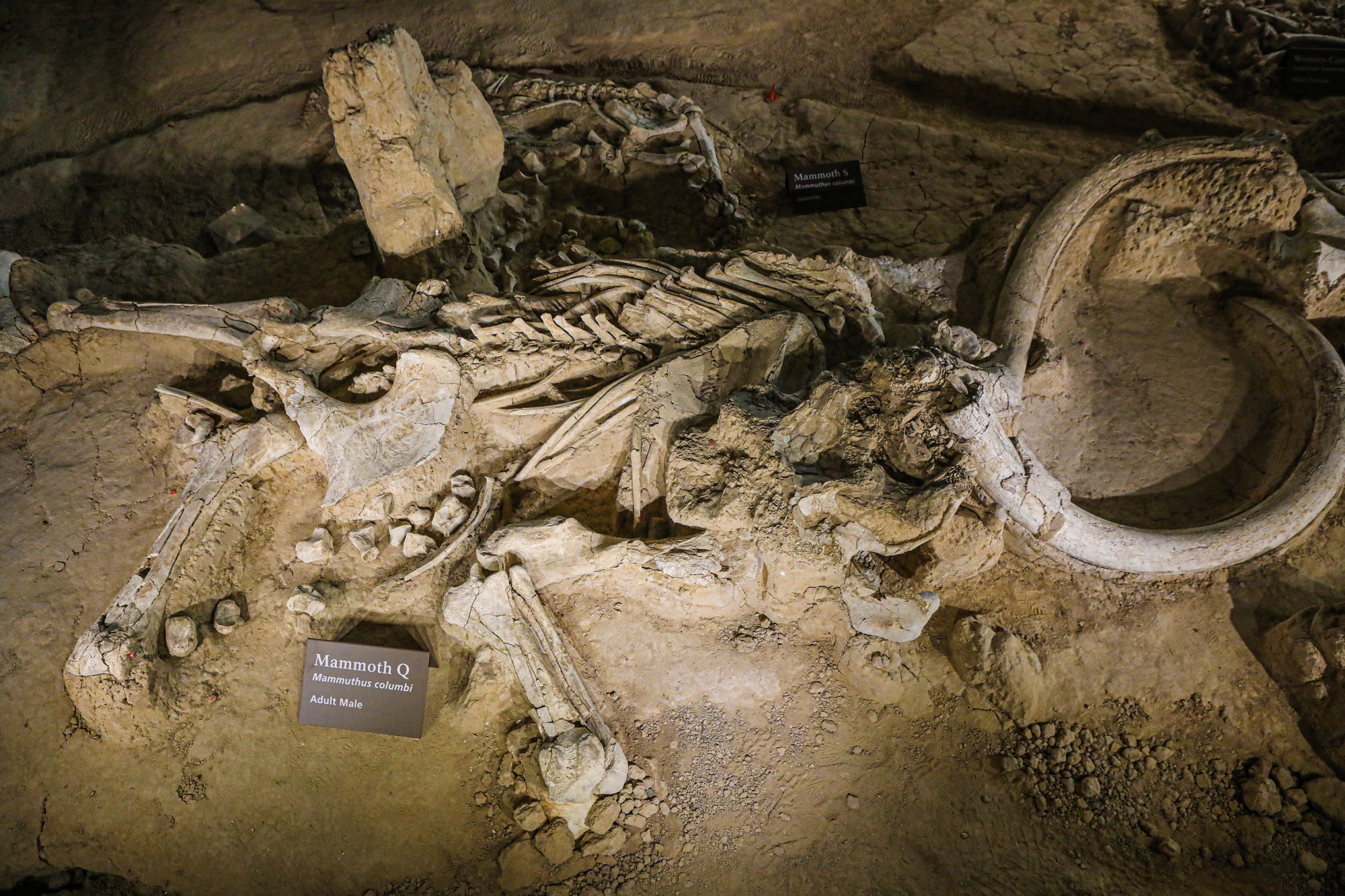
In the Mayborn Museum’s Hall of Natural History, brushes scrape and chisels tap as Baylor researchers carefully uncover fossils from the Waco Mammoth National Monument. Each Friday from 10:30 a.m. to 12:30 p.m., visitors to the museum can gather around and watch them chip away.
The weekly event, called Fossil Friday, is led by members of Baylor’s department of geosciences, including Ph.D. candidates Dava Butler and Connor White. Over the course of two hours, they prepare mammoth fossils in real time, offering museum guests a rare look at the slow, meticulous process of paleontological research.
“My dissertation research focuses on the Waco Mammoth National Monument,” Butler said. “Fossil Friday gives people a chance to see the kind of detailed work that goes into every single piece we find.”
Butler, a Waco native and fifth-year doctoral student, highlighted the distinctive outreach element of Fossil Friday.
“I think the outreach part is what makes this so special,” Butler said. “It’s not just for scientists or students. Anyone can walk up and see what we’re doing, ask questions and realize that paleontology isn’t something far away. It’s right here in Waco.”
White, a Mandeville, La., graduate student, said as he chips away at sediment he sometimes gets the opportunity to explain what he is uncovering to a child or museum visitor who is leaning in for a closer look. White, who also studies vertebrate paleontology, said Fossil Friday allows people to see science happening right in front of them.
“Every time we do this, we get people who stop and say, ‘I had no idea this kind of thing happened here,’” White said. “It’s a reminder that science can be accessible and that it doesn’t have to stay behind lab doors.”
The museum’s partnership with Baylor allows this kind of visibility. Each session invites guests to observe up close, ask questions and learn.
“The Mayborn has been such an important partner in helping us reach the community,” Butler said. “They’ve given us a space to show what this research really looks like; most people don’t ever get to see this kind of preparation up close.”
Dr. Joe C. Yelderman Jr., chair of Baylor’s department of geosciences, said Fossil Friday represents the university’s commitment to both research and public engagement.
“This kind of outreach shows how research and education can come together,” Yelderman said. “It lets our students share their expertise with the public and helps people understand the scientific process in a tangible way.”
Fossil Friday continues to draw visitors from across Texas, locals and Baylor students alike, who are all curious about the work happening so close to campus.
“If a kid walks away thinking, ‘That’s something I could do,’ then we’ve done our job,” White said. “That’s how science grows — when people can see themselves in it.”
Though the process often appears quiet and methodical, Butler said it’s filled with moments of awe and discovery.
“We’re not just cleaning bones,” Butler said. “We’re uncovering pieces of history that tell us how these animals lived, how they died and what the environment looked like tens of thousands of years ago.”
Each Fossil Friday session becomes part of a larger story, tying Baylor’s research, Waco history and public curiosity together.
“This is Waco’s history,” Butler said. “And when people come here and see it happening in real time, they start to realize that they’re a part of it, too.”