By The Editorial Board
The world is full of war, unrest, starvation and strife. America itself struggles with political turmoil, disunity and evil. While millions of things vie for our attention and beg to be fixed, one of our biggest defenses is compartmentalization.
It seems like every time you have something that you absolutely must get done, countless other things seem more important. There’s an essay due tomorrow and suddenly you think you must be able to find the solution to world hunger. The day before a test, your biggest concern is how we are going to solve political disunity.
We on The Editorial Board care about these issues, and they are real problems that require attention. But the fact of the matter is that some things you don’t have control over and some things you won’t be able to find the solution to.
Compartmentalization is a “defense mechanism in which thoughts and feelings that seem to conflict or to be incompatible are isolated from each other in separate and apparently impermeable psychic compartments,” according to the American Psychological Association dictionary.
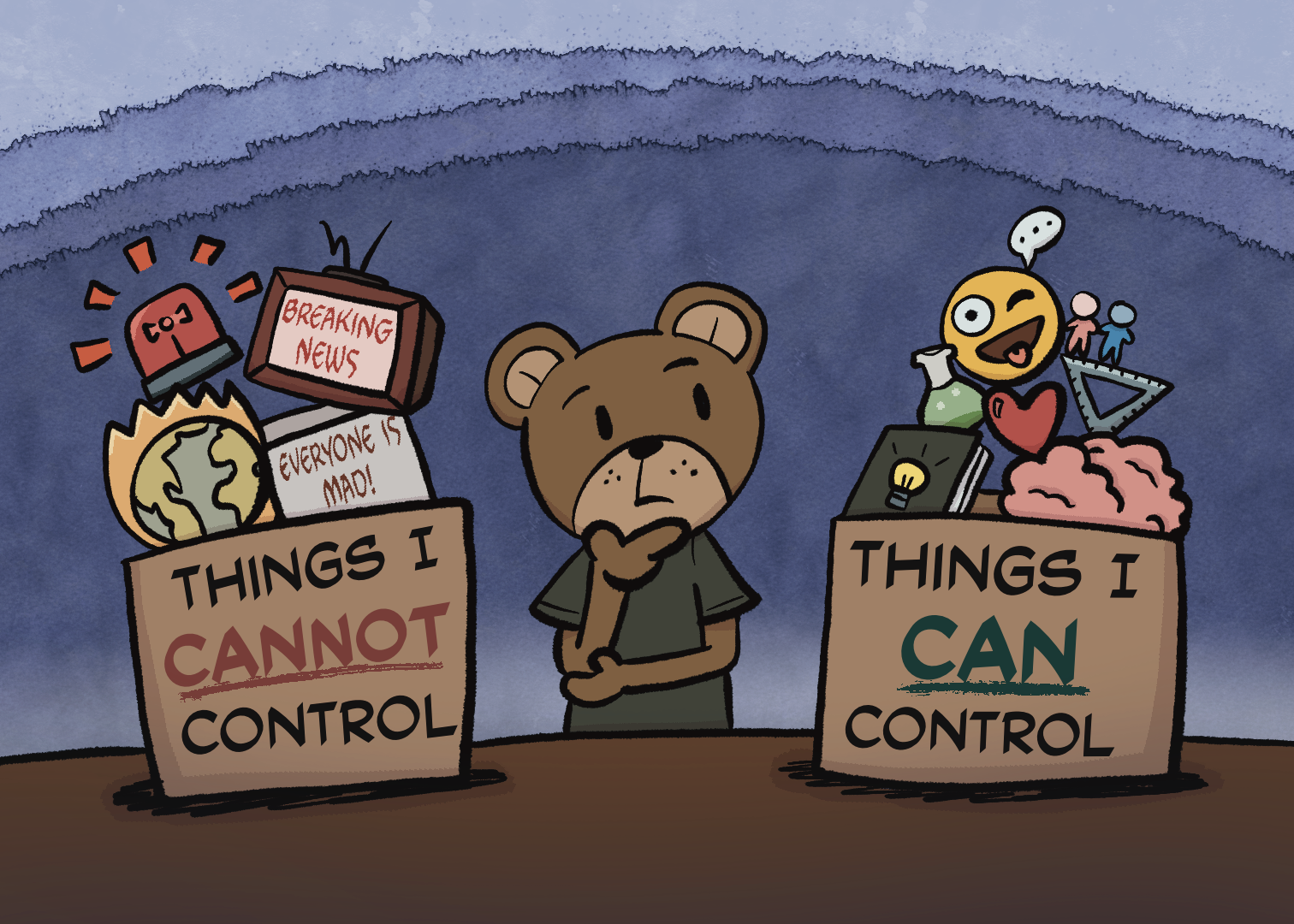
In other words, compartmentalizing means putting your work stress in a work box, your relationship issues in a relationship box, school deadlines in a school box and so on. If you find yourself bringing home your frustration over a bad grade and taking it out on your poor roommate, you might benefit from compartmentalizing your feelings. Compartmentalization can also mean putting your “the world is falling apart” feelings into a “deal with later” box or a “things I can’t control” box.
According to mental wellness storyteller Toketemu Ohwovoriole, compartmentalizing doesn’t mean suppressing emotions. It’s a method of weeding out the things that aren’t productive at any given moment. It allows one to process and confront the emotions relevant at any given time without being overwhelmed by irrelevant feelings. It lets you prioritize the task at hand without being distracted by the ones you haven’t started yet.
“It’s not about ignoring your problems or bottling up your emotions,” Ohwovoriole wrote. “Instead, it’s a way to organize your thoughts to stay present, focused, and emotionally balanced.”
But be careful not to let your compartmentalization cross the line into emotional avoidance. It’s important to address your emotions, but compartmentalizing them can help you decide which ones to address at what time.
According to an article by Mile High Psychiatry, compartmentalization is a helpful tool for emotional regulation, but it’s just that — a tool. It shouldn’t be used to avoid uncomfortable emotions simply because they’re uncomfortable, and it shouldn’t bury your emotions so deeply that they are suppressed rather than shelved.
“Problems arise when compartmentalization becomes a default strategy instead of a temporary tool,” the article reads.
If you compartmentalize your despair over sickness in the world, you’re not suppressing it, just shelving it until it needs to be addressed. You might view that shelved feeling as an Ebenezer for your future goal, motivating you through your undergraduate studies and medical school. It’ll spur you on until you are in a position to actually help fix sickness in the world.
It’s important to have empathy for people who are suffering. It’s admirable to have a drive to help fix those problems, but they can’t all be fixed right now. Whatever stirs your empathy — political reform, the housing crisis, world hunger — compartmentalize it in a box you can revisit when you’re ready. Baylor is full of students who are driven and passionate about changing the world, but often, your degree will help get you there.
Focus on what’s in front of you. Use that focus to succeed, and follow that passion. Follow what stirs your empathy and take steps toward bringing change. If you want to see your government change for the better, it might start with paying attention in your political science class. If you want to help solve world hunger, your first step might be doing your biology homework. Then, one day, you may have the chance to change the label on that box from “things I can’t control” to “things I’m working on changing.”