By Abram Farrington | Staff Writer
With the semester coming to an end, students also find themselves cramming for finals as the last stretch before returning home. But as finals loom and time stretches thin, a question arises — what’s the best way to retain information?
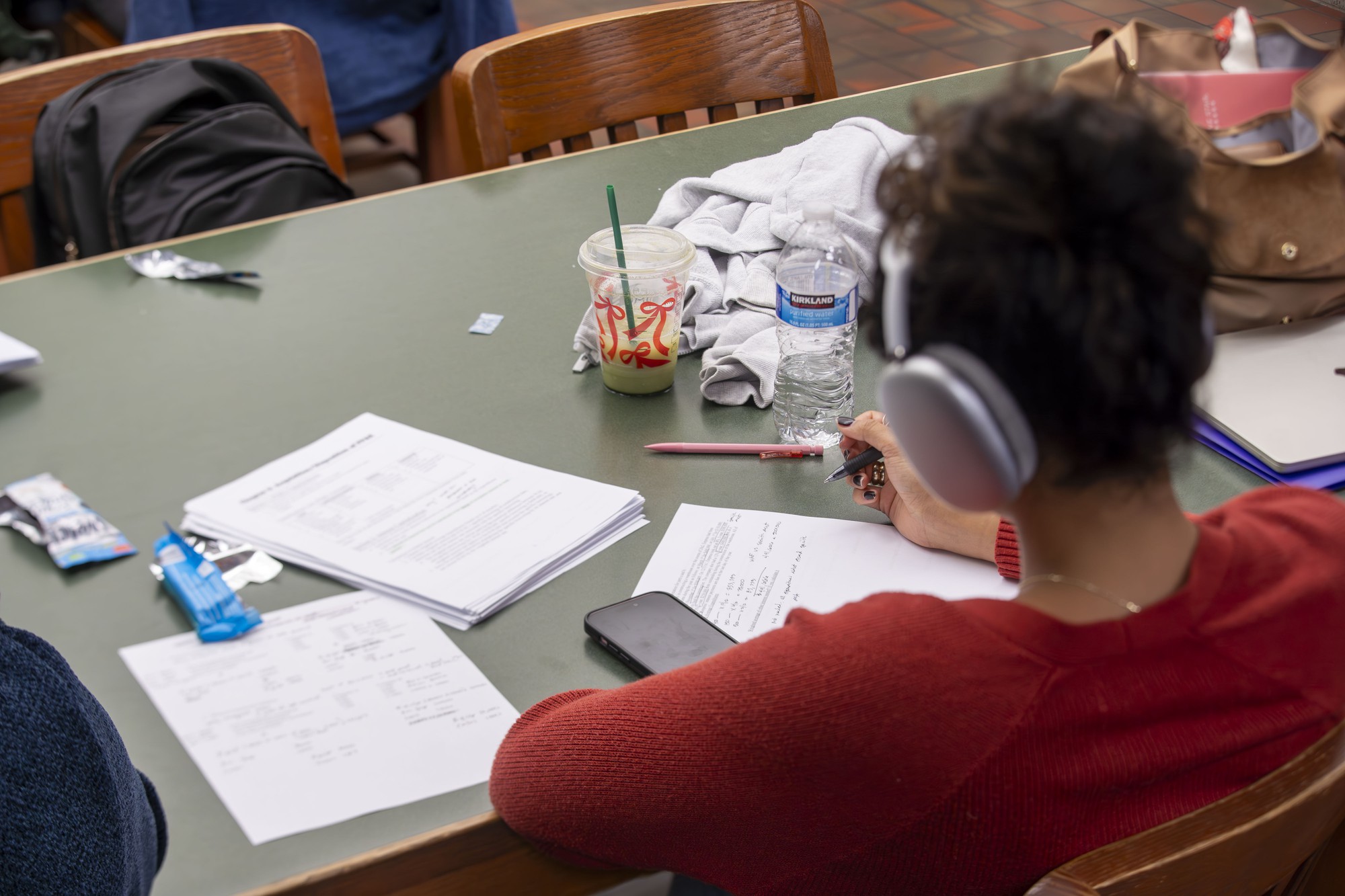
Technology has introduced many online routes of studying. Whether through artificial intelligence or Quizlet, people find themselves with a multitude of options. However, amid these choices, professors suggest considering rewriting notes by hand during all-night study sessions. Handwriting notes is proven to be psychologically beneficial for memory retention and study habits. So this finals season, experts suggest closing that laptop, getting out the notebook and writing between the lines.
Studies show that handwriting notes and study guides activate parts of the brain and enhance overall memory retention. Technology scientist and journalist Charlotte Hu did a study comparing the effects of handwriting versus typing on the brain in Scientific American.
She found that information easily passes in one ear and out the other when typing. Handwriting revealed different results.
“When taking notes by hand, it’s often impossible to write everything down; students have to actively pay attention to the incoming information and process it — prioritize it, consolidate it and try to relate it to things they’ve learned before,” Hu wrote.
Hu found that handwriting is something students must always be aware of, cognitively sorting and consolidating. Comparatively, when typing, students get lost in the act and forget their information. Overall, Hu discovered that handwriting activated broader parts of the brain, fueling cognitive function for remembering.
Likewise, Marieke Longcamp, a cognitive neuroscientist at Aix-Marseille Université, said, “Handwriting is probably among the most complex motor skills that the brain is capable of.”
Longcamp said it’s the most complex because your brain and your hands mirror the letters you perceive. The outcome boosts memory retention and understanding, something typing cannot do by nature.
San Antonio sophomore Mara Petty said she prefers handwriting notes over anything else, especially for her science courses.
“I think handwriting helps understanding, especially with repetition,” Petty said. “When it comes to science, it helps to see your work and understand what’s going on.”
Petty said she enjoys the repetitive element of handwriting and visualizing her notes. Handwriting also helps her notice important details on the page, which she can then highlight and spend more time studying. Note-taking for her helps her remember and understand her material, especially the intricacies of models.
“You also feel accomplished when you fill a page,” Petty said. “It helps you sort your notes and also sort that information in your brain.”
Likewise, Nashville sophomore Mac Vanzant said handwriting helps him remember and study for longer periods than studying at a dull computer screen.
“Staring and typing away at a computer screen sometimes gives me headaches,” Vanzant said. “Being able to write and see myself organize my thoughts is super important to me.”
Vanzant finds studying long-term on a computer uncomfortable and prefers to organize information on a page. As a whole, Vanzant values handwriting and agrees with its psychological benefits.
“I have not once used an iPad or Chromebook for studying since high school, nor do I plan on it soon,” Vanzant said. “I agree that handwriting is better for your brain. Personally, I’d choose my Moleskine journal over anything.”