By Josh Siatkowski | Staff Writer, Jacob Stowers | Broadcast Reporter
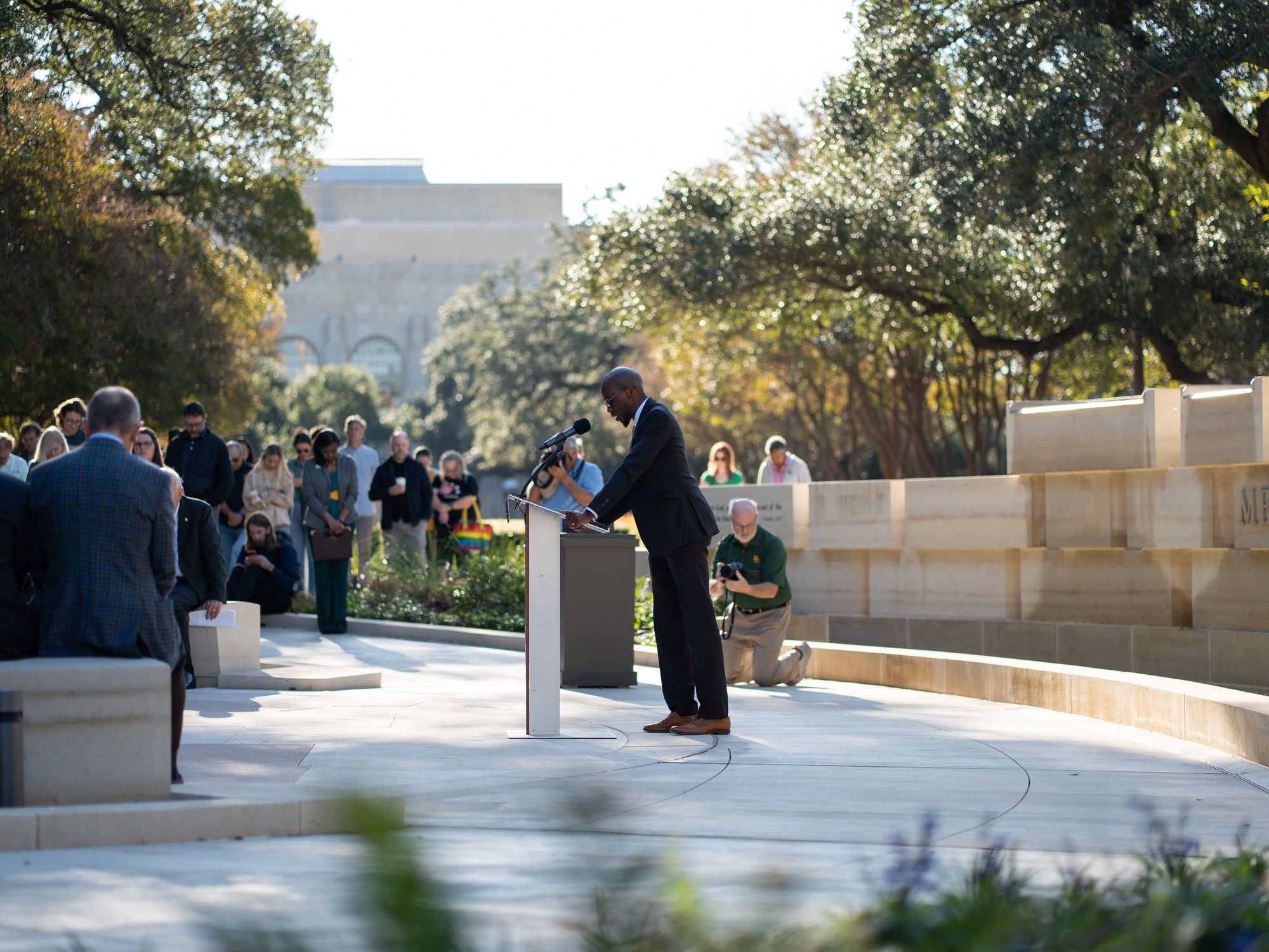
Drawing the attendance of regents, faculty, staff, students and more, the Baylor community united in reflection during the dedication of the Memorial to Enslaved Persons Friday morning.

“We sit under shade trees we did not plant,” Baylor Regent Dr. Michael McFarland said in reference to the forced labor by which Baylor was built. “We drink from wells we did not dig. And we are warmed by fires that we did not light … Baylor’s story, like the story of our great nation, is both complicated and redemptive.”
McFarland, a member of the Commission on Historical Campus Representations that recommended the memorial in 2020, was one of numerous esteemed guests who took to the podium to articulate the layered emotions of the memorial’s completion and its context.
Much of the 30-minute ceremony consisted of speech that balanced a hopeful future with a challenging past and reconciled Christian values with overt injustice.
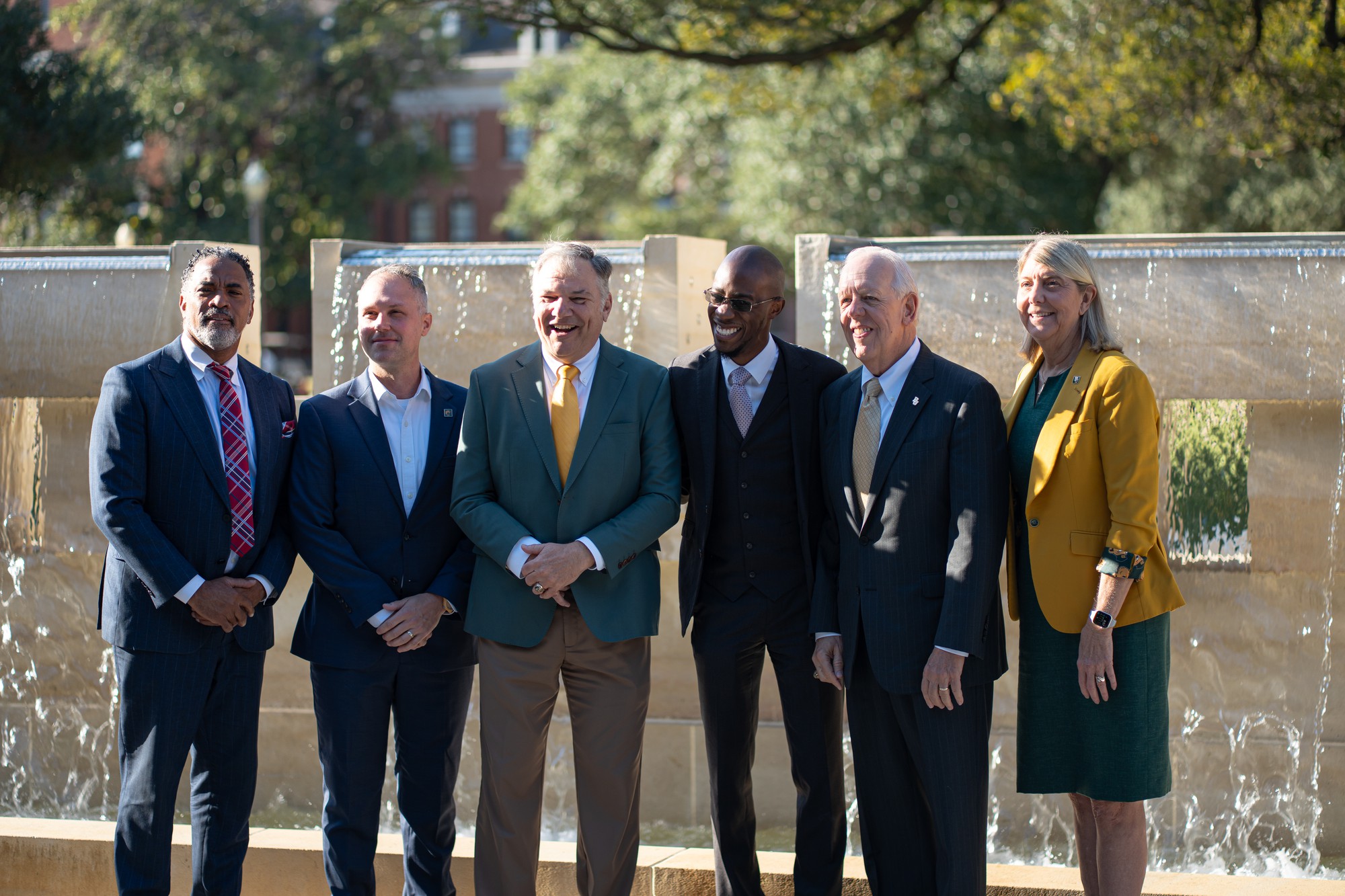
“Today, we do not simply remember their suffering,” McFarland said of the enslaved people. “We affirm their humanity. We do not just memorialize their love. We celebrate their legacy.”
Other speakers echoed McFarland’s spirit. One of them was Dr. Alan Lefever, a Truett Seminary professor, director of Texas Baptist Historical Collections and a member of the commission.
“You have to tell the whole story,” McFarland said. “That’s what the Bible does.”
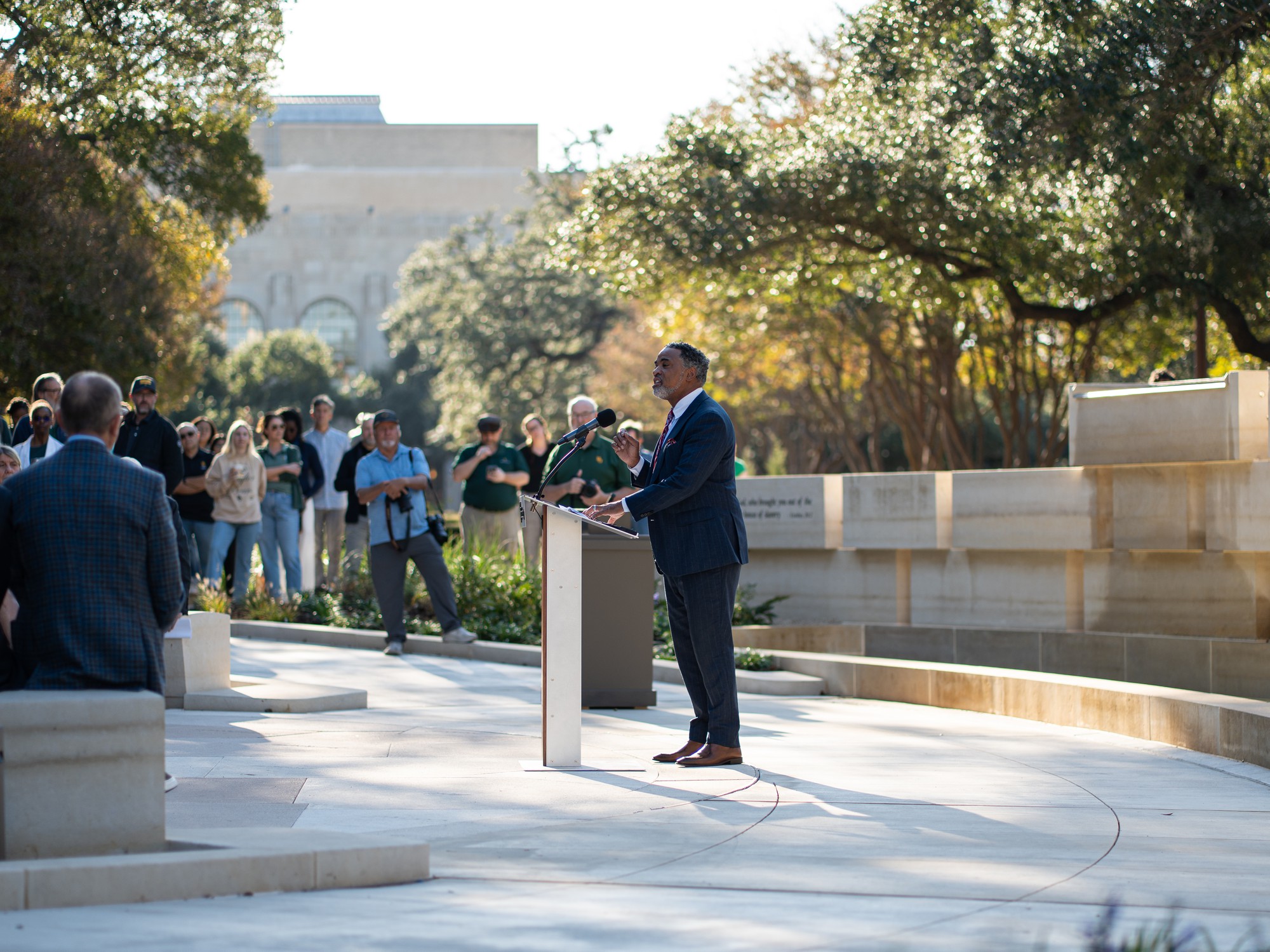
But at the same time, Lefever recognized the inconsistency between biblical teaching and the historic practice of the university — and the nation as a whole.
“Ironically, the cornerstone of the Baptist faith is freedom,” Lefever said. “And when you look at our history, especially Baptists in the south, the one thing that they denied so many people was freedom. The monument honors a group of people who were forced to be part of the Baylor story and become as important to Baylor University as any founder of this school.”
In tandem with Lefever’s and McFarland’s deep reflections, President Linda Livingstone and Sasaki Landscape Architect Ian Scherling offered visions for how the memorial and its intentional design can impact the campus.

The memorial is made up of three components — an inner ring, an outer ring and what the university calls the Resonance Garden. Each one has its own meaning.
“The outer ring honors individuals enslaved by Baylor’s earliest leaders, such as Ann Freeman, who we know was enslaved by two of Baylor’s founders,” Livingstone said. “The inner ring tells the story of slavery around the time of Baylor’s founding in the mid-1800s. It depicts Waco, Independence and the Brazos River that runs between the two cities. Finally, the Resonance Garden creates another peaceful space for us to come together.”
The structure is just one part of a highly symbolic design that includes 33 gaps in the wall to memorialize Judge R.E.B. Baylor’s 33 enslaved individuals, seven fountains of rushing water and a pair of Bible verses that combine material and spiritual liberation. The memorial even includes soil from Independence buried beneath it.
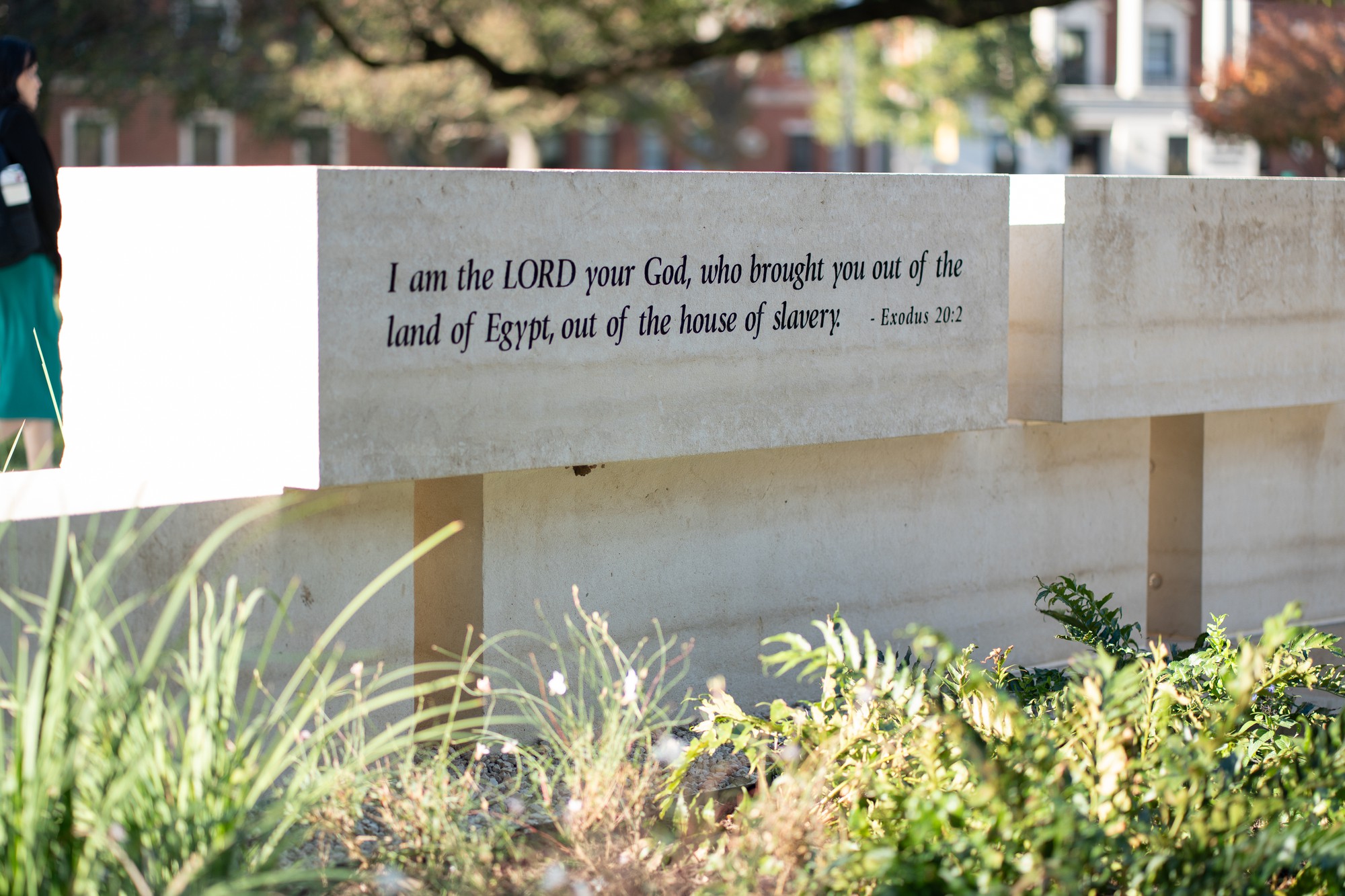
“Every detail is intentional,” Scherling said to the Baylor community. “Our hope is it can be a sanctuary for you, a place to reflect, a place to grow in your faith and a place to be together.”