By Kamryn Anthis | Staff Writer
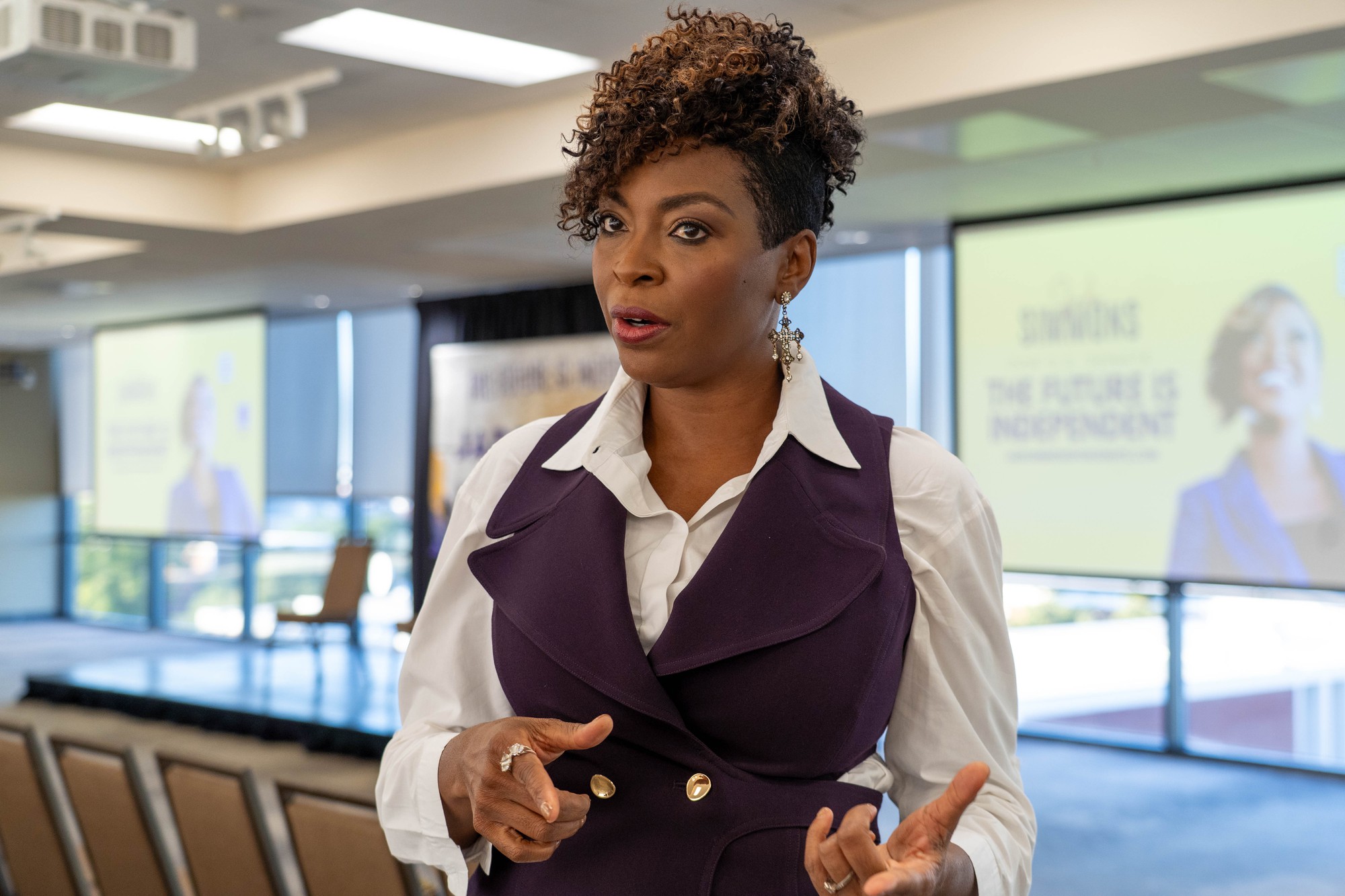
Classical concert pianist, minister, author and mother Jade Simmons is taking an unconventional route to the U.S. Senate, running as an independent write-in candidate in Texas’ Nov. 3 election. During an event Monday at Baylor, Simmons broke down what running independently means for her and the challenges of campaigning without a party affiliation.
Simmons and her team were unable to reach the 81,000-signature requirement to secure a designated spot on the ballot as an independent candidate. She later qualified as a declared write-in candidate.
Simmons said the difficulty of qualifying for the ballot and campaigning without major-party support has not changed her commitment to staying in the race.
“This is why I’m still standing, right?” Simmons said. “I’m the most unlikely candidate. … To say the odds are against me is the understatement of the century.”
She said the obstacles have motivated her to keep the campaign going.
“Any revolution that’s ever happened, anything powerful that’s happened, it wasn’t easy,” Simmons said. “… We have promised since last September that no matter what, we weren’t going to quit.”
Despite the challenges of the campaign trail, Simmons has continued to advocate for giving voters an option besides Democrat or Republican. She said independence gives her more freedom from party expectations, even though campaigning without that support is harder.
“Independence allows me a sort of freedom that running with a party wouldn’t,” Simmons said. “… I feel like the hard work is worth it if you can give more people more options.”
Simmons said she did not originally envision herself running for office. As a wife, mother and business owner, she said there are other things she would rather be doing, but frustration with the government, political dishonesty and party division pushed her toward a campaign.
“‘Why am I running?’ Well, that’s probably the question I start with every morning when I wake up.” Simmons said. “If I’m being honest, I don’t want to run. There are at least four other things I would rather be doing … I am a wife, I’m a mother, I’m a business owner.”
She said she would prefer to see government and elected officials function in a way that did not make her feel compelled to seek office herself.
“I would rather the government just do what it’s supposed to do,” Simmons said. “I would rather candidates just tell the truth, and I would rather there not be as much party division as there is.”
McKinney senior and Baylor Ambassador Josh Staz, who led the Q&A with Simmons, said party affiliation matters less to him than whether a candidate understands the people they hope to represent.
“What I’m really looking for is someone who understands what people are going through … instead of just looking like they’re trying to go along with the party and someone who’s really relatable,” Staz said.
As a Christian, Simmons said her faith affects her everyday life and character, but she believes its greatest political influence is in how she interacts with people who hold different beliefs.
“My faith influences my everyday life,” Simmons said. “… Where I think my faith informs me the most, and this is gonna sound counterintuitive, it actually teaches me more about how I treat people who do not believe like me, think like me, live like me.”
Other candidates in the Senate race, including Democrat James Talarico and Republican Ken Paxton, have also discussed their faith while campaigning. Simmons said she is more hesitant to make explicit expressions of Christianity a centerpiece of her campaign because she believes faith has become too closely intertwined with partisan politics.
“People are surprised I don’t quote more scripture,” Simmons said. “There’s another candidate who quotes more scripture than I do.”
Simmons said she worries Christianity “has been hijacked by politics” and no longer always reflects what it means to “walk like Christ.” Instead, she said her faith primarily guides how she communicates with and treats others.
“So the way that my faith fits in is it tells me how to speak, and it mostly tells me how to treat people,” Simmons said.
Simmons also pointed to her upbringing as an influence on her approach to politics. Raised by African American parents who lived through the Civil Rights Era, she said her father faced barriers she did not and encouraged her to pursue opportunities that had been unavailable to him. Simmons said that influence remains significant even when the two disagree politically.
“Now, what he will say is, ‘Jade, God created you to go into the rooms that they would bar me from,'” Simmons said. “So while he’s shaped some things, we definitely diverge in many ways, but he’s still someone that I call and love to argue with, whenever it’s possible.”