By Jen Forse | Staff Writer
Black gospel history lives on at Baylor, where recordings preserve the faith, music and stories of generations.
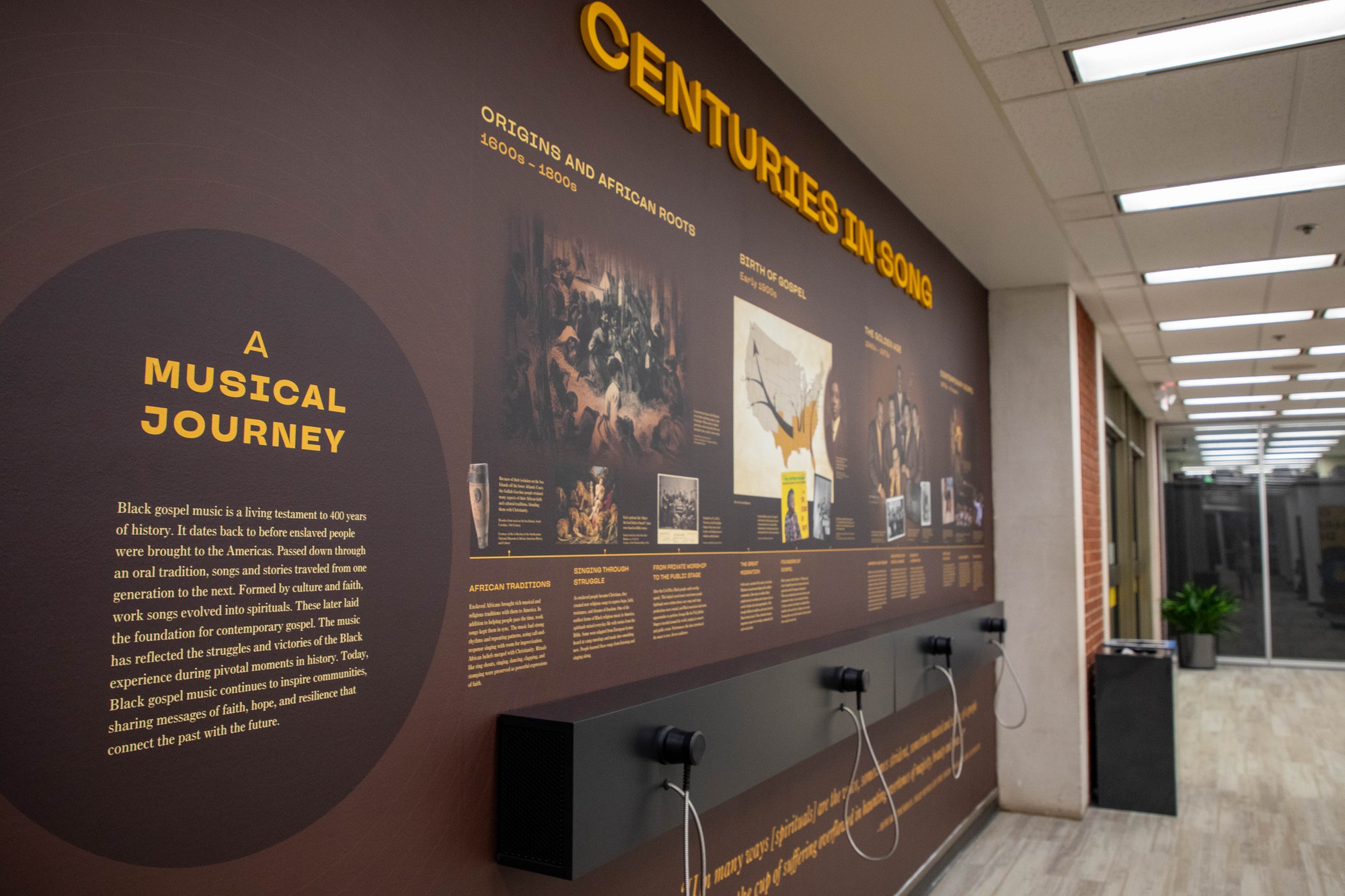
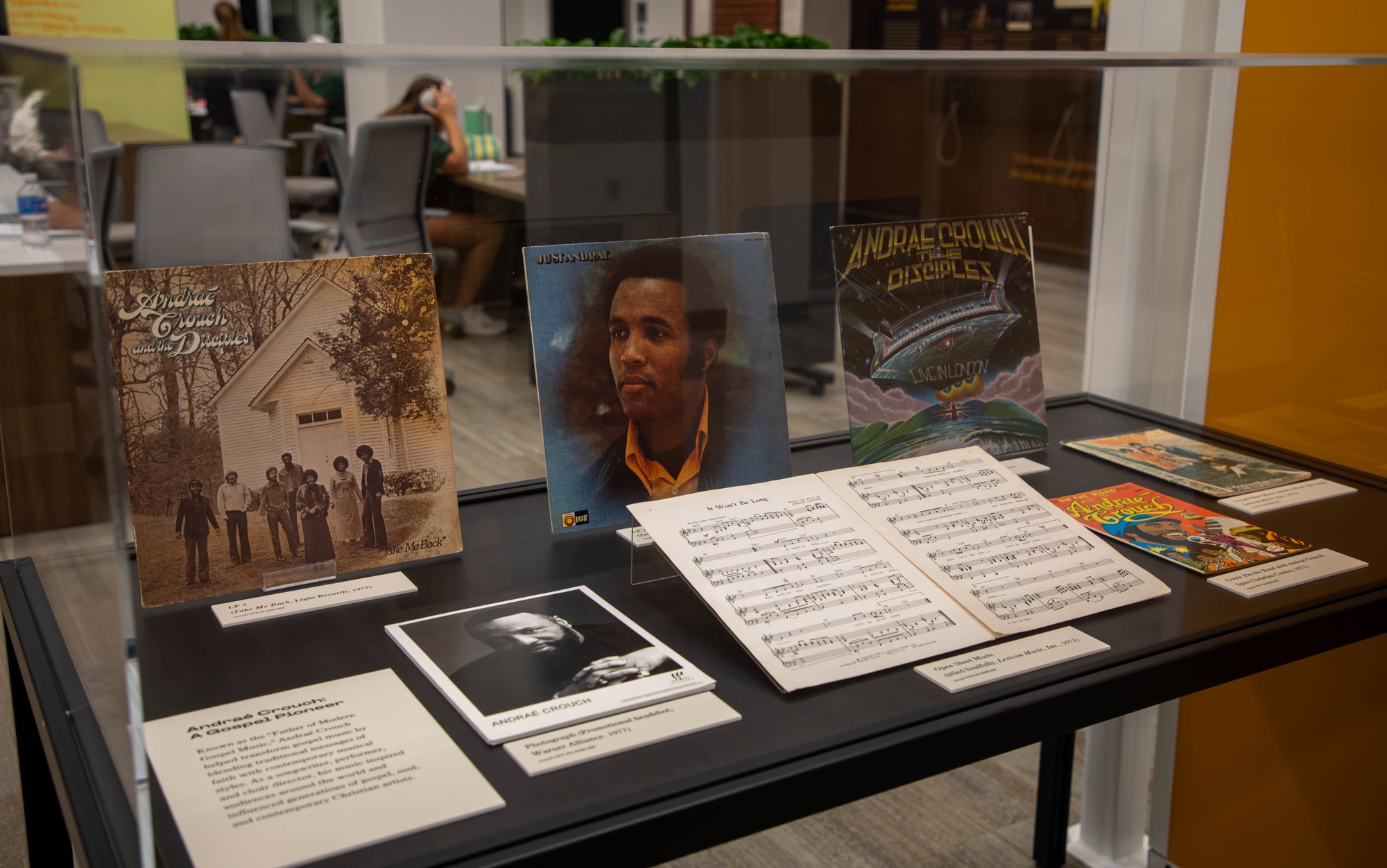
Located on the garden level of Moody Library, Baylor’s Black Gospel Archive conserves the history of Black gospel music. The archives feature historic gospel artists from different eras, including Mahalia Jackson, James Cleveland and The Winans.
Its collections include materials held by Baylor University Libraries as well as recordings preserved through the Black Gospel Music Preservation Program from collections loaned by individuals and institutions across the country.
Visitors can listen to the materials from the collection on campus. A recent expansion of the archives also provides space to host classes, lectures and small concerts. It is equipped with a piano and Hammond B3 organ. Beyond music, the archives support research into sacred materials related to Black church and religious history.
Stephen Newby, ambassador for Baylor’s Black Gospel Archives, said Black gospel helped shape worship and music, inspired social transformation and provided hope to generations.
“They preserve one of the most significant theological, spiritual, cultural and artistic movements in American history,” Newby said. “The archive makes sure the memory and testimonies of those who helped build this tradition are not lost.”
Newby compared the archive’s mission to Mark 2:1-12, in which four friends carry a paralyzed man to Jesus. He said their determination created a pathway for healing, much like the archive brings sacred memories back into view and creates opportunities for healing, understanding and appreciation.
“The archive is a living testimony to God’s faithfulness,” Newby said. “It preserves stories that inspire generations and reminds us that all God’s children have songs to sing, sermons to preach and symphonies to compose.”
Sylvia Jones, program manager for Black Worship Studies, said gospel music’s distinct sound may be recognizable from churches, films and other media, but its significance comes from the combination of its religious message and African American history.
“There are two parts to the heart of Black Gospel, so the actual gospel message and the roots in African American culture,” Jones said. “That’s how it continues, because it tells the story of the gospel, but it’s also intertwining that with the story of people, a people in America, a people that existed before us, a people that exist now and people that will exist in the future.”
For Jones, some of those stories are personal.
Jones said CeCe Winans, who is featured in the archives, brings back memories from her childhood. Jones said her mother loved Winans and frequently played her music. Jones also said she admires Winans’ journey from the 80s as a duo with her brother to today in 2026, and how she has adapted and remained relevant.
“I really look up to the person she is, the way she carries herself,” Jones said. “I think I speak for many people when I say she’s one of those bright shining lights, and I love her music, but also the person she is.”
Jones visited the archives as a grad student for her classes, but her own contribution to the collection has given her a personal connection.
While attending a conference on contemporary worship music hosted at the Museum of Christian and Gospel Music, Jones found a copy of “The First Annual Northwest Gospel Extravaganza” for sale.
The album included names from her time growing up in her hometown of Seattle, including Mount Zion Baptist, an important church in the Seattle area, and The Total Experience Choir, which she grew up hearing about.
“I also saw the husband of one of my former gospel choir directors on the album, who had a big influence on my life,” Jones said. “Then, I noticed that the album was recorded in Seattle at a church I’ve been to several times.”
After Jones discovered the album had warped on the journey home, she brought the vinyl to Baylor’s archive in hopes it could be repaired. Although staff couldn’t repair the record itself, they digitized its contents and added them to the archive.
“I feel I brought a piece of my Seattle history with me,” Jones said. “It’s one of my favorite pieces in the archive. That donation felt especially meaningful to me because of the local connection I had with the album. It felt like a sweet God wink for sure.”
Jones said stories like hers help the archive keep growing. Many of the materials in the archive come from collectors, artists’ families and people sorting through estates.
“There’s some well-known collectors like Bob Marovich who loans some of his collection to the archive,” Jones said. “We receive some contributions from the personal collections of former artists and their kids.”
For those who come across materials of their own, Jones said there is no guarantee the archives already has them in its collection. The Black Gospel Archives provides information online for people interested in loaning or donating materials.