By Hannah Webb | Opinion Editor, Abby Roper | Broadcast Reporter
In the wake of campus tension sparked by Turning Point USA, a student-led gathering at Baylor on Wednesday night advanced a counterclaim rooted not in politics, but in theology — the command to love one’s neighbor is both central to Christian life and inseparable from public action.

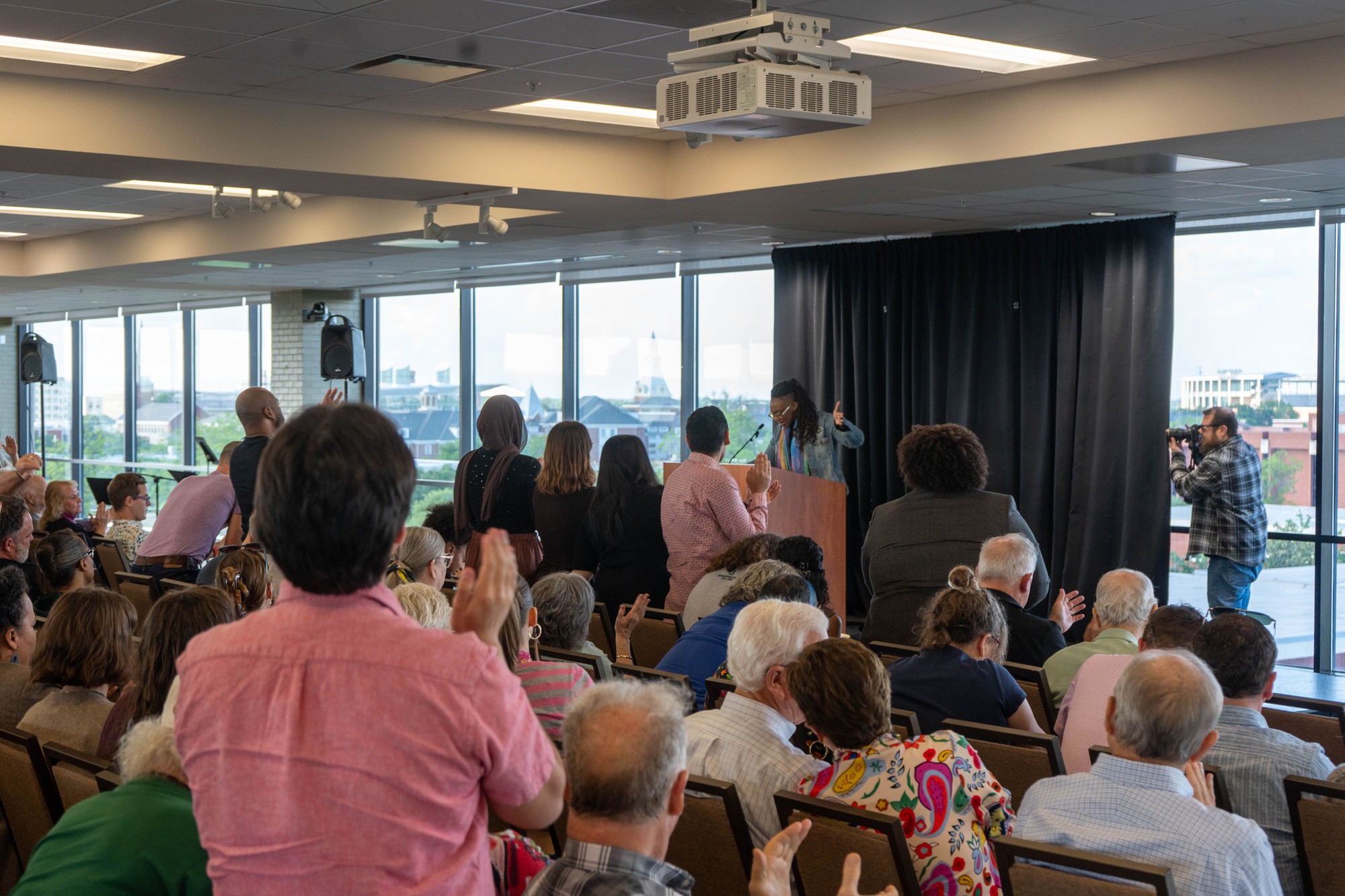
All Are Neighbors, held in the Cashion Academic Center, drew 270 ticketed attendees, totaling 352 people, including VIP guests and speakers, nearly filling all available seats. The event was created in response to TPUSA’s presence on campus, but speakers and organizers consistently emphasized that the gathering was not merely reactive.
Instead, it functioned as a faith-centered call to action, rooted in Christian teaching and expressed through civic engagement.
The evening opened with a band performing songs such as “Lean on Me” and “Goodness of God,” setting an early tone that blended worship with public discourse.
Student speakers from organizations including Baylor College Democrats, NAACP Baylor, Students Demand at Baylor, Hearts for Homelessness, Texas Rising and Prism spoke between the advertised speakers, reinforcing the event’s dual identity as both a student movement and a spiritual reflection.
The Rev. Susie Hayward, a minister and specialist in religion and human rights, framed her remarks around a personal realization about Christian obligation.
“For me as a lifelong Christian, as a Christian minister … I didn’t fully understand the greatest command of all, to love God and love neighbor,” Hayward said.
Hayward emphasized that the call to love one’s neighbor extends beyond abstraction and into action.
“This work of affirming everybody and recognizing that everybody is a neighbor and is deserving of love and that we are called to love everybody, no exceptions, is precisely the work,” Hayward said.
She also rejected the idea that Christian teaching aligns neatly with any political ideology.
“I don’t think the gospel is partisan,” Hayward said. “I don’t think it is ideologically conservative or progressive. All I know is that Jesus commanded us to love God, love neighbors, to heal the sick, to welcome the stranger … and care for the oppressed.”
For Hayward, the event itself embodied those principles.
“[All Are Neighbors] feels very aligned with the gospel to me of opening up doors and welcoming all in and sharing a message of love,” she said. “Any event that is excluding folks just feels very antithetical to the Christian message to me.”
The Rev. Paul Brandeis Raushenbush, president and CEO of the Interfaith Alliance, similarly grounded his remarks in both faith and identity.
“I wanted to respond to the students who were organizing this and to show up as a full person who is a person of faith and also LGBTQ,” Raushenbush said. “I’m so glad I did because today was awesome.”
He returned to the question at the heart of the event.
“What does it mean to show up for our neighbor?” Raushenbush said. “What does it mean to love our neighbor? What does it mean to really believe that there’s a future of our democracy together where everyone has dignity and everyone belongs?”
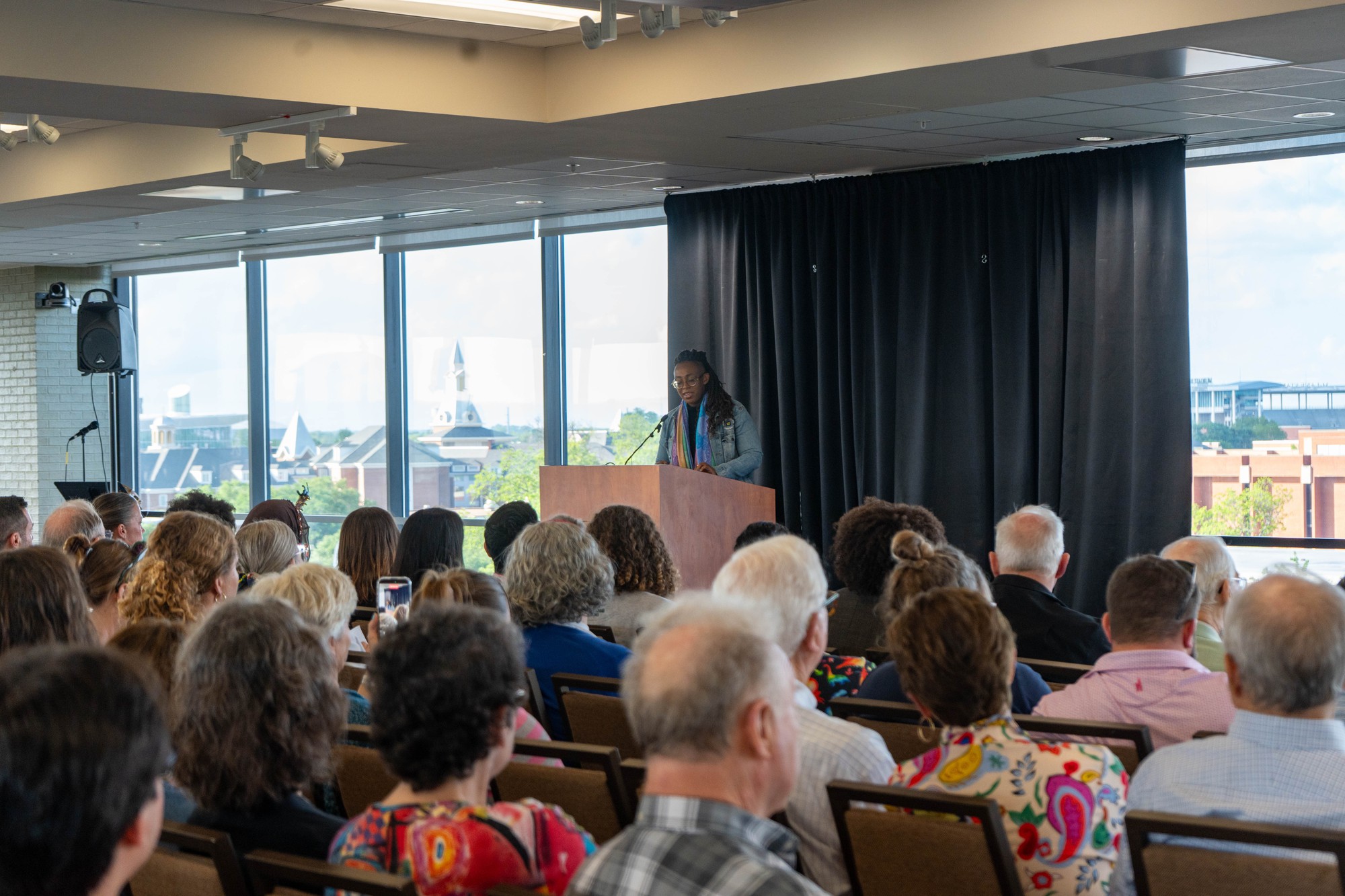
Raushenbush framed neighbor-love as both a theological and civic principle.
“Each one of us … is an embodiment of the image of God here on earth — no exceptions,” he said.
He also cautioned against using religion to impose uniformity.
“We can’t have a democracy with so many diverse people where one group gets to tell the rest of us how to live,” Raushenbush said. “That’s not what democracy is. That’s theocracy.”
Human Rights Campaign President Kelley Robinson described the event as historically significant for the university.
“For the first time in Baylor’s nearly 200-year history, they had an advocacy event that featured all of these speakers,” Robinson said. “That’s incredible.”
In reference to the creation of the event, she said it is obvious it did not happen “by accident.”
Robinson framed her presence not as separate from faith, but as a direct expression of it.
“I’m not here in spite of my faith; I’m here because of my faith,” she said. “It calls me to fight for the justice and dignity of every person.”
She described the gathering as an act of collective agency.
“We’re not just waiting for the future to come — we are the architects of it,” Robinson said. “When you get people like this together in a room … anything is possible.”
Dr. Greg Garrett, professor of English, challenged narratives of Christian marginalization.
“I am a straight white Christian male, and I am not one of the least of these,” Garrett said. “Some white American Christians claim to be persecuted. … This is not reality. It is assumed victimhood.”
Student organizers described the event as both rapid in formation and deeply intentional. Waco senior JW LaStrape, president of Baylor College Democrats, said the idea emerged organically among students.
“It was a whirlwind of energy and activism that I feel really proud about,” LaStrape said. “We had around … four and a half weeks … and it was very student-led.”
LaStrape emphasized that the event signals future efforts.
“This is very far from the end,” LaStrape said. “This is a beginning, if anything.”
Fort Worth junior Joseph Naylor, president of Hearts for the Homeless, echoed that sentiment.
“If one is to be persecuted, let them be persecuted on their possession of the ability to love,” Naylor said.
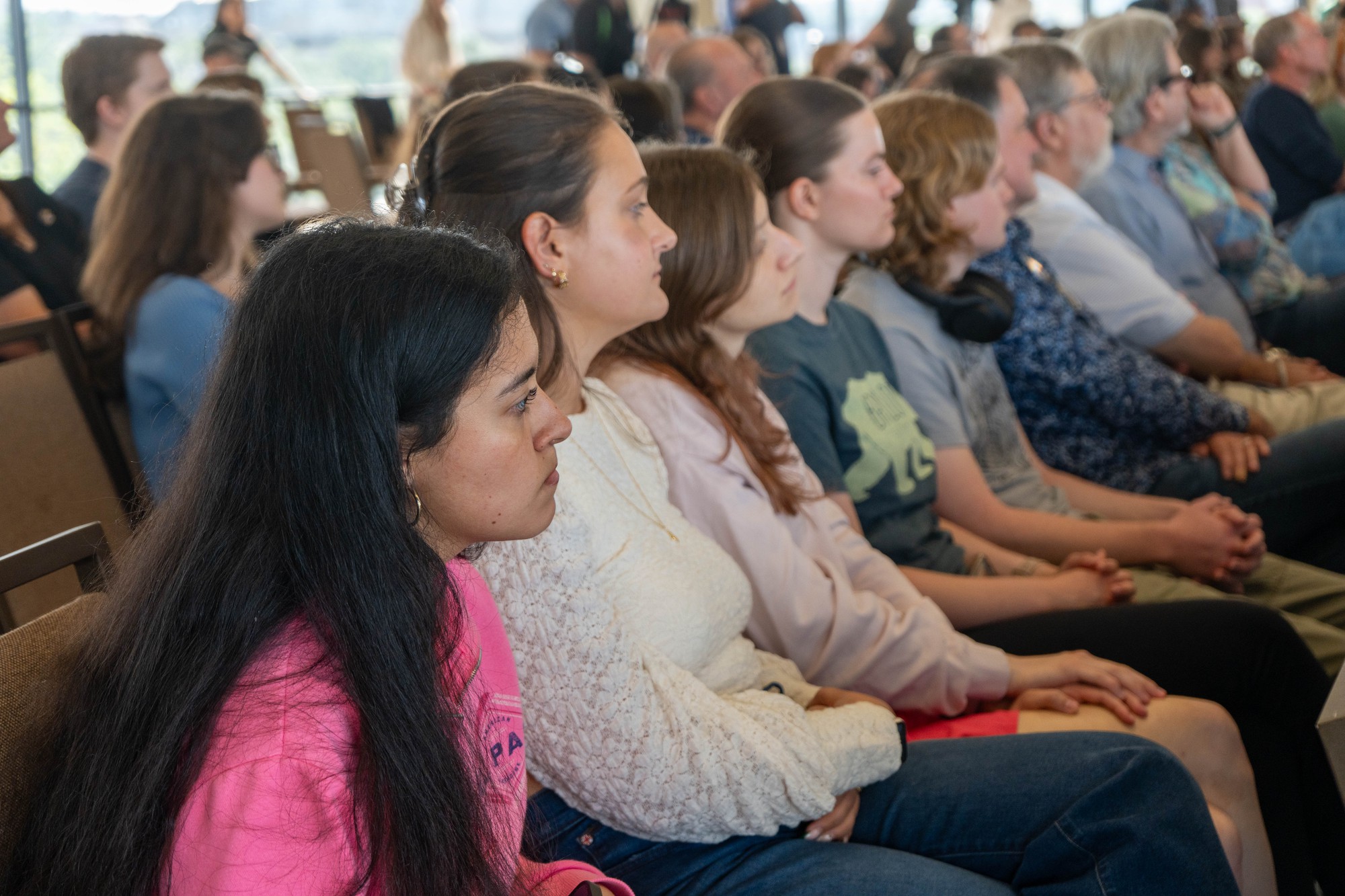
Some students in attendance emphasized the importance of hearing differing perspectives on campus. Seth Bullard, a Willow Park master’s student, said it was “good to see differing views” represented and described the event as fostering “a community that feels a little more welcoming” to a range of viewpoints, a sentiment Robinson echoed from the stage.
“This moment that we’re sitting in exists because people spoke up, because students organized, because the community decided that if harmful ideas were going to have a platform, that, by God, the truth would have one, too,” Robinson said.