By Addison Gernenz | Intern
Art Center Waco’s current exhibit, titled “More is More is More: A Melody of Maximalism,” features four artists who have brought maximalist art styles to Waco. The exhibit features a variety of media, messages and materials that invite viewers into an eclectic, intimate world of artistry.
Artists Nichól Brinkman, Niki Dionne, Ivette Ramos Levy and John Storm have their work displayed in the exhibit, which presents different perspectives on maximalism and its impact on art. The exhibit will be on view until April 25.
Brinkman’s art is shown through stuffed, whimsical characters. A frog named Pip with a mushroom purse and hat and little flowers on the knees of his pants wearing light blue rollerblades; a girl named Beatrice with pink puffy pigtails in an elephant costume.
She also includes a man named Leon, whose head is a bright yellow crescent moon, with a conductor’s hat.
Several are displayed as soft sculpture, but viewers can also see small framed mixed-media drawings that show the characters’ original forms, as well as separate drawings by the artist.
Brinkman’s artist’s statement clarified her thoughts on the project.
“I create characters who live in their own whimsical, slightly surreal worlds,” Brinkman said in her artist statement. “I bring to life figures with personalities, quirks, and histories — monsters, clouds, frogs, and improbable humans — each with their own small stories.”
Brinkman’s soft sculptures are created from fabric and fiber. She includes armature wires that allow for gestures and poses, emphasizing the individual character’s personality and expression.
As for Brinkman’s drawings, they capture softer moments of her artistic world.
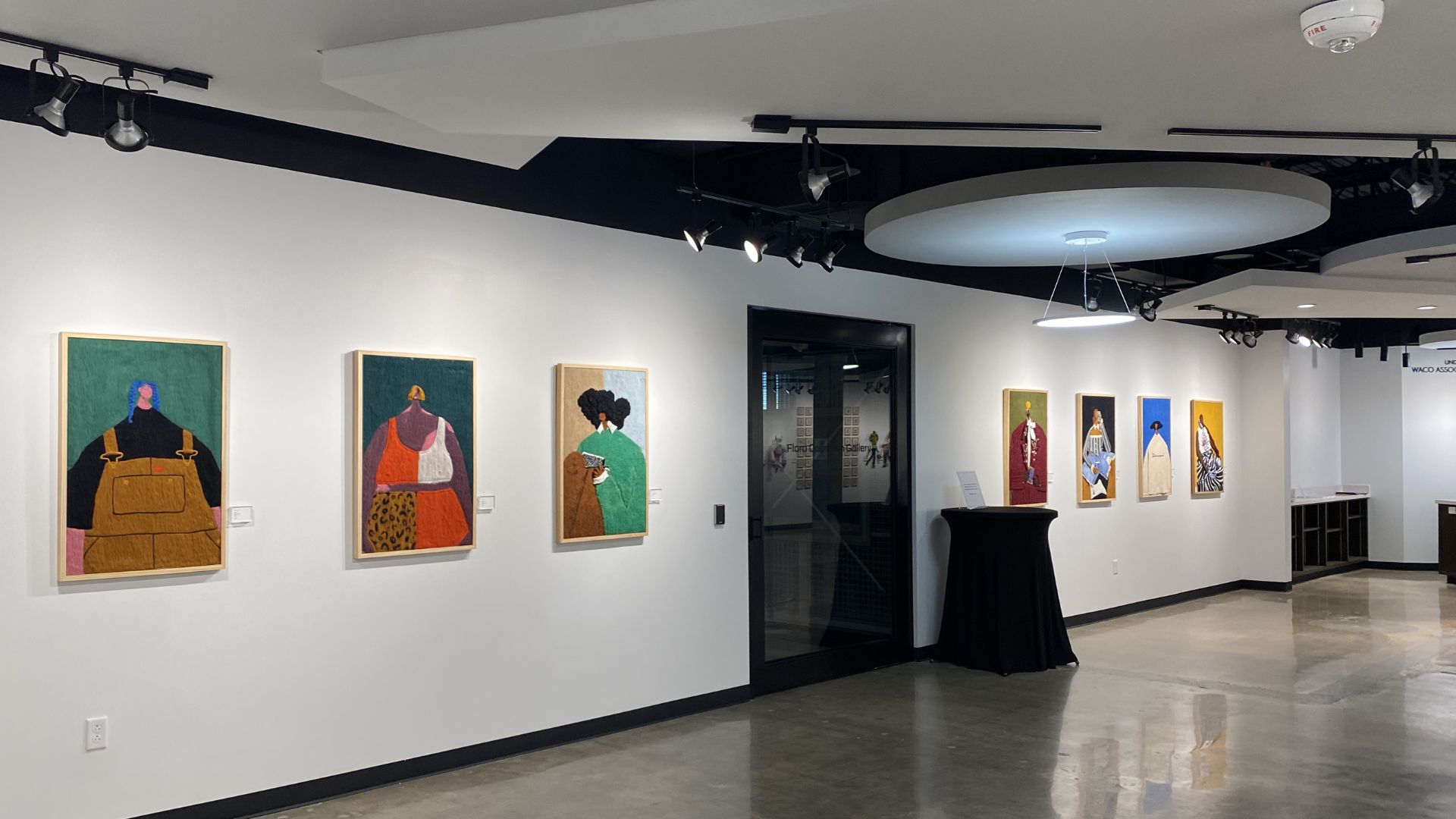
While one wall is covered in Brinkman’s stuffed sculptures, another is lined with Dionne’s framed “photographs” of Black women crafted with needle felting and wet felting.
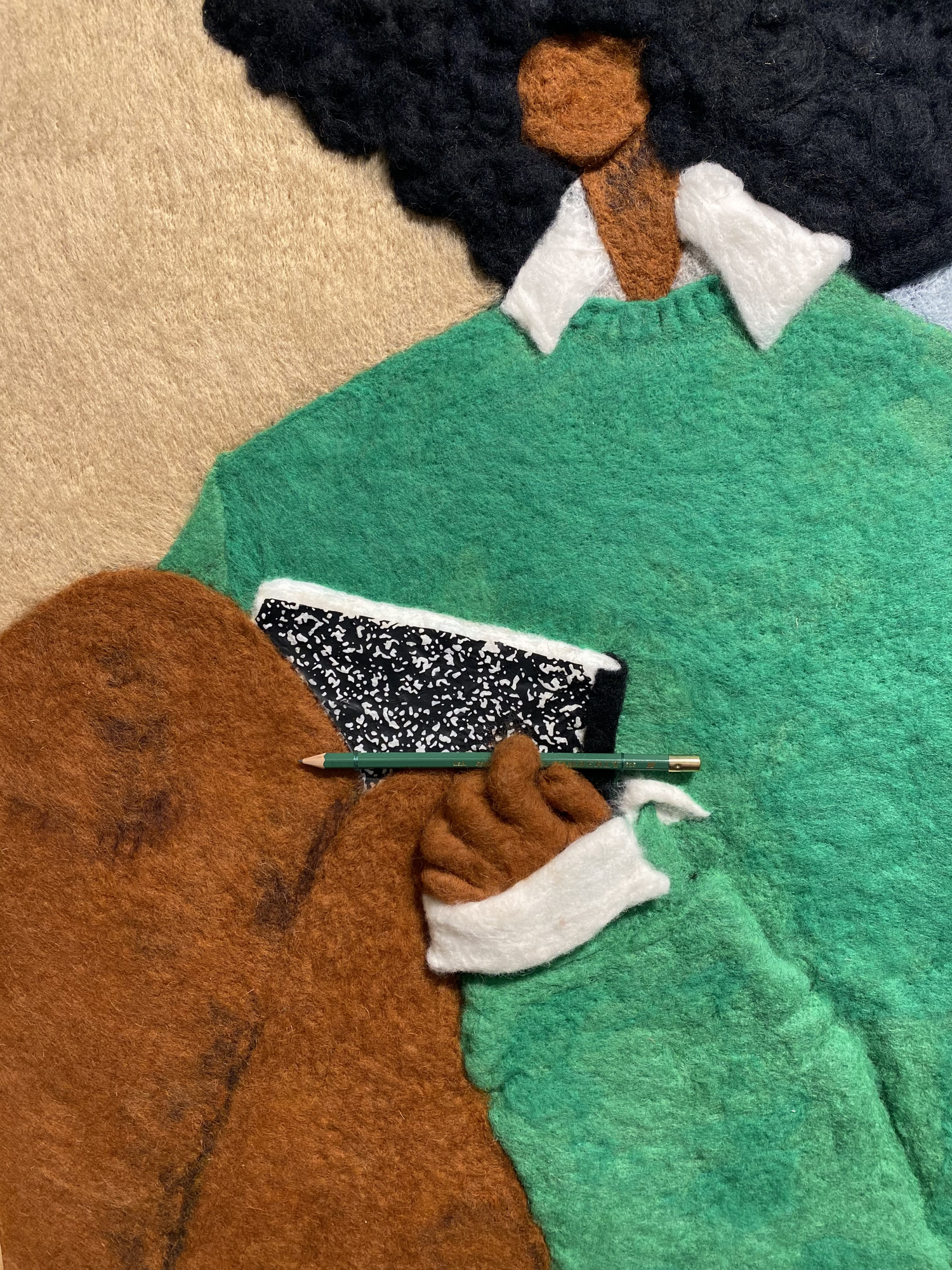
“I leaned into my growth from a period of experimentation with fiber,” Dionne said in her artist statement.
Through these works, Dionne emulated life, fashion and womanhood.
One of the pieces, “Macy and her Phone,” is an Ode to Erykah Badu.
In this piece, a woman with red braids, striped pants and a white tank top with a photo of Badu and characters from Sesame Street are felted against a dark yellow background.
“Macy” sits on the ground and holds a telephone base, the cord spiraling up to the phone sticking out of the piece for a 3D effect.
Levy‘s work heavily draws on anatomical inspiration, especially the eyes.
Levy’s piece is an oil painting with seven smaller circle paintings, all surrounding eyes.
Several small circular mirrors fill in the gaps between the painted eyes. These mirrors are small enough that viewers can see only their own eyes, making the painting’s message complete through the experience of viewing it firsthand.
“I am interested in how the body becomes both archive and narrator,” Levy said.
Storm, the final artist in the exhibit, is also an art teacher.
His work is inspired by outsider art, children’s art, street art and the Japanese aesthetic of wabi-sabi, and the exhibit features several of his collage pieces.
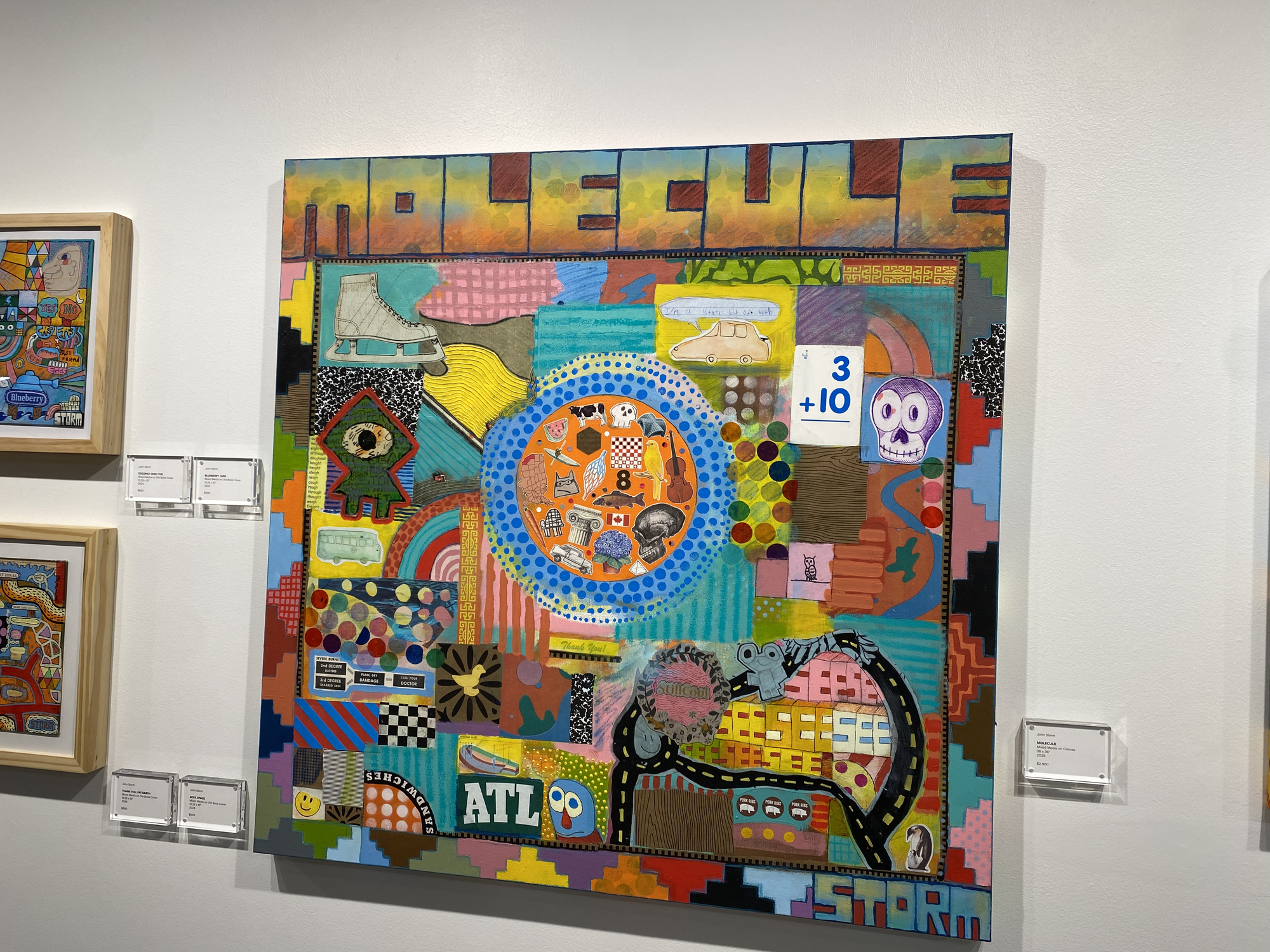
Several of the pieces displayed are mixed-media works on the backs of old books. His art uses markers, crayons, paint stamps, magazine clippings, children’s drawings and even math flashcards.
Waco freshman Karis Barker, who studies art, said the exhibit is important to Waco and Baylor students because it helps people gain a broader sense of the town’s culture and what is important to the city.
“Art is important because it connects us and inspires us and promotes creativity,” Barker says. “Even if it is just you looking at the art. It forms us as people, no matter what your studies are.”
Barker’s favorite part of the exhibit was Dionne’s felt portraits. She described the pieces as a “mosaic of meaning,” noting that all the small details had intention and creativity behind them.
Barker encouraged students to visit the exhibit and Art Center Waco before April 25.
“Art is important to being human because as humans we are children of God,” Barker said. “We are called to reflect our creator, and God is inherently the most creative being. Part of being made in his image is in turn, creating. It’s a way we get to glorify him and spread our own small identities with each other.”
Brinkman emphasized the importance of art as a method of expression and connection.
“Art is therapeutic for me,” Brinkman said. “It’s a way for me to both experience and spread hope and joy. The ‘More is More is More’ exhibit is fun, thoughtful and dynamic. Going to see an art show is such a human thing to do. This show in particular might show you something you’ve never seen or imagined before, and that’s just very good for us all to experience.”