By Tolga Sahin | Staff Writer
Though the Iran war is far from Waco’s soil, it still has consequences affecting Central Texas, including a surge in gas prices.
Since the war started, oil shipping companies have suspended routes through the Strait of Hormuz, freight costs have surged and consumer prices on everyday goods are expected to follow.
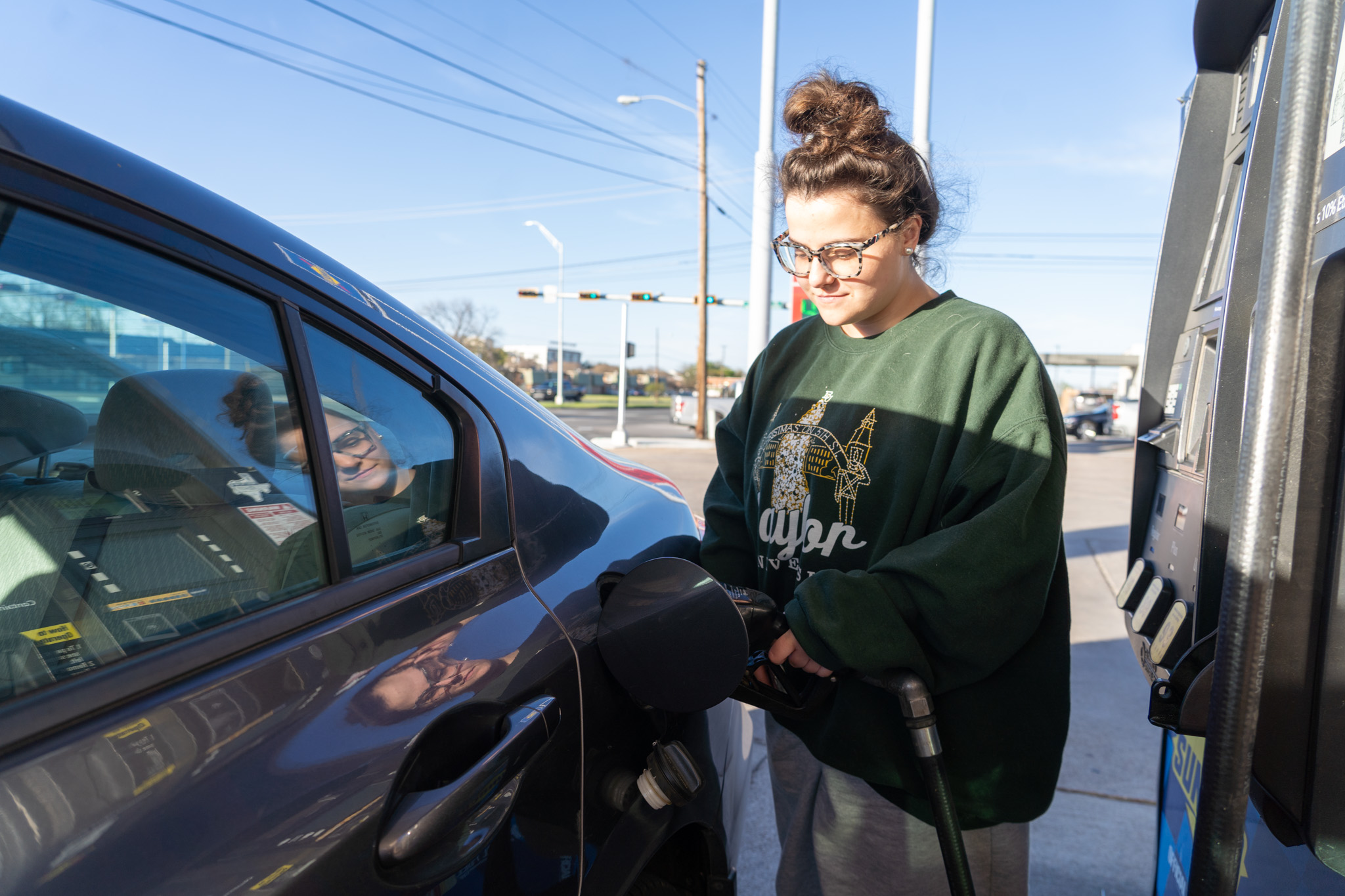
Gas prices in Texas have risen from roughly $2.75 to $3.48 a gallon in under three weeks amid the war with Iran. It is disrupting one of the world’s most critical oil shipping routes. The national average for regular gasoline reached $3.79 Monday, the highest since October 2023 and a 27% increase since the war began Feb. 28. Diesel surpassed $5 a gallon for the first time in three years.
The price increase is already hitting students on campus. Waco sophomore Jack Meehan said he noticed prices climbing the weekend the war began and has since felt the difference at the pump.
“I considered getting some gas at that point,” Meehan said. “Surely it wouldn’t be that bad. But right when it hit Monday, immediately it was up [by] close to a dollar. It was quite a bit more expensive.”
The primary driver behind this surge is the near-total shutdown of the Strait of Hormuz, a narrow waterway between Iran and the United Arab Emirates through which roughly 20% of the world’s oil passed before the conflict. Iran’s military has struck more than a dozen commercial vessels since hostilities began, effectively halting tanker traffic. Daily transits through the strait have fallen from an average of 138 to fewer than five, according to the United Kingdom Maritime Trade Operations Center.
Dr. Patrick Flavin, chair of the political science department, said the surge in gas prices carries political weight heading into November’s midterm elections. Trump won in 2024 largely on promises of affordability, and Flavin’s research found that he performed better in areas with higher inflation rates.
“If there’s one predominant thing that’s on voters’ minds above all, it’s the economy,” Flavin said. “That’s usually felt in terms of the prices that they’re paying when they go to the grocery store.”
Even students who don’t track prices closely said the increase has become hard to ignore. Dellwood, Minn., sophomore Micah Schmidt said the war’s effect on gas has come up repeatedly in conversation around campus.
“I don’t really pay attention to how much gas costs; I just fill up,” Schmidt said. “[But] I heard people mentioning to get gas now before the prices go up.”
U.S. Energy Secretary Chris Wright acknowledged there is no clear timeline for prices to come down. His comments came after U.S. strikes on Iran’s Kharg Island on Friday raised new fears about the security of the country’s oil exports, through which 90% of Iran’s crude is shipped. Wright spoke with ABC News Sunday as oil prices continued to climb.
“There’s no guarantees in wars at all,” Wright said. “I can guarantee the situation would be dramatically worse without this military operation to defang the Iranian regime.”
Natasha Kaneva, head of global commodity strategy at J.P. Morgan, warned that a direct strike on Kharg Island’s export terminal would immediately halt 1.5 million barrels per day of Iranian crude. In a note to clients Friday, Kaneva said the consequences of such a move would extend well beyond Iran’s own output.
There have been international efforts to lower the prices, but they have been insufficient so far. Thirty-two member countries of the International Energy Agency agreed to release 400 million barrels from emergency oil reserves. President Donald Trump called on NATO allies and China to deploy warships to protect tankers in the strait, but no country has committed forces. Trump also warned the U.S. would target Iran’s oil infrastructure if attacks on shipping continue.
College Station senior and Baylor College Republicans President Lindsay Flanigan said the Republican Party entered 2026 confident in the president’s foreign policy record, pointing to the Gaza ceasefire, the Venezuela operation and the initial strikes on Iran’s nuclear facilities.
“We’ve seen a lot of foreign policy wins over the first year in this administration,” Flanigan said.
With midterm elections seven months away, Republicans are defending a narrow House and Senate majority. An ongoing war in Iran and the rising prices put dozens of many seats at risk for the president’s party.