By The Editorial Board
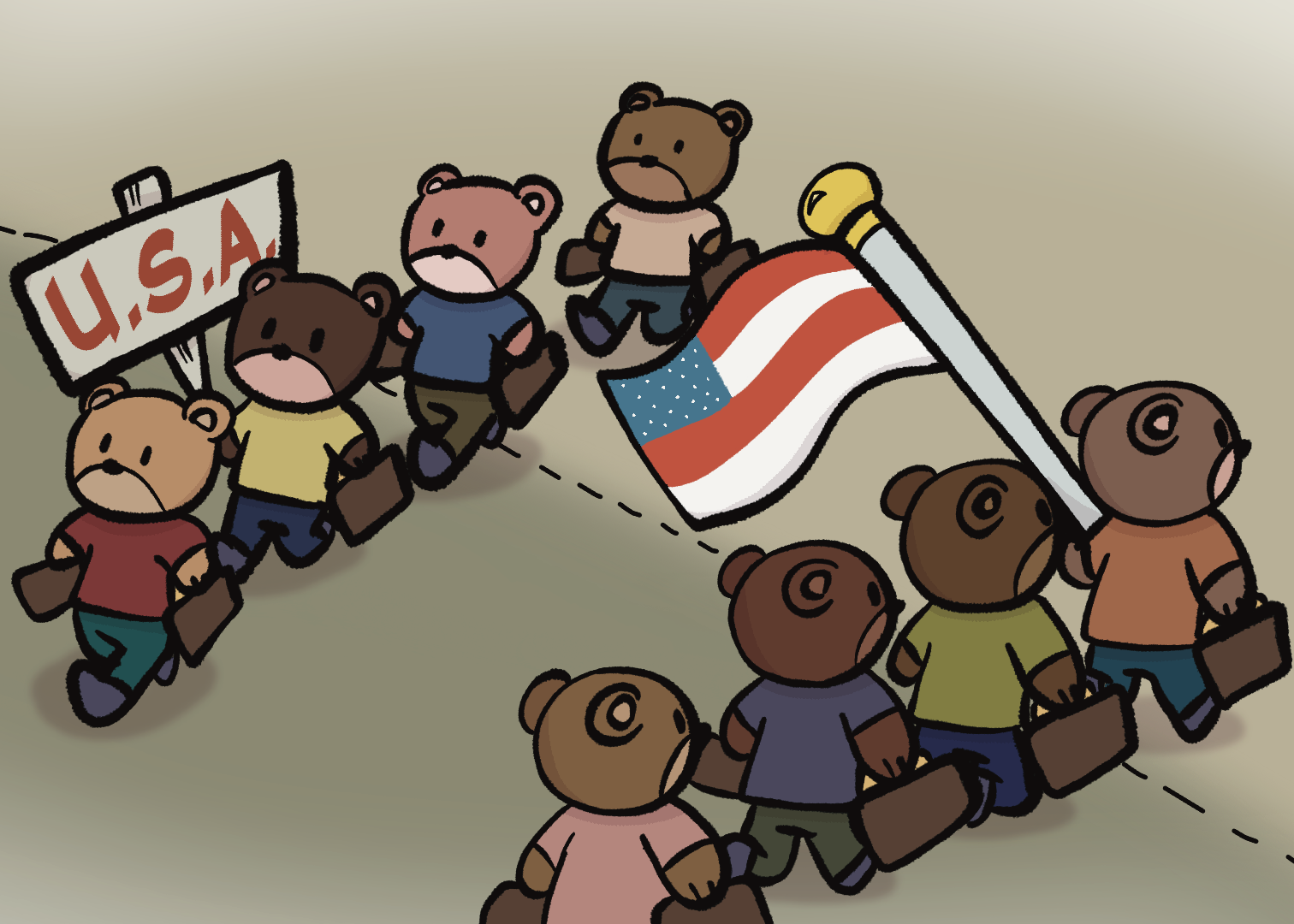
The image of a hard-working family arriving in America is a story embedded in our nation’s identity. For generations, immigrants crossed oceans in hopes of settling where opportunities were abundant and a better future was just over the horizon. Many stood on the bow of a ship facing Lady Liberty and experienced a defining moment that signaled hope and the promise of a new beginning.
The “American Dream” has functioned as both an ideal and an attainable expectation for much of American history. People believed that with a little effort, they would be rewarded with stability and freedom for generations to come. The shared assumption was that each generation would live better than the last on a steady upward trajectory.
In recent years, that image of a sparkly new beginning has faded, much like the beautiful copper of the Statue of Liberty dulling to the weathered green we know now. The rising cost of living has made financial security increasingly difficult for the average American to achieve. Housing prices have skyrocketed, healthcare has stretched budgets thin and higher education costs challenge the accessibility of opportunity. The road to making it in America no longer appears quite as simple, even if you proceed with hard work and perseverance.
Americans seem to be waking up to the unfortunate turn the nation has taken. Outward migration rates reached about 150,000 in 2025 alone. This marks the first time the U.S. has experienced more people moving out than in since the Great Depression.
The Trump administration says the migration deficit is due to restrictions on new visas and deportation practices; however, that reasoning fails to account for numerous critical factors that repel many who desire to live in the U.S. The increasing number of Americans choosing to live abroad and the shrinking number of immigrants reveal something much deeper than a simple change in immigration policy.
America’s strong borders are not to blame for this progression. The promise and opportunity the nation once represented have been lost to exploitative fiscal policy and the richest among us.
Rising economic inequality further affirms the difficulty of living as a middle-class citizen in the United States. A high concentration of wealth among a small percentage of Americans allows for the benefits of economic growth to be enjoyed disproportionately.
The median sale price of homes has risen nearly 34% since the end of 2015, a growth rate making homeownership out of reach for many. The goal of homeownership has become completely unattainable for many average families, as unreasonably high home prices exile them from the market altogether.
Healthcare accessibility is another challenge to the stability that was once expected. Many Americans have found that residing in one of the wealthiest nations isn’t enough to ensure basic medical care. A study conducted by the Commonwealth Fund found that 33% of Americans didn’t fill a prescription, went without recommended care or failed to visit a doctor when sick because of costs.
Aggressive and at times fatal, Immigration and Customs Enforcement practices undoubtedly paint the U.S. in an unfavorable light for immigrants. In 2025 alone, over 30 people died in ICE custody, marking its deadliest year in two decades. Understandably so, fear and unrest have exploded among immigrant communities, shaking the chance of stability. About half of Mexicans and Central Americans say they feel less safe in their local areas following the administration’s efforts.
Without confidence that essential needs like medicine, housing and safety will be provided, do the risks of being — or becoming — an American outweigh the rewards?
For immigrants considering relocation to the U.S., this dilemma creates a layered predicament. The United States claims to symbolize freedom and opportunity, but the conditions required for upward mobility are slipping away.
While political leaders frame the population change as evidence of successful policy, they ignore the broader changes happening. The fading image of the American Dream is a direct result of shifts within the nation itself; changes that directly affect, or will affect, your household.
Preserving the things that make our nation special is no small feat, but it is possible. Voting in local, state and federal elections allows voices of all kinds to be heard. Empowering our immigrant neighbors protects the culture and values they bring to our communities.
A country built by those who chose to come and stay holds a responsibility to remain worthy of choosing. America has never been defined by perfection, but by remaining a place people believe is worth fighting for.