





Joana Karoshi | Staff Writer
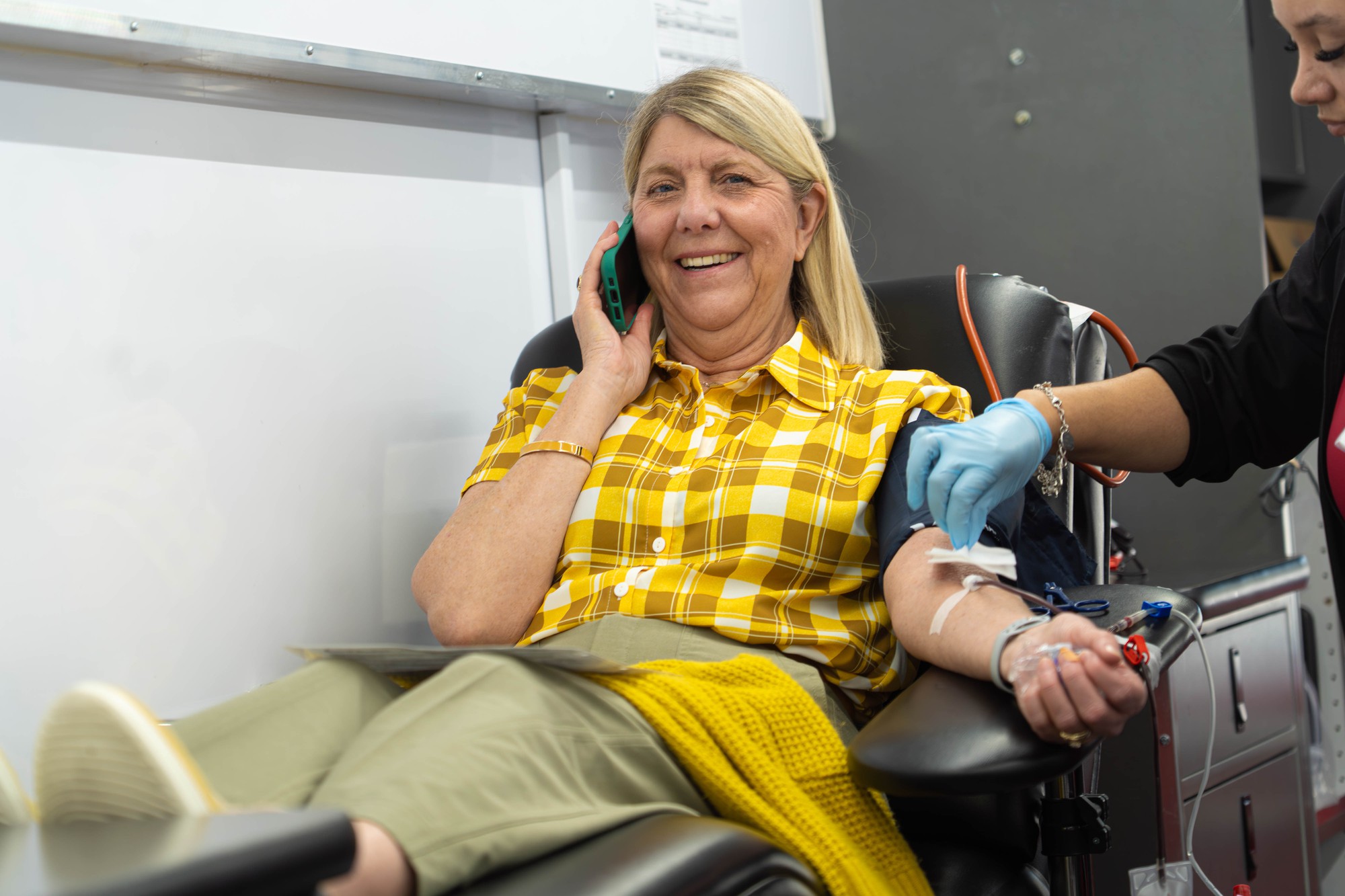
Parked outside Moody Library, a bus stamped with the words “Carter BloodCare: Be a Lifeline for Your Community” drew students, some checking in as walk-ins and others arriving with appointments booked online.
Amid a nationwide blood donation shortage, Baylor Health Services partnered with Carter BloodCare to host blood drives from Feb. 9–12 outside Moody Library. The drives run from 10 a.m. to 3:30 p.m., and Baylor Health Services promoted the event on Instagram, offering free dinner to students who donate.
The American Red Cross declared a severe blood shortage in January after the national blood supply dropped below 35%, a situation worsened in some areas by winter weather that disrupted donations.
Raleigh, N.C., senior Scott Leblanc said he learned about the shortage through Carter BloodCare and felt compelled to contribute.
“I heard that the weather may make the blood shortage worse in the area, so I thought I should do my part and donate,” Leblanc said. “I’m not from Texas, but I really like the community here, so I want to make sure that I can help out when I can.”
Carter BloodCare spokesperson James Black said donations are critical as the organization recovers from recent weather-related disruptions.
“Donating blood is a positive way to have a powerful effect on someone in Waco and Central Texas who needs our help,” Black said. “When you donate blood with Carter BloodCare, you help children who are fighting cancer, organ transplant recipients, people hurt in serious car wrecks, patients being treated after mass casualty incidents, new mothers and so many others.”
As shortages continue, campus blood drives have become an essential pipeline for maintaining the region’s blood supply.
“In fact, 25% of the blood supply is collected through campus blood drives,” Black said.
Not all students arrived aware of the national shortage. Riverside, Calif., sophomore Emi Tavares said she learned about it only after being asked about it. Despite that, she said donating felt like an easy decision.
“It just seemed like the right thing to do,” she said.
Mondekhuu Turmunkh, a second-year international student from Ulaanbaatar, Mongolia, said he decided to donate after walking past the Carter BloodCare bus. Though he was unaware of the national shortage, Turmunkh said his decision was influenced by his doctor’s advice back home.
“My doctor suggested I give blood,” Turmunkh said. “I didn’t get a chance back home, so I decided I might as well donate here.”
Turmunkh said he would encourage other students to consider donating.
“I would encourage them to give blood,” he said. “It helps people and can save lives.”
For some students, the main barrier to donating is time. Leblanc said the process can take close to 40 minutes, which can be difficult to fit between classes.
However, Long Island, N.Y., freshman Ace Kerrigan said the process was quicker than expected.
“It’s really not that much time,” Kerrigan said. “I was in and out in like 30 minutes, and then I could go about my day.”
Kerrigan said he learned about the drive through a friend who received an email and by seeing the Carter BloodCare bus parked outside the Moody Library for a couple of days.
Despite the time commitment, Leblanc encouraged other Baylor students to consider donating as the shortage continues.
“It’s a little pinch in the arm, and it’s one of the few chances you have to actually help save lives, especially now when there’s a shortage,” Leblanc said. “It’s such a little thing to do, but it can make a big difference.”


